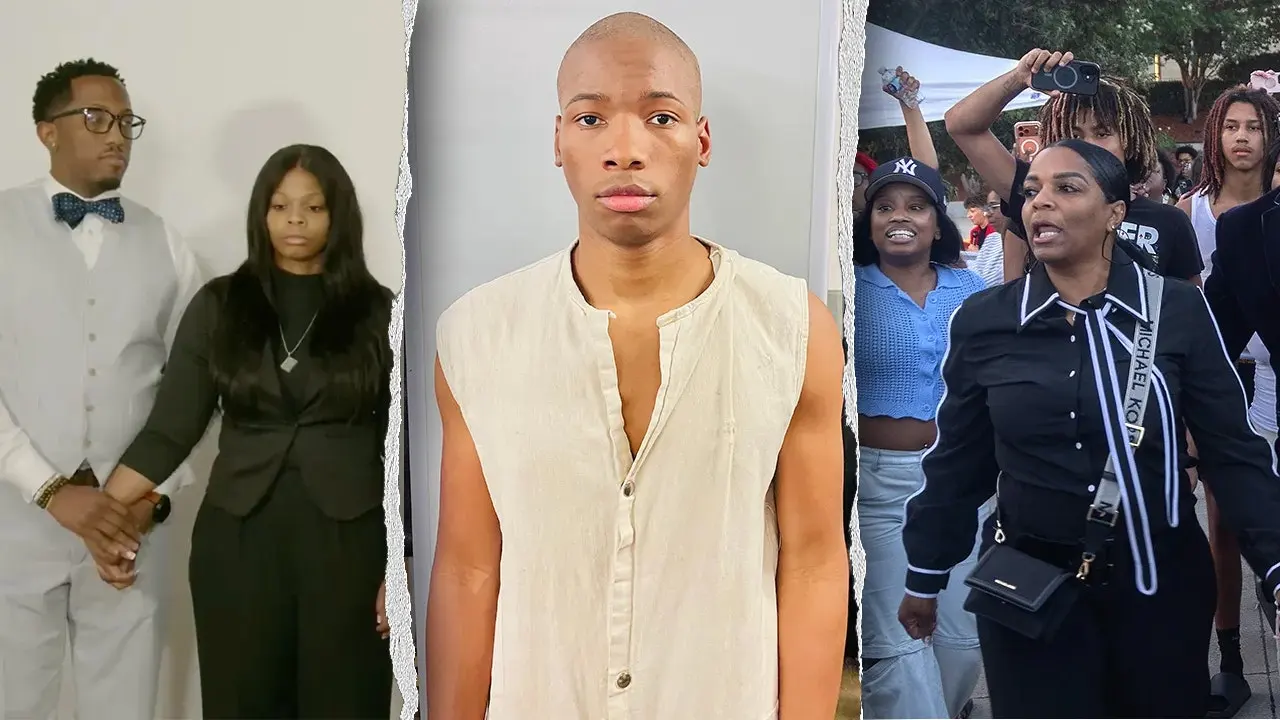
The court has released the evidence jurors saw in the Karmelo Anthony murder trial, giving the public its first full look at the recordings and images that shaped one of the most closely watched Texas cases of the year.
The release includes surveillance footage, police bodycam video, 911 calls, crime scene photographs, and images of the knife prosecutors said was used in the fatal stabbing of 17-year-old Austin Metcalf. Cameras were not allowed in the courtroom during the trial, making this the first time many of the exhibits have been seen publicly.
Anthony, now 19, was convicted of murder and sentenced to 35 years in prison after jurors rejected his self-defense claim. The incident happened on April 2, 2025, during a Frisco ISD track meet at Kuykendall Stadium.
According to trial coverage, the confrontation began during a rain delay when Anthony, a Centennial High School student, was sitting under Memorial High School’s team tent and Metcalf told him to leave. Prosecutors argued the exchange escalated into a fatal stabbing, while the defense argued Anthony believed he was protecting himself.
The surveillance footage released by the court shows a rainy scene at the stadium and captures Anthony running from a yellow tent after the confrontation. The video also shows him moving along the track before he is eventually confronted by police and placed in handcuffs.
But the bodycam footage has become the part of the evidence release drawing the loudest reaction online. In the video, Anthony appears emotional as officers detain him and repeatedly says that Metcalf put his hands on him.
At one point, Anthony can be heard saying he was protecting himself. Later in the footage, when an officer refers to him as the alleged suspect, Anthony says, “I’m not alleged. I did it,” a statement that has quickly become one of the most discussed moments from the release.
Supporters of Anthony have focused on his repeated comments that Metcalf touched him first, arguing the footage adds emotional weight to his self-defense claim. Others say the jury already heard that argument, reviewed the evidence, and still found him guilty of murder.
The 911 calls released with the trial exhibits show the panic that followed the stabbing. Students and adults can be heard urgently asking for help as coaches and bystanders tried to assist Metcalf before first responders arrived.
The court also released photographs connected to the investigation, including images of clothing and other evidence collected from the scene. Because some of the exhibits are graphic, their release has triggered strong reactions from both supporters of Metcalf’s family and people questioning the verdict.
Prosecutors also showed jurors the knife they said Anthony used during the confrontation. Reports identified it as an Ozark Trail folding multitool knife purchased at Walmart, with the blade presented as a key piece of evidence at trial.
The release has revived debate over the central question of the trial: whether Anthony acted in self-defense or whether his actions met the legal standard for murder. Jurors were given that question and ultimately sided with the prosecution.
Anthony’s legal team has already begun the appeal process, meaning the case is not finished in court. However, appeals generally focus on legal errors during the trial rather than simply re-arguing the facts for the public.
For Austin Metcalf’s family, the release of the evidence brings another painful wave of attention to the day they lost him. For Anthony’s supporters, the footage has become new fuel for arguments that the case deserves another look.
What the public is seeing now is what the jury had before it reached its decision. The videos, calls, photos, and Anthony’s own words may keep the online debate alive, but the legal reality remains that a jury convicted him of murder and sentenced him to 35 years in prison.