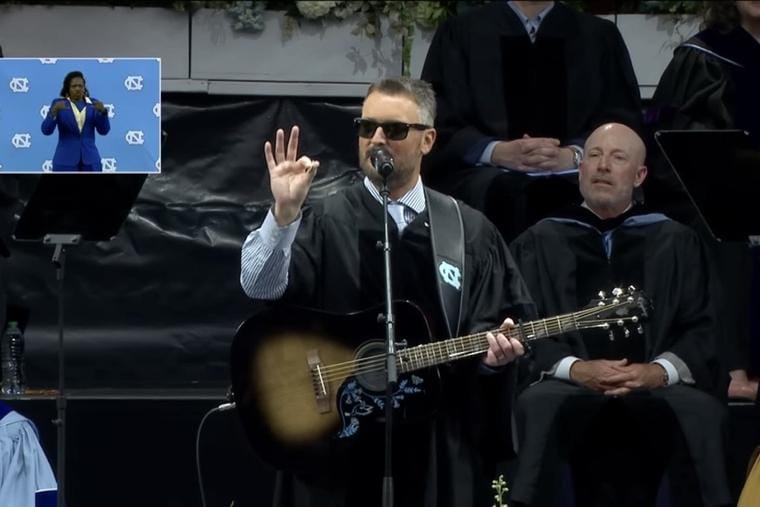
Eric Church helped make Alan Jackson’s final full-length concert even more emotional when he appeared at Nissan Stadium to pay tribute to a legend he has long credited with protecting the heart of country music. On a night already filled with rain, memories, and thousands of fans saying goodbye to Jackson’s touring career, Church’s presence added another powerful reminder of how deeply Jackson’s influence runs through the genre.
The moment came during Last Call: One More for the Road — The Finale, Jackson’s historic farewell concert in Nashville. The show marked the final full-length performance of his touring career, bringing together fans and artists who wanted to honor more than four decades of songs, storytelling, and traditional country music. For many in the stadium, the night felt less like a normal concert and more like a public thank-you to one of country music’s most trusted voices.
Church was one of several major artists invited to celebrate Jackson’s legacy, but his tribute carried a special kind of weight. Known for his own strong opinions about artistry, songwriting, and the soul of country music, Church has often been seen as someone who respects the artists who came before him. His appearance at Jackson’s farewell felt like one generation of country music standing up for another.
During the tribute portion of the night, Church performed Jackson’s “Someday,” a song that remains one of the most quietly emotional moments in Jackson’s catalog. Instead of turning it into a loud arena performance, Church leaned into the simplicity of the song, letting the lyrics and melody carry the feeling. That choice made the performance feel sincere, personal, and deeply respectful.
“Someday” was a fitting song for the occasion because it carries the kind of reflection that matched the mood of the night. Jackson’s farewell was not only about celebrating the hits; it was also about looking back at time, choices, memories, and the way life changes before people are ready. Church’s version gave fans a chance to sit with that feeling.
The crowd inside Nissan Stadium had already been through an emotional night before Church’s tribute. Heavy rain moved through Nashville, causing a weather delay and soaking parts of the stadium, but fans stayed in place. Ponchos, wet seats, and storm clouds could not stop them from being part of Jackson’s final touring goodbye
That commitment from fans showed how much Jackson means to country music listeners. These were not people simply attending a show because of a famous name. Many had grown up with his songs, played them in their cars, heard them at family gatherings, or connected them to personal memories. For them, the night was personal.
Church’s tribute added to that feeling because it reminded fans that Jackson’s impact is not limited to the audience. His songs also shaped the artists who followed him. Younger stars and fellow country veterans came together because Jackson’s career gave them a standard to admire — one built on honesty, tradition, and songs that sounded like real life.
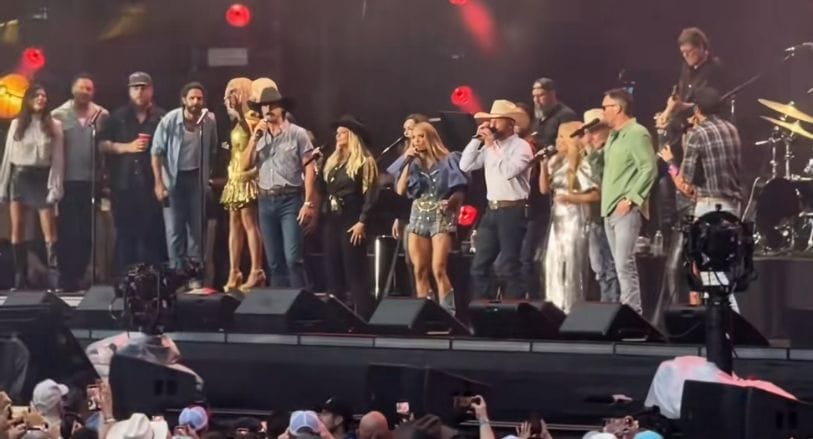
The farewell concert featured a massive lineup of country stars, including Luke Bryan, Luke Combs, Miranda Lambert, Carrie Underwood, George Strait, Lainey Wilson, Riley Green, Cody Johnson, Jon Pardi, Lee Ann Womack, and others. Each artist brought a different connection to Jackson’s music, but together they created the feeling of an entire genre gathering around one of its own.
For Church, the tribute was not about stealing the spotlight. It was about giving it back to Jackson. That is why his performance worked so well. He did not need dramatic staging or a complicated arrangement. He only needed the song, his voice, and the respect that was already obvious in the room.
Jackson’s farewell also carried deeper emotion because of his ongoing battle with Charcot-Marie-Tooth disease, a degenerative nerve condition that affects balance, coordination, and muscle strength. Jackson has been open about how the disease has made touring more difficult, and that honesty has made fans understand why this final concert meant so much.
Because of that, every tribute during the night felt heavier. These artists were not simply celebrating another career milestone. They were helping Jackson close a chapter he had spent years fighting to continue. His final show was a reminder that leaving the road does not mean the music loses its power.
Church’s performance of “Someday” also reminded fans why Jackson’s songs have lasted. His music was never built only on trends or radio success. It was built on stories people recognized, emotions they understood, and simple lines that stayed with them long after the song ended.
That is why so many artists wanted to be part of the farewell. Jackson’s influence is not only in his awards, record sales, or No. 1 hits. It is in the way he made traditional country music feel strong, relevant, and deeply human across several generations.
Fans who could not attend in person will still be able to experience the historic night when the concert airs later as a television special and streams afterward. That wider release will allow even more listeners to see the tributes, the emotional performances, and the final moments of Jackson’s touring career.
For those inside Nissan Stadium, however, Eric Church’s tribute was one of the moments that helped define the evening. His version of “Someday” gave the crowd a quiet pause in the middle of a massive farewell, allowing fans to feel the weight of what Jackson’s final show truly meant.
By the end of the night, Church had done more than perform an Alan Jackson song. He had honored the kind of country music Jackson spent his life defending — honest, simple, emotional, and built to last. As Jackson’s touring career reached its final curtain, Church made sure one more voice stood up to say what so many fans were feeling: Alan Jackson’s legacy is not going anywhere.