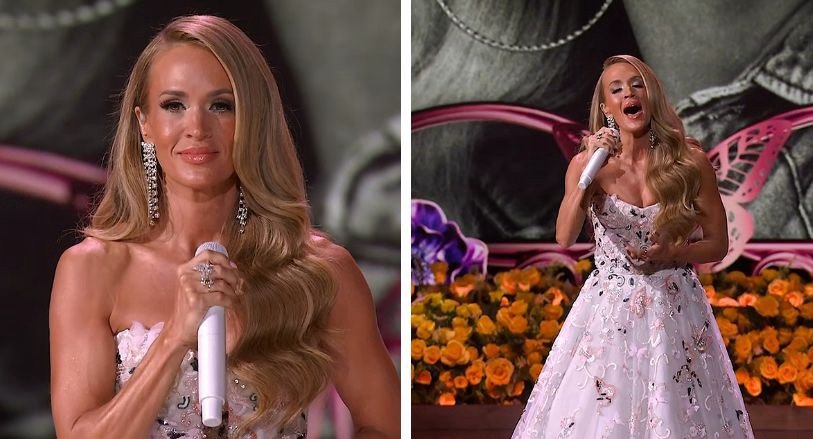
Carrie Underwood delivered an emotional finale to the CMA’s Dolly Parton tribute special with her rendition of “I Will Always Love You,” earning enthusiastic praise from viewers who considered it one of the evening’s standout performances. But beyond her powerful vocals and visible emotions, one subtle element of the arrangement gave the tribute an even deeper connection to Dolly’s musical legacy.
The performance closed CMA Presents I Will Always Love You: A Celebration of Dolly Parton, a two-hour television event featuring some of country music’s most recognizable performers. Throughout the special, artists celebrated the legendary singer’s extraordinary career through musical tributes, personal memories, and performances of her most beloved songs.
Underwood faced a particularly meaningful responsibility as the evening’s closing performer. “I Will Always Love You” is among the most recognizable songs ever written by Parton, making it a fitting selection to conclude a celebration dedicated to her remarkable influence on music.
Originally released in 1974, the song was written by Dolly as a farewell to her longtime musical partner and mentor, Porter Wagoner. Rather than expressing anger or bitterness over their professional separation, Parton created a deeply personal ballad about gratitude, affection, and the difficulty of saying goodbye.
The recording later reached an even wider audience when Whitney Houston released her celebrated interpretation for the 1992 film The Bodyguard. Houston’s version became an international phenomenon, introducing the song to millions of listeners who may not have been familiar with its country music origins.
Because both recordings became so influential, singers performing “I Will Always Love You” often face comparisons with two very different vocal interpretations. Dolly’s original emphasizes intimacy and storytelling, while Houston’s recording is remembered for its dramatic arrangement and extraordinary vocal power.
During the tribute, Underwood brought her own impressive vocal abilities to the classic. Known for her commanding voice and ability to deliver emotionally charged ballads, she approached the song with the intensity expected from one of country music’s most successful contemporary performers.
One particularly meaningful aspect of the arrangement was its connection to the song’s country roots. Rather than allowing the performance to become simply a showcase of vocal power, the musical presentation placed attention on the melody and heartfelt message that made Dolly’s original recording so memorable.
That balance helped distinguish Underwood’s interpretation from the many versions audiences have heard over the years. By combining a powerful delivery with the song’s emotional simplicity, the performance reflected both her own musical identity and the storytelling tradition that shaped Parton’s career.
As the song approached its final moments, Underwood reportedly became visibly emotional. She appeared to fight back tears while continuing to sing, creating a moving moment that resonated with viewers watching the tribute.
The finale became even more memorable when fellow country music performers joined Underwood onstage. Their presence transformed the closing moments from an individual performance into a collective expression of admiration for Parton and the enormous influence she had on the industry.
Following the broadcast, viewers shared differing reactions, but many praised Underwood’s vocal performance and the emotion she brought to the song. Some regarded it as the highlight of the evening, while others appreciated the way the arrangement honored the original recording without simply attempting to recreate it.
Carrie Underwood’s closing performance offered a powerful conclusion to the Dolly Parton celebration, combining remarkable vocals, visible emotion, and a meaningful connection to the song’s country music origins. Whether remembered for its heartfelt delivery, its arrangement, or the gathering of stars during the finale, the tribute served as a fitting reminder of why “I Will Always Love You” remains one of Dolly Parton’s greatest musical achievements.