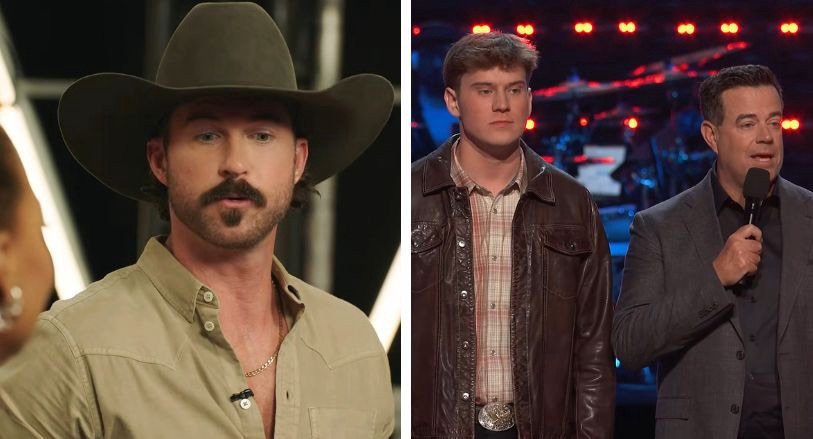
The Voice Season 30 contestant Joe Henley is enjoying a remarkable rise in popularity, and his journey has already attracted attention from one of country music’s most respected legends. The 19-year-old Alabama singer received recognition from Randy Travis after his Blind Audition, adding another memorable moment to his experience on the NBC singing competition. With Henley now advancing to the Live Shows, fans are increasingly predicting that he could become this season’s champion.
Henley first introduced himself to viewers during the Blind Auditions with a performance of Travis Tritt’s “Anymore.” His deep, traditional country voice immediately caught the attention of Kelly Clarkson and Riley Green, who both turned their chairs. Although the teenager had limited experience performing before large audiences, his natural vocal ability helped him make a strong first impression.
The performance also attracted attention beyond the coaching panel. Country music legend Randy Travis publicly showed support for Henley on social media, recognizing the young singer’s talent. For an emerging artist whose musical influences include classic country performers, receiving acknowledgment from such an established figure represented an encouraging moment early in his career.
Travis holds a special place in country music history, having helped popularize a traditional sound that influenced generations of performers. His recognition of Henley highlighted the teenager’s connection to the genre’s roots. Henley’s rich vocal tone and straightforward delivery have also reminded listeners of other traditional country artists, including Keith Whitley.
During his Blind Audition, Henley developed an immediate connection with Riley Green. Both singers come from Alabama and share an appreciation for traditional country music. When Henley revealed that Green was his favorite artist, the coach joined him onstage with a guitar for an impromptu performance of “My Way,” creating one of the premiere’s memorable moments.
Henley ultimately chose Green over Clarkson, beginning a partnership that continued through the Battle Rounds. He later performed “Don’t Mind If I Do” alongside teammate Kenna Elpers, demonstrating his ability to blend his distinctive voice with another singer. Green selected Henley to advance, giving the teenager another opportunity to establish himself as a serious contender.
However, Henley’s biggest breakthrough came during the November 2 Cut Week episode. Facing elimination, he performed Keith Whitley’s “Don’t Close Your Eyes,” delivering an emotional interpretation that earned a standing ovation from all four coaches. His controlled vocals and natural country phrasing impressed the panel, particularly Clarkson, who predicted that he could reach the finale.
Green was equally enthusiastic about the performance, praising Henley’s ability to capture the distinctive qualities of Whitley’s music while maintaining his own identity. After advancing Cade Mower and sister duo Ferryn and Brinkley Wright automatically, Green selected Henley for his final guaranteed Live Show position. The decision secured the young singer’s place among the remaining contestants.
The performance also generated considerable attention online, with viewers praising Henley’s voice and predicting that he could win Season 30. Some supporters described him as an old soul, while others expressed interest in hearing a full album of his music. His ability to perform classic country songs with sincerity has become one of the defining qualities of his journey, helping him attract listeners who appreciate the genre’s traditional sound.
With the Live Shows beginning November 9, Henley now faces the challenge of turning that enthusiasm into continued success. His recognition from Randy Travis, memorable performances, and praise from the coaching panel have already made his time on The Voice significant. Although the winner will not be determined until the December 14 finale, the Alabama teenager has established himself as one of the contestants to watch as Season 30 moves toward its conclusion.