Dakota Cohen has opened up about the intense experience of competing on The Voice Season 30, revealing that the Live Shows were far more demanding than she expected. The rock singer, who represented Team Adam Levine, described the experience as fast-paced, unpredictable and chaotic while explaining why she actually enjoyed the pressure. In a revealing interview, Cohen also shared a different perspective on Levine’s coaching style, explaining why his direct approach made him her first choice long before her journey ended during Dolly Parton Tribute Night.
Cohen quickly established herself as one of the season’s most distinctive contestants, bringing a rock-influenced sound to a competition featuring singers from several musical genres. Her powerful vocals and energetic performances helped her attract attention during the early rounds. Although her time on the show ended on November 23, her comments offered an interesting look at what contestants experience behind the scenes when the competition transitions from prerecorded episodes to live television.
Her journey began with a memorable Blind Audition performance of Black Sabbath’s “Changes.” The performance earned chair turns from Adam Levine and Riley Green, giving Cohen an opportunity to choose between two established musicians. Although both coaches expressed interest in working with her, Cohen admitted that she had already been leaning toward Levine because of his musical background and experience as the frontman of Maroon 5.
During the audition, Cohen also revealed that she had previously performed Maroon 5’s “Sunday Morning” at an establishment in Montecito, California. That connection made her interest in joining Levine’s team particularly fitting. However, she explained that her decision was based on more than simply admiring his music. Cohen believed Levine understood the type of artist she wanted to become and could provide the guidance needed to develop her career.
What impressed Cohen most was Levine’s willingness to deliver honest feedback rather than simply tell contestants what they wanted to hear. She described him as straightforward and unafraid to explain when something needed improvement. For Cohen, that approach was particularly valuable because she prefers receiving clear advice that allows her to make meaningful adjustments. She also appreciated that Levine understood the rock-oriented musical direction she hoped to pursue after the competition.
Cohen explained that Levine’s background made her feel confident about her artistic identity. She wanted to establish herself as a female rock singer, and working with someone familiar with that musical environment provided reassurance that her ambitions were understood. Rather than encouraging her to move away from her preferred genre, Levine helped her recognize the strengths she could bring to the competition while continuing to develop her abilities.
Her journey continued through the Battle Rounds, where she performed Evanescence’s “Bring Me to Life” alongside fellow contestant Destinee Monroe. The powerful rock collaboration became one of the memorable performances of the season, highlighting Cohen’s ability to handle emotionally intense material. She later advanced through Cut Week before reaching the Live Shows, where the competition introduced an entirely different level of pressure.
For her first live performance, Cohen selected Aerosmith’s “I Don’t Want to Miss a Thing,” the famous rock ballad associated with the 1998 film Armageddon. Her interpretation helped secure enough viewer support to advance into the Top 10. Although she had already performed several times on national television, Cohen admitted that singing live presented challenges she had never experienced during the earlier rounds.
According to Cohen, the most intimidating part of the Live Shows was knowing that every sound she made would be broadcast immediately to viewers. Unlike prerecorded performances, there was no opportunity to stop and begin again if something went wrong. She explained that the realization was nerve-racking, particularly because the contestants were surrounded by talented singers who were also determined to deliver their strongest performances.
The demanding schedule created additional challenges. Cohen revealed that contestants had considerably less preparation time during the Live Shows, requiring them to learn arrangements, rehearse and adapt to production changes quickly. She described the experience as more chaotic than the Blind Auditions, which she had initially considered overwhelming. However, the singer admitted that she enjoyed the unpredictable atmosphere because it resembled the busy and constantly changing nature of her everyday life.
Away from the competition, Cohen has also been developing her career as a songwriter. She revealed that she began writing music during childhood and continues drawing inspiration from a wide range of musical influences. Rather than limiting herself to one specific sound, she allows personal experiences and creative ideas to shape her work. One example is her original song “thank u for the party favor,” which she wrote in August and released the following month.
Cohen explained that the song emerged from a difficult breakup and reflected emotions she wanted to express through music. Although the recording differed from some of her previous releases, she felt it was important to share something personal and authentic. Her comments demonstrated that her musical identity extends beyond the rock covers she performed on The Voice, with songwriting remaining an important part of her ambitions after the competition.
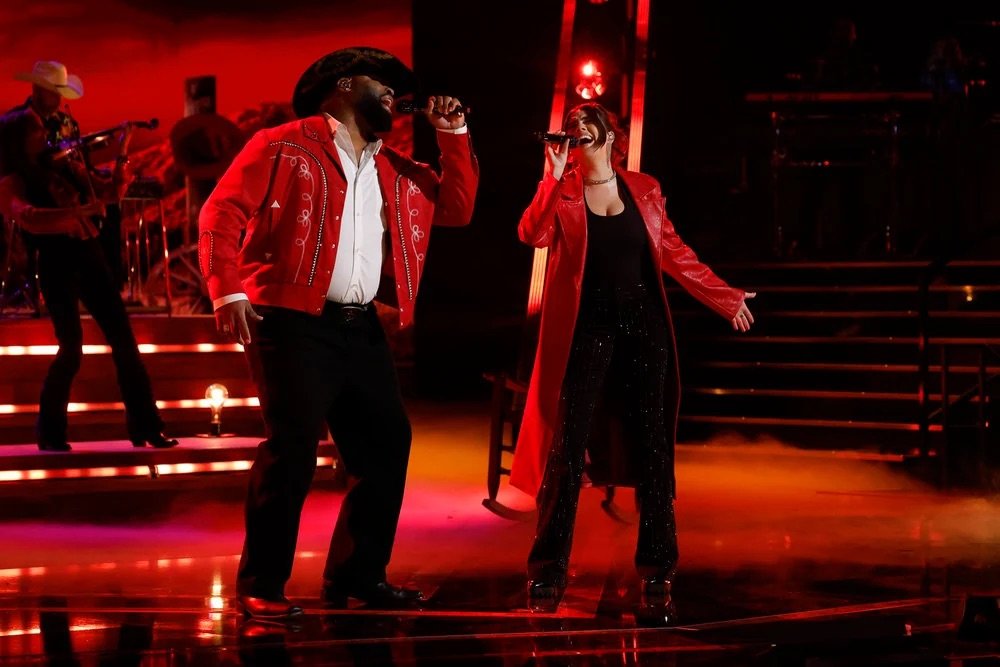
Unfortunately, Cohen’s journey came to an end during the November 23 Dolly Parton Tribute Night, when she joined BigCountry from Team Queen Latifah for a rock-influenced rendition of “Jolene.” Despite receiving encouraging feedback from Levine and Queen Latifah, neither contestant secured enough votes to advance into the Top 8. Their elimination left Levine with Connor Closs and Lexi Stephens as his remaining artists. Although Cohen will no longer compete for the Season 30 championship, her experience provided national exposure, valuable coaching and an opportunity to introduce her original musical identity to a wider audience. Her reflections on the intense Live Shows and Levine’s straightforward coaching style reveal how much she learned during her time on the competition and why she hopes to continue building a career as a rock performer.