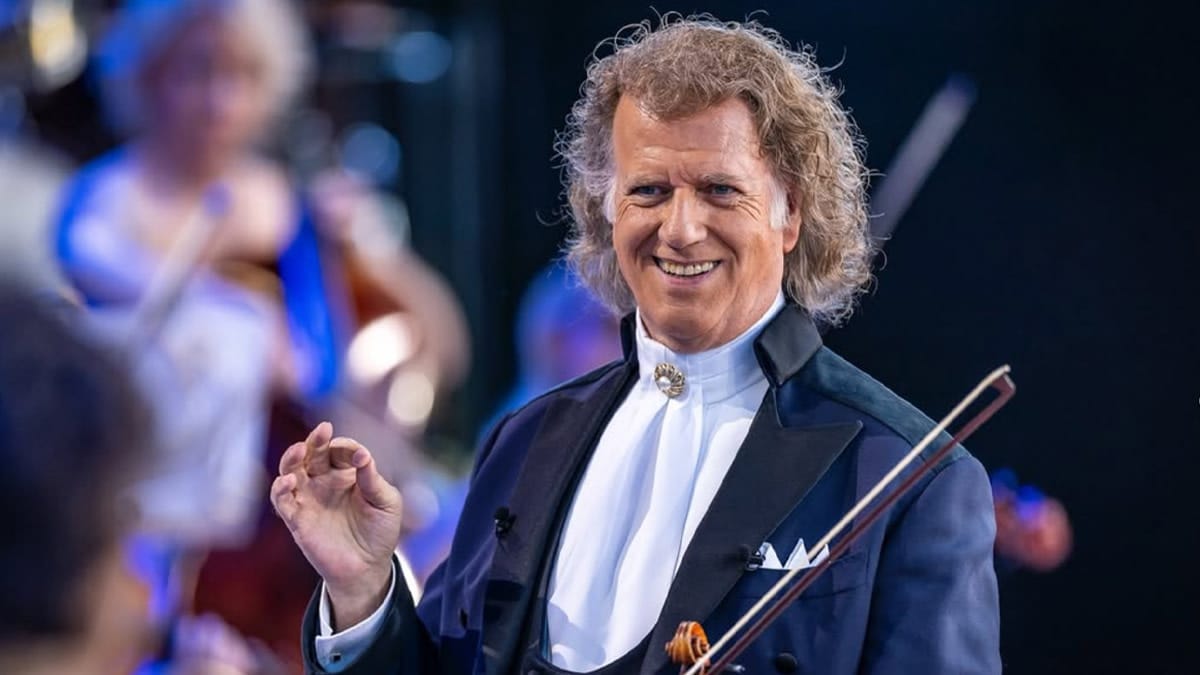
As André Rieu celebrates his 75th birthday, fans across the globe are reflecting on a career that has not only endured for decades, but reshaped how classical music is experienced and loved. The Dutch violinist and conductor—often called the “King of the Waltz”—has become a rare cultural bridge, bringing symphonic music out of formal concert halls and into packed town squares, stadiums, and living rooms around the world.
For generations of listeners, Rieu’s name has been synonymous with elegance, joy, and accessibility. With his Johann Strauss Orchestra, he transformed classical performances into vibrant celebrations—where audiences dance, sing, and feel welcomed rather than intimidated. His gift has never been about technical brilliance alone, but about connection: making people feel that this music belongs to them.
Now, marking this milestone birthday, Rieu has spoken more openly than ever before—offering glimpses into the personal values and quiet disciplines that sustained him through a career defined by constant travel, enormous pressure, and global expectations.
Behind the glamour and sweeping melodies, Rieu revealed that consistency and purpose have been his anchors. He credits his longevity not to chasing trends or fame, but to staying rooted in what first made him fall in love with music: storytelling, emotion, and shared human experience. “If the music doesn’t touch the heart,” he has said, “it has no reason to exist.”
That same philosophy extends into his personal life—especially his marriage. While many public figures speak of balance as an abstract idea, Rieu described it as a series of deliberate choices: protecting family time, respecting independence, and trusting one another fully. He has often acknowledged that his wife’s belief in him, especially during moments when success was uncertain, formed the emotional backbone of everything that followed.
Perhaps most surprising to fans was his candid admission that success never erased doubt. Even at the height of his fame, Rieu has faced moments of exhaustion and vulnerability. What kept him going, he explained, was not ambition, but responsibility—to his musicians, his audience, and the joy his music brings to people who may be struggling in their own lives.
At 75, André Rieu shows no signs of slowing down. Yet his reflections carry the tone of gratitude rather than triumph. He speaks less about records broken or venues filled, and more about moments: a child hearing a waltz for the first time, an elderly couple dancing together, a crowd singing as one under the open sky.
As fans celebrate this milestone alongside him, one truth stands out clearly: André Rieu’s legacy isn’t measured only in concerts or accolades. It lives in the way he made classical music feel human, warm, and alive—and in the quiet principles that allowed both his career and his marriage to flourish side by side.
At 75, the maestro’s greatest achievement may not be how long he has played—but how deeply he has been felt.