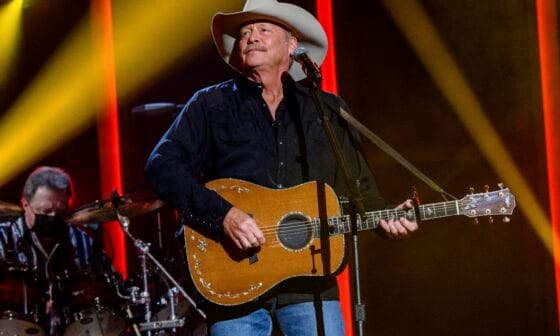
Chris Stapleton singing “Free Bird” doesn’t land like a typical cover. It arrives quietly, almost cautiously, and then settles into the room with a weight that’s impossible to ignore. From the first restrained note, the familiar song sheds its overplayed skin and becomes something personal again, as if it’s being spoken directly rather than performed.
The noise seems to fall away as he sings. Decades of radio repetition disappear, replaced by a sense of intimacy that’s rare for a song this famous. It no longer feels like an anthem shouted at a crowd, but a story shared between people who understand what it means to keep going when the road gets long.
Stapleton doesn’t rush the melody or try to reinvent it for attention. He allows space between the lines, letting silence do some of the work. In that space, the blues roots of the song surface, carrying ache, restraint, and a deep familiarity with longing and freedom.
For listeners who were reminded of “Free Bird’s” power by its recent use in a Budweiser Super Bowl commercial, this performance goes even further. Where the commercial leaned on imagery and nostalgia, Stapleton strips everything down to voice and feeling, trusting the song to stand on its own.
There’s no vocal acrobatics here, no dramatic flourishes meant to impress. Instead, Stapleton sings with control and patience, as if he understands that the song’s strength lies in what it suggests rather than what it declares outright. Every line feels lived-in rather than learned.
His voice doesn’t sound like it belongs only on a stage. It carries the texture of hard miles, early mornings, and roads that stretch longer than planned. It feels pulled from experience rather than technique, shaped by time instead of training alone.
When he finally opens the song up, it doesn’t explode in spectacle. It releases. The emotion unfurls naturally, sending a ripple through listeners who find themselves suddenly tense, suddenly quiet, suddenly aware they’ve been holding their breath.
Physical reactions follow before thoughts can catch up. Goosebumps rise. Chests tighten. Throats catch. The song reaches places that most covers never come close to touching, not because it’s louder or bigger, but because it’s truer.
“Free Bird” is a song many artists should leave untouched. Too often it’s reduced to noise, nostalgia, or empty bravado. Stapleton does something rare by restoring its soul, not through imitation, but through honesty and restraint.
This isn’t a performance that fades once the final note ends. It lingers, carrying grit, pride, and a quiet fire that refuses to be forgotten. In that moment, “Free Bird” isn’t just a classic song again — it sounds like America telling the truth about itself.