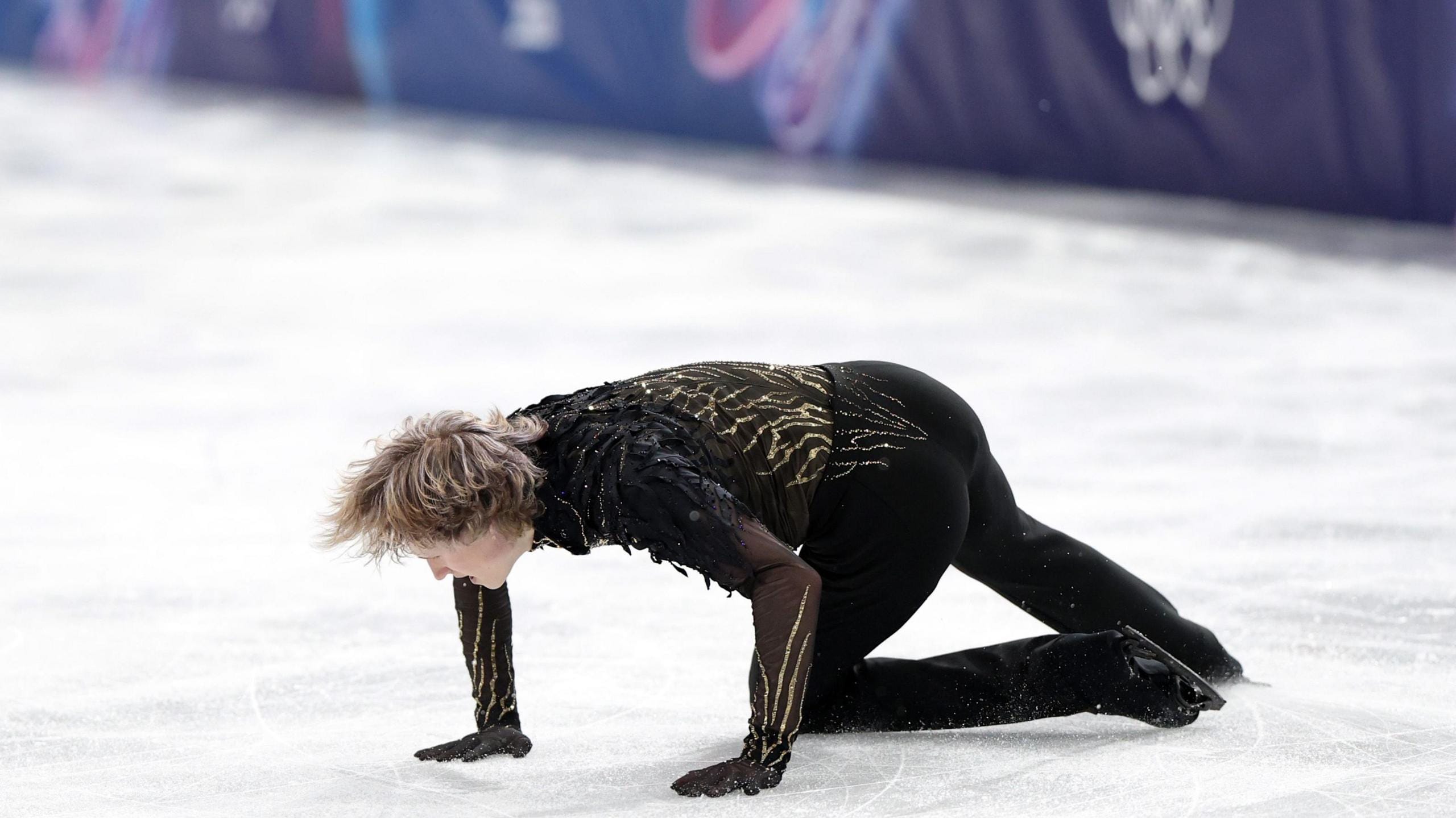
Following Ilia Malinin’s unexpected eighth-place finish at the Olympics, his longtime coach Rafael Arutyunyan stepped forward with a candid and emotional response — placing responsibility on himself rather than his skater.
Arutyunyan stated publicly that Malinin did nothing wrong in his preparation or effort. Instead, he suggested that the coaching team could have done more to protect a 21-year-old athlete from the overwhelming expectations that built around him heading into the Games.
In the weeks prior, Malinin had been widely labeled the favorite. Media narratives focused heavily on his technical arsenal and historic quad jumps, amplifying the pressure surrounding his free skate. According to Arutyunyan, that spotlight intensified into something difficult to manage once the Olympic stage magnified it further.
The coach acknowledged that elite athletes must learn to handle pressure — but also emphasized that support systems play a critical role in shielding them from unnecessary external noise. He described the Olympic environment as emotionally volatile, particularly for young competitors carrying “can’t lose” expectations.
Adding to the weight of the moment were Malinin’s earlier comments about online criticism and the darker side of social media. In past posts, he referenced the emotional toll of negativity and even warned about the risk of an “inevitable crash” when pressure becomes relentless. In hindsight, those words have taken on deeper meaning for many fans.
Arutyunyan did not make excuses for the performance itself. Falls happen in figure skating. But he framed the situation as larger than technical errors — pointing instead to the psychological storm that can surround a rising star at the peak of hype.
His remarks have shifted part of the public conversation away from score sheets and toward athlete well-being. Supporters argue that moments like this highlight the need for stronger mental health safeguards in high-performance sport.
While the result remains a painful chapter in Malinin’s career, his coach’s willingness to shoulder responsibility has resonated widely. It underscores a broader truth about Olympic competition: behind every performance is a young athlete navigating immense expectation under the brightest lights in sport.