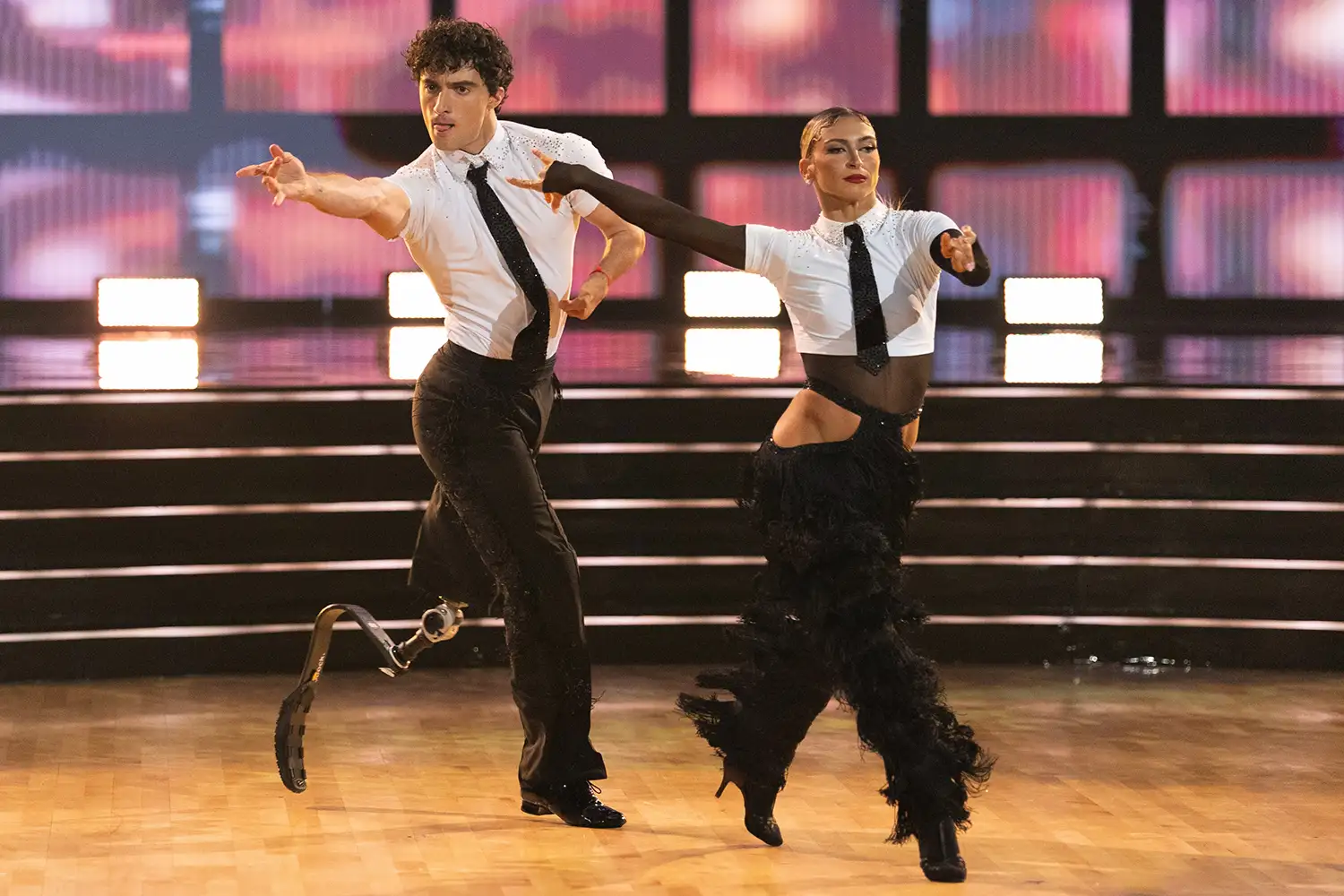
Ezra Frech is already doing something remarkable on “Dancing With the Stars,” but there is another challenge viewers may not immediately notice. The 21-year-old Paralympic champion is deliberately dancing with a prosthetic leg that actually makes him less stable.
Frech is competing on Season 35 alongside professional partner Daniella Karagach. After a strong tango during premiere week, the pair returned for Viral Hits Night with a fast cha-cha to Flo Rida’s “Low,” earning 21 out of 30 and finishing tied near the top of the leaderboard.
Behind the scenes, however, preparing that cha-cha required far more than simply learning the choreography. Frech explained that every dance becomes a new problem for him and Daniella to solve because traditional ballroom technique wasn’t designed around his prosthetic setup.
Frech was born with congenital limb differences and has used a prosthetic leg since early childhood. Long before entering the ballroom, he became one of the world’s leading Para athletes, eventually winning two gold medals at the 2024 Paris Paralympic Games in the 100-meter T63 and high jump T63 events.
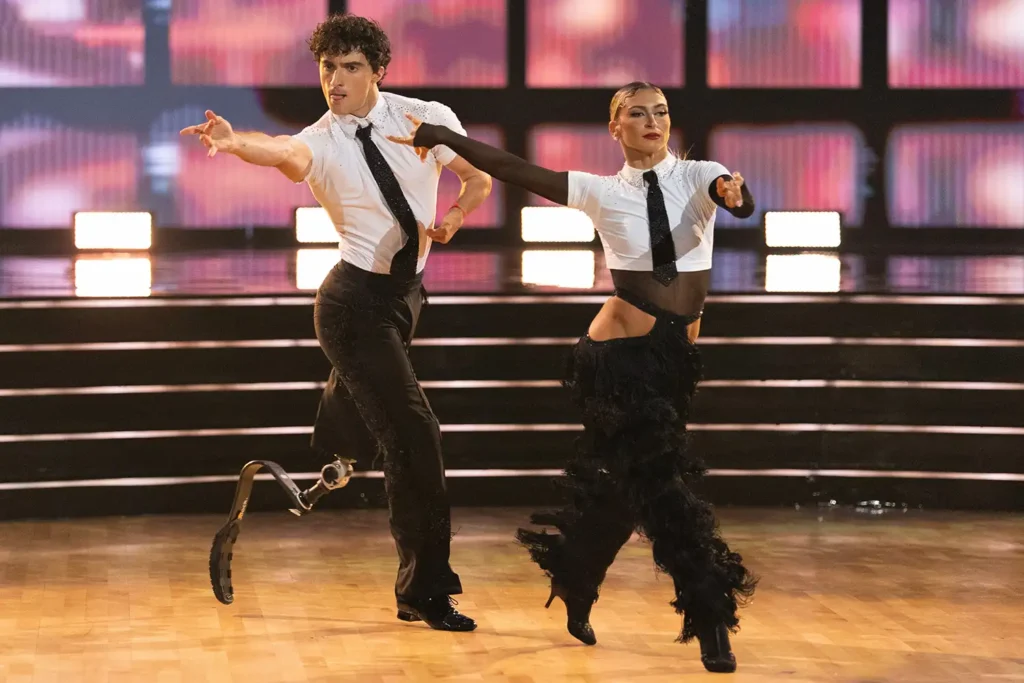
That athletic background explains something unusual about his “DWTS” performances. Instead of dancing with his everyday walking prosthesis, Frech and Karagach have chosen to use his running blade.
The blade was built for sprinting, not ballroom dancing. Frech explained that it is actually taller than his other leg because when he runs at high speed, the blade compresses under force. That compression helps bring his hips into alignment while sprinting.
But dancing creates a completely different situation. The blade isn’t being compressed in the same way it would be during an all-out sprint, meaning Frech can find himself standing with his hips at an angle. He has also described himself as unstable on the prosthetic while dancing.
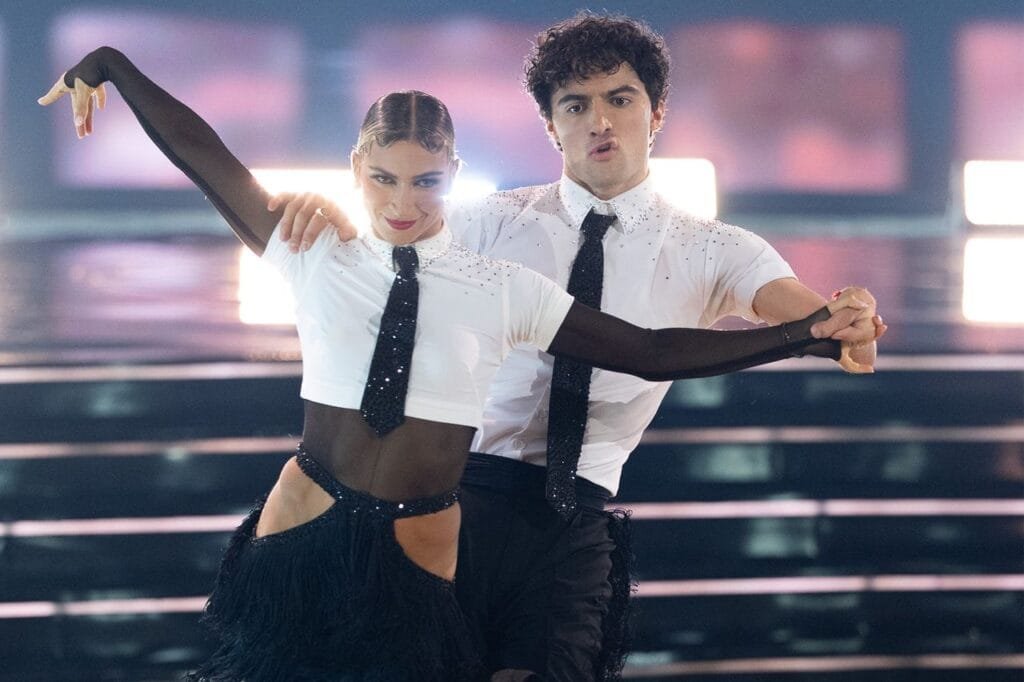
That becomes especially challenging in a dance such as the cha-cha. Hip action and weight transfer are fundamental parts of the technique, and dancers normally depend on having a stable base underneath them. Frech has to create those movements while adapting to a prosthesis that changes the mechanics of his body.
So why not simply switch to his walking leg?
According to Karagach, the running blade provides one major advantage: rebound. When Frech pushes into the floor or creates hip action, the blade can respond with energy and spring back. His walking prosthesis does not provide that same response and can feel much more cumbersome for the movements they are trying to perform.
That means Frech and Karagach are accepting one disadvantage to gain another advantage. The running blade may make stability and hip alignment harder, but its responsiveness gives them movement possibilities that his everyday prosthesis cannot provide. Each week, their job is figuring out how to build the choreography around that tradeoff.
The adjustments are already getting attention from the judges. After the cha-cha, Derek Hough specifically noted Frech’s awareness of his weight transfers and body, while the pair earned their 21-point score.
For Frech, that may be one of the most fascinating parts of his “DWTS” journey. The prosthetic helping him dance was designed to help a Paralympic champion sprint at maximum speed—not perform tangos and cha-chas. Yet alongside Karagach, he is learning how to turn that running blade into a ballroom tool, one routine at a time.