Just over a year after losing both of his parents in a devastating plane collision near Washington, D.C., Maxim Naumov stepped onto Olympic ice for the first time. For the 24-year-old Team USA skater, the moment was more than a career milestone — it was a deeply personal tribute to the two people who built the foundation of his life on and off the rink.
In January 2025, the skating world was shaken by the loss of Vadim Naumov and Evgenia Shishkova, former world champion pair skaters and Maxim’s lifelong coaches. Beyond their accolades, they were his mentors, his teachers, and his constant presence at every major competition. Their sudden absence left a silence that no applause could fill.
As Maxim waited backstage before his Olympic skate, the weight of that loss was impossible to ignore. The Games are often described as the pinnacle of athletic achievement, but for him, this debut carried a quiet ache. The two faces he used to search for in the crowd — the steady nod from his father, the reassuring smile from his mother — would not be there.
When his name was announced and he glided onto the ice, the arena seemed to hold its breath. There was tension, but also reverence. Every edge he carved into the rink felt deliberate, every jump measured. It wasn’t just about executing a program — it was about honoring a journey that began long before this Olympic stage.
As he moved through his routine, viewers couldn’t help but notice the echoes of his parents’ influence. The posture, the discipline, the attention to musical phrasing — all bore the imprint of years spent under their guidance. It was as if their presence had shifted from rinkside coaching to something internal, stitched into his muscle memory.
Social media quickly filled with resurfaced clips of Maxim skating beside his father in earlier years. Fans shared videos of young Maxim practicing under Vadim’s careful eye, their movements synchronized in a way that spoke of trust and shared understanding. Watching him now, alone but composed, gave those old videos new meaning.
Technically, the performance was strong and steady. Clean landings, controlled spins, and confident transitions signaled an athlete prepared for the Olympic spotlight. But what resonated most was not the technical score — it was the quiet resilience behind every movement.
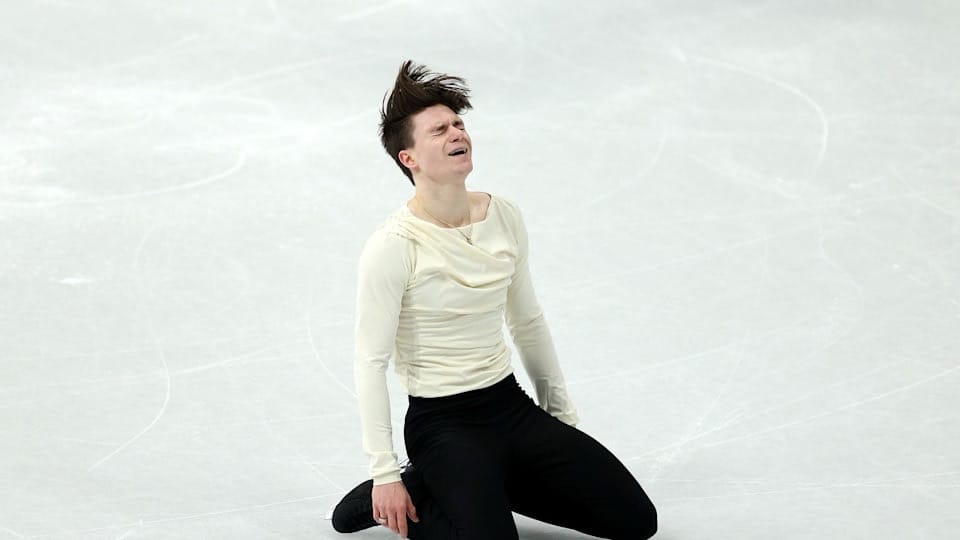
When the music faded and Maxim struck his final pose, there was a brief moment where competition seemed secondary. He lifted his gaze toward the stands, and for a split second, emotion flickered across his face. It wasn’t dramatic or theatrical. It was real — the look of someone who had carried grief onto the ice and transformed it into purpose.
For many watching, this skate felt larger than sport. It became a reminder that behind every Olympic performance is a human story, often marked by unseen struggles. In Maxim’s case, that story included loss, perseverance, and the determination to continue forward even when the people who shaped his dream were no longer there to witness it.
Maxim Naumov’s Olympic debut will be remembered not only for its athletic achievement but for its emotional depth. It was a performance that honored legacy without words, proving that even in the face of profound tragedy, love and guidance can endure — carried forward in every glide, every spin, and every courageous step onto the ice