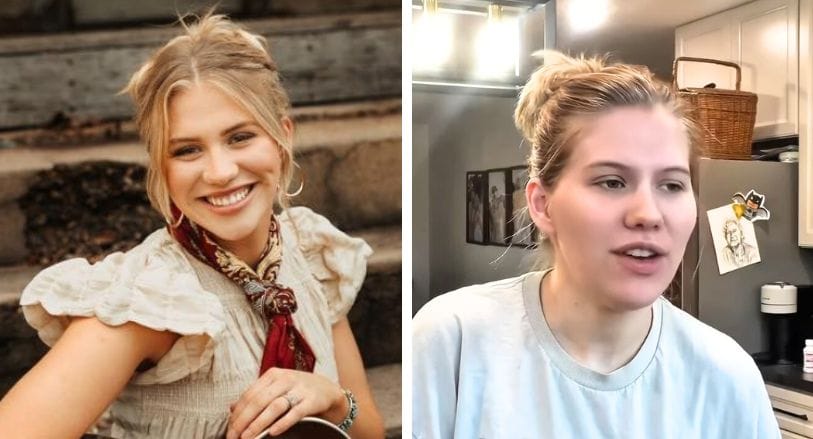
Hannah Harper didn’t wait for a stage, a spotlight, or a perfect recording setup when she shared her original song online. There were no polished visuals or studio acoustics. Instead, she sang while life moved around her — dishes clinking, kids calling out, and the quiet hum of a normal day unfolding in real time.
That setting mattered. The song wasn’t competing with perfection; it was living inside reality. Harper’s voice stayed steady even as motherhood pulled at her attention, and that contrast made the lyrics feel more honest than rehearsed performances ever could.
Listeners immediately noticed how natural it felt. The song didn’t sound like something written to impress strangers. It sounded like something written to survive the day. Lines about routine, exhaustion, and love landed gently, giving ordinary moments the space to feel meaningful.
Many fans began drawing comparisons to Dolly Parton, not because Harper was imitating her sound, but because she shared the same gift for turning everyday life into story. Like Dolly’s early songs, Harper’s lyrics didn’t romanticize hardship — they simply told the truth and trusted listeners to recognize themselves in it.
What stood out most was the lack of performance instinct. Harper wasn’t selling a moment. She was letting one exist. That restraint gave the song a quiet strength, the kind that grows rather than demands attention.
As the video spread, comments filled with gratitude instead of hype. Mothers wrote that they felt seen. Others said the song made them pause mid-scroll because it sounded like their own kitchen, their own house, their own life.
This authenticity helped explain why her later appearance on American Idol felt so grounded. Harper didn’t arrive as someone discovering her voice — she arrived as someone who had already been using it where it mattered most.
The same storytelling instinct that carried her through daily routines translated effortlessly to a bigger audience. Viewers recognized that her confidence didn’t come from ambition, but from lived experience.
In a world full of carefully curated performances, Harper’s song felt almost disruptive in its normalcy. It reminded people that music doesn’t always begin in studios or stages — sometimes it starts between chores, interruptions, and unfinished to-do lists.
That’s why the song lingered. Not because it demanded attention, but because it earned it. Hannah Harper didn’t chase a moment — she documented one, and in doing so, gave thousands of listeners permission to see beauty in their own ordinary days.