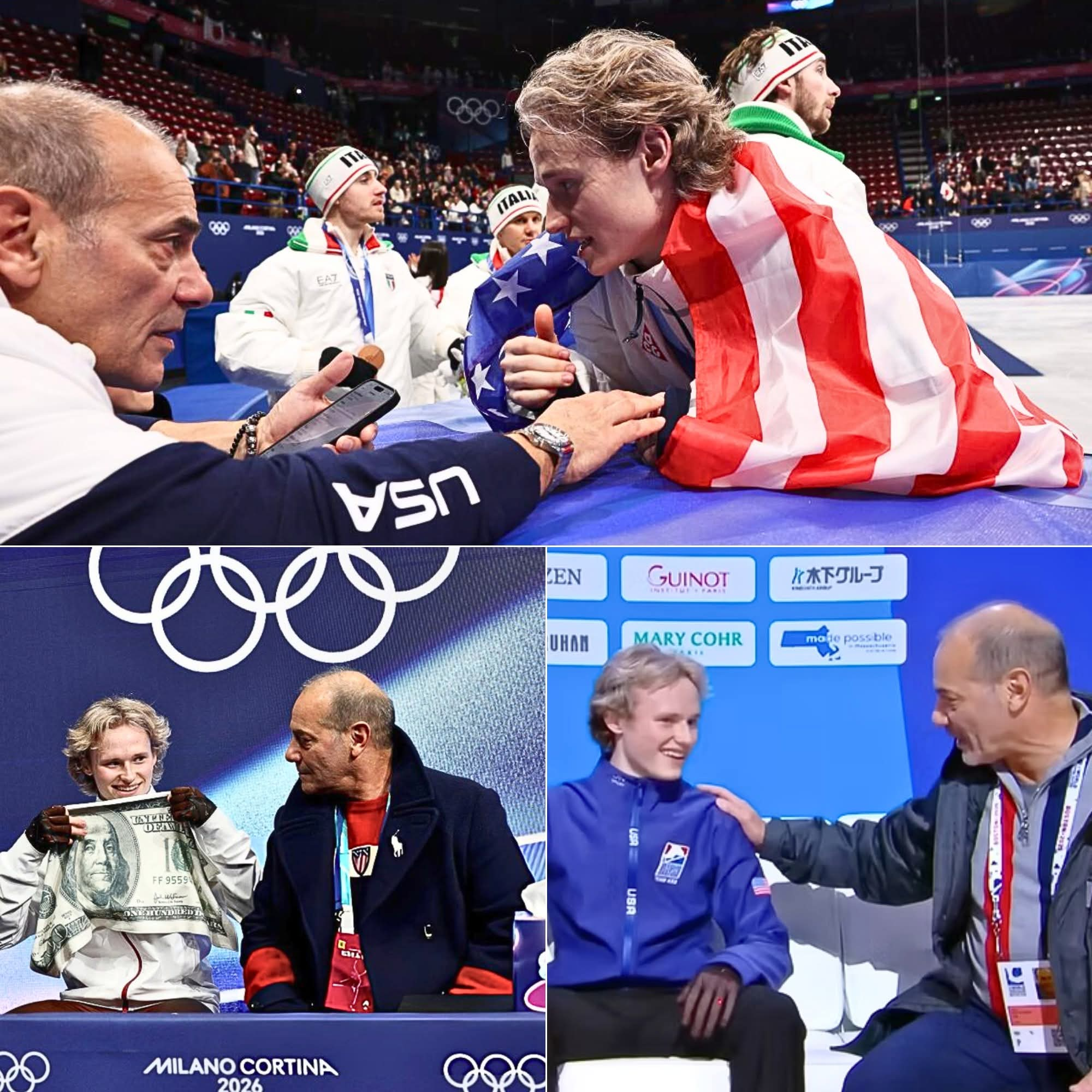
In the emotional aftermath of Ilia Malinin’s difficult free skate at the 2026 Winter Olympics, his coach Rafael Arutyunyan stepped forward with a heartfelt message of support. As questions swirled and reactions poured in, Arutyunyan’s voice trembled while addressing the media, offering a glimpse into the weight of the moment.
“He gave everything he had on the ice tonight,” Arutyunyan said, clearly moved. The statement was not one of excuses, but of defense — a reminder that behind every performance is an athlete who has pushed through years of sacrifice, training, and pressure to reach that stage.
Malinin entered the Games carrying enormous expectations. Known globally as the “Quad God” for his groundbreaking technical achievements, he had become a symbol of American medal hopes. When his program unraveled, the disappointment was visible — not just in the scores, but in his reaction afterward.
Arutyunyan emphasized that the public sees only a few minutes on the ice, not the physical and emotional toll that precedes it. “Please recognize what Ilia has been through,” he urged. His words suggested that the journey leading into the Olympics had been more complex than many realized.
Without detailing specifics, the veteran coach made it clear that Malinin’s effort could not be measured solely by the final placement. Competing at the Olympic level requires resilience beyond technical skill — mental endurance, focus under pressure, and the ability to perform despite unseen challenges.
“I’m asking everyone to show sympathy to him and our team right now,” Arutyunyan added. The plea resonated with fans who had watched Malinin grow from a promising junior skater into one of the sport’s most daring innovators. For many, the coach’s remarks shifted the tone of the conversation from criticism to compassion.
The Olympics can elevate athletes to legendary status, but they can also expose vulnerability in the most public way possible. Arutyunyan’s defense underscored the human side of elite competition — the reality that even the most technically gifted skaters are not immune to difficult nights.
Support quickly followed. Social media, once buzzing with analysis and debate, began filling with messages of encouragement. Many echoed the coach’s call for empathy, reminding others that a single performance does not define a career.
Malinin himself has taken responsibility for the skate, but his coach’s words added context to the broader picture. They highlighted the partnership between athlete and mentor — one built not only on medals and milestones, but on trust and unwavering support during setbacks.
As the skating world looks ahead, Arutyunyan’s emotional defense may ultimately become part of the story of resilience. Because beyond the scores and headlines, the message was simple: Ilia Malinin left everything on the ice — and sometimes, that is what truly matters.