The arena was electric when Ilia Malinin stepped onto the Olympic ice, carrying the weight of expectations few athletes ever experience. Known worldwide as the “Quad God,” the American skating sensation had entered the competition as a favorite for gold, a prodigy whose technical brilliance had redefined what was thought possible in men’s figure skating. Every eye in the building — and millions watching from home — were fixed on him from the very first movement.
For most of his program, Malinin delivered exactly what fans expected. His jumps were sharp, his speed confident, and his presence commanding. It felt like the beginning of a crowning moment, the culmination of years of relentless training, sacrifice, and pressure. But in figure skating, perfection can collapse in an instant.
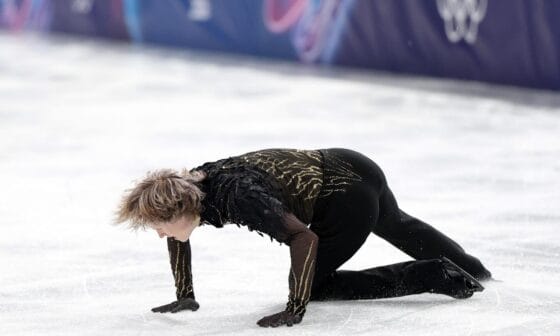
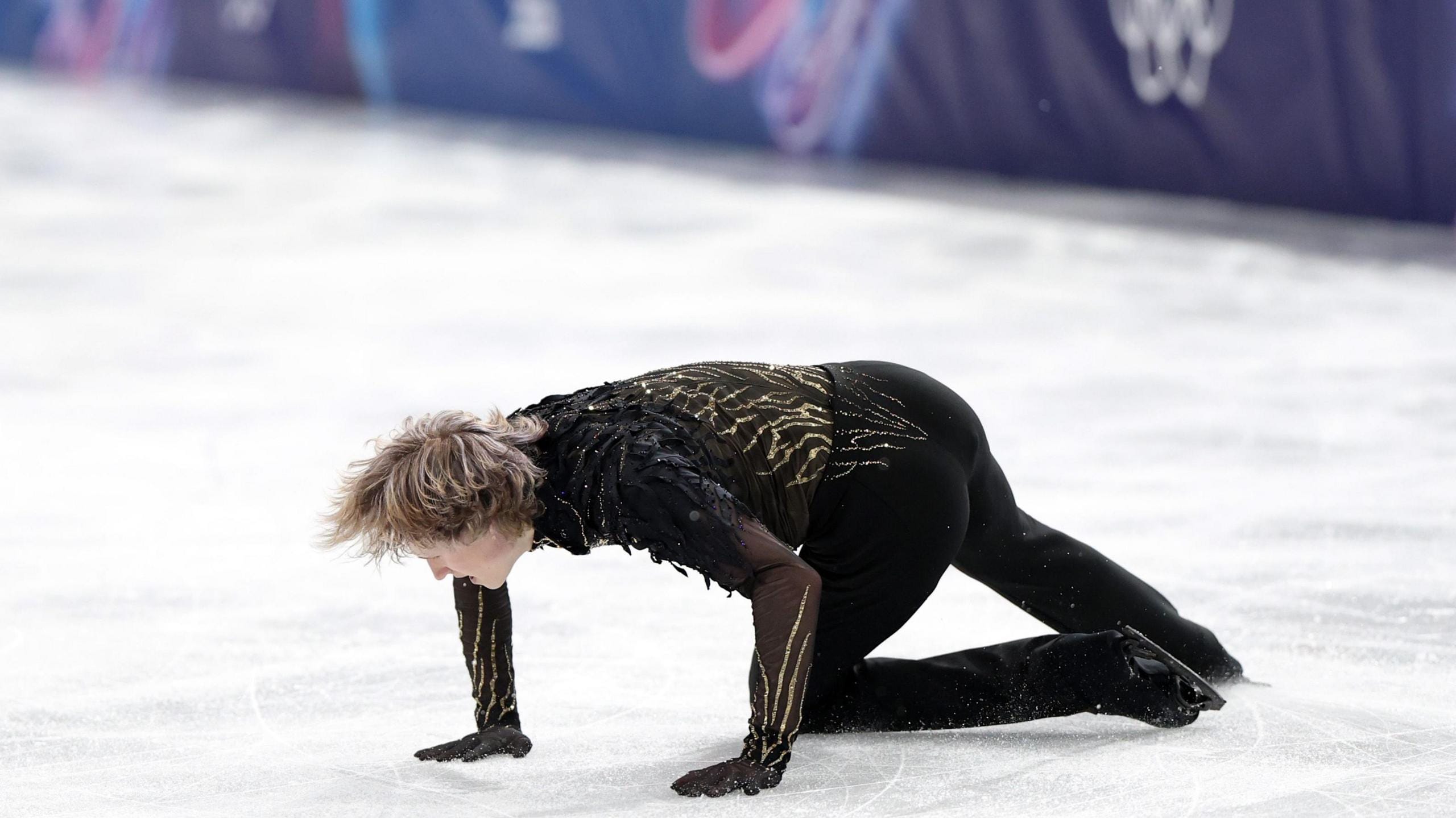
Then came the moment that stunned the arena. On a critical jump, Malinin lost his edge mid-air, landing awkwardly before crashing hard onto the ice. The gasp from the crowd was immediate and collective, a sound of disbelief that echoed across the venue. Seconds later, a second fall followed, confirming what many feared — the gold medal dream was slipping away.
As he rose from the ice, the shift in his body language was unmistakable. The confidence that defined his entrance had been replaced by a quiet heaviness. He continued skating, finishing the routine with determination, but the energy in the arena had changed from anticipation to heartbreak. Fans watched in silence, understanding that a single sequence had unraveled years of preparation.
Backstage, the emotional toll became fully visible. Cameras captured Malinin sitting alone, shoulders hunched, staring down as he tried to steady his breathing. He appeared to replay the moment in his mind, processing the reality that the Olympic podium was no longer within reach.
When he finally spoke, his words reflected both pain and perspective. “I trained day and night for this,” he admitted, his voice steady but visibly strained. “And it hurts. It really hurts. But I know this moment will make me stronger.” The statement revealed not just disappointment, but the weight of expectations he had carried leading into the competition.
Malinin also acknowledged the immense pressure surrounding his Olympic debut. As a young athlete labeled a generational talent, he had been expected not just to compete, but to dominate. That pressure, he revealed, was something he had learned to manage over years — but on the biggest stage in sport, the stakes felt different.
He described the fall not simply as a technical mistake, but as a deeply human moment. In elite sport, he explained, athletes train to push beyond limits, often attempting the most difficult elements at the highest possible risk. Sometimes, that risk delivers history. Other times, it delivers heartbreak.
Despite the loss, Malinin’s reaction afterward reflected resilience rather than defeat. He congratulated fellow competitors, spoke openly about learning from failure, and emphasized that the Olympic experience itself remained meaningful. For him, the Games were never only about medals — they were about growth, challenge, and representing something bigger than himself.
In the end, the image that lingered was not the fall, but the quiet determination in his words. As he left the arena, Malinin made one thing clear: the dream was not over. The Olympic collapse may have shattered a moment, but it also marked the beginning of a new chapter — one defined not by perfection, but by resilience.