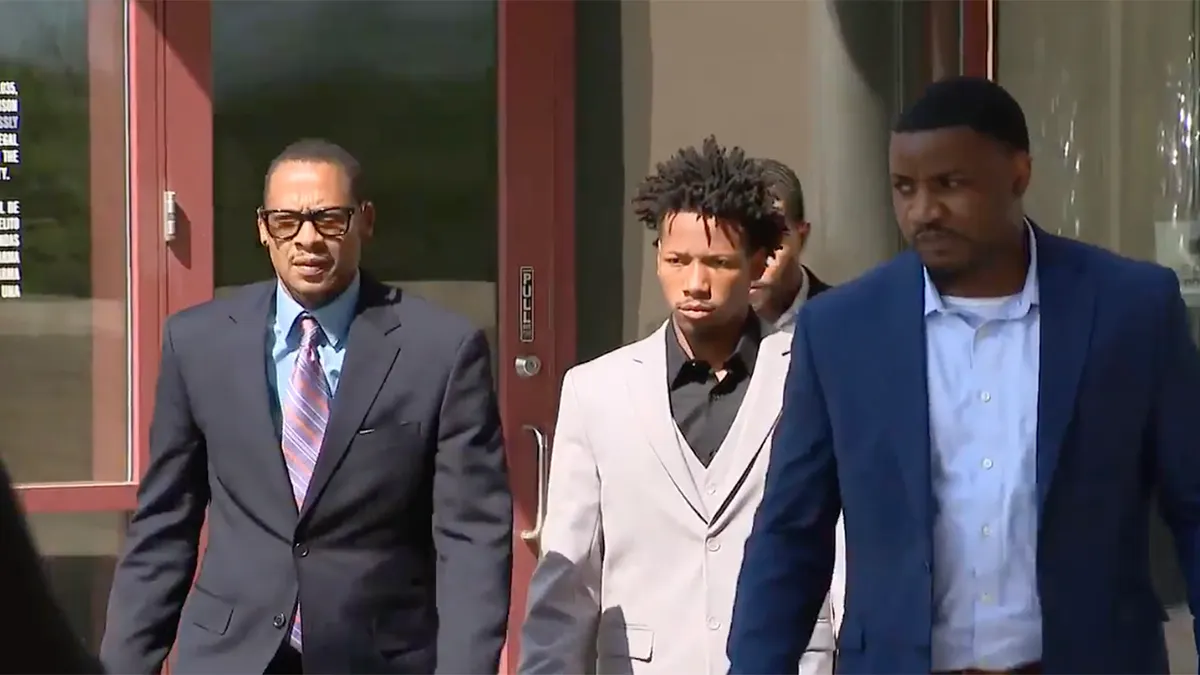
Judge John Roach Jr. is speaking out after one of the most closely watched murder trials in Texas ended with Karmelo Anthony being sentenced to 35 years in prison. Days after the verdict, the Collin County judge addressed two questions that had been spreading across social media: why cameras were banned from the courtroom, and whether he had any personal connection to Austin Metcalf’s family.
Anthony, 19, was convicted of first-degree murder in the fatal stabbing of 17-year-old Austin Metcalf during a high school track meet in Frisco, Texas. The jury rejected Anthony’s self-defense claim and later handed down a 35-year prison sentence.
The case had already drawn national attention before the trial began, but the decision to block cameras and livestreaming from the courtroom made the public debate even louder. Many people online argued that video coverage would have helped the public better understand what happened during the proceedings.
Roach, however, defended the decision in an interview with WFAA, saying it was an “easy decision.” He said his main goal in every case is to make sure both the defendant and the prosecution receive a fair trial.
The judge said he knew the ruling made people angry, but added that his role was not to make the public happy. He explained that he was trying to balance the media’s right to know with the need to limit outside influence on the jury and the courtroom process.
Roach also pushed back against the idea that the courtroom was hidden from public view. He said reporters and members of the public still had in-person access and could follow what was happening, even without cameras inside.
The camera ban became even more controversial after fake and misleading images began circulating online. WFAA reported that Roach spoke out about AI-generated images that falsely appeared to show him with the Metcalf family, saying those moments never happened.
That led directly to the second major question surrounding the judge: whether he had a personal relationship with Austin Metcalf’s family. Roach denied those claims and said he would not have known Austin’s father before the trial if he had walked up and greeted him.
The denial was important because rumors about possible connections had been spreading online as people debated whether the trial was fair. Roach made it clear that those claims did not match reality and that his rulings were based on the law, not personal relationships.
The judge also defended the jury’s verdict. He said the jurors were selected according to legal procedures, listened to the facts presented in court, and reached their decision based on the evidence.
That response did not end the debate. Some critics have continued to question the jury makeup because no Black jurors were seated, while others argue the jury followed the evidence and rejected a defense that did not meet the legal standard.
Roach also made another comment that quickly became one of the most discussed parts of the interview. He described Anthony as “a nice young man” who committed a crime and said Anthony now understands the consequences of what happened more than ever before.
That remark divided people online. Some saw it as a judge recognizing that someone can seem respectful in court while still being held responsible for a serious crime. Others felt the phrase sounded unexpected after a case that ended with another teenager dead and a family grieving.
Anthony has since filed a notice of appeal, and reports say he is asking for court-appointed counsel after claiming he cannot afford an attorney. That appeal is expected to keep the case in public view for months or even years.
For now, Roach says he stands by his decisions, including the camera ban, the handling of the trial, and the jury’s verdict. But his interview has only added another layer to the controversy, with the internet still split over whether his answers brought clarity or raised even more questions.