Carrying the weight of a name like Lennon is both an honor and a burden. For Julian Lennon—the son of Beatles icon John Lennon and Cynthia Lennon—the expectation to live up to his father’s extraordinary legacy has always loomed large. While he has carved out his own career in music, art, and philanthropy, there has long been one song he refused to touch: “Imagine.”
For decades, Julian avoided performing his father’s most timeless anthem, aware of the inevitable comparisons and criticisms such a performance would invite. He had always maintained that it would take an extraordinary circumstance—“something as serious as the end of the world”—to make him sing the song.
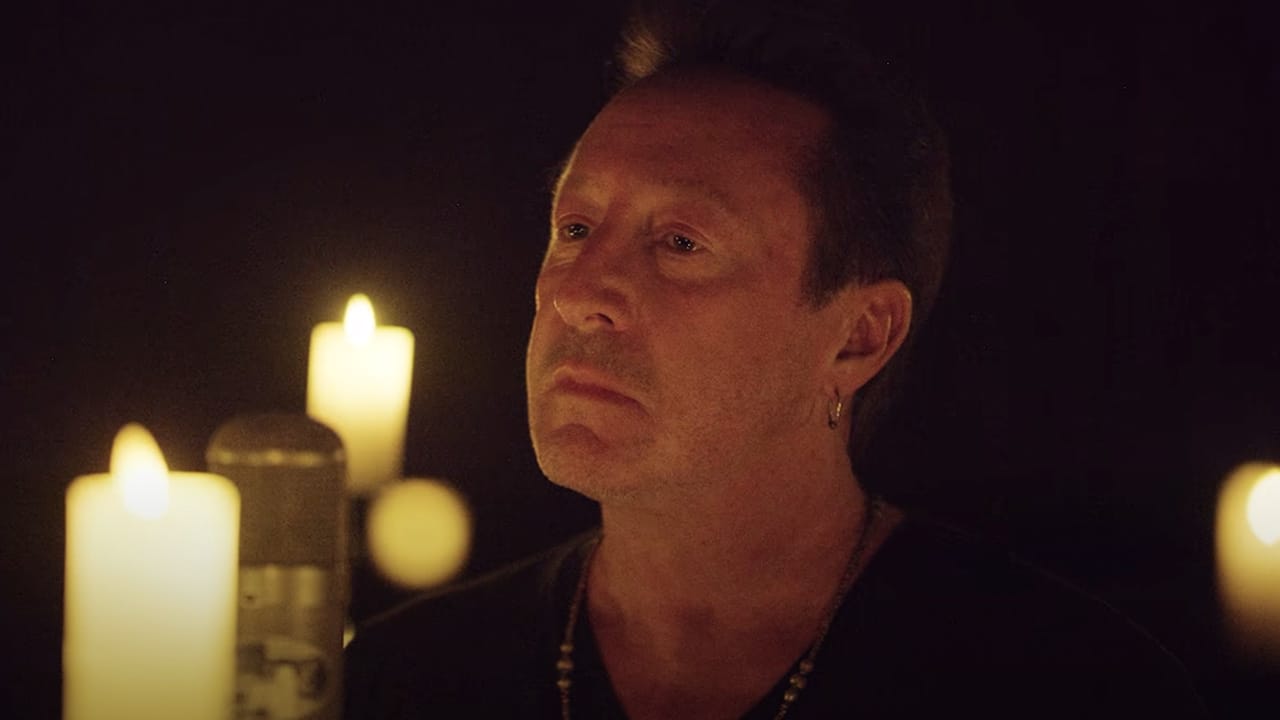
That moment came in 2022, amid the devastation of Russia’s invasion of Ukraine. As the world watched a humanitarian crisis unfold, Julian was moved to break his silence. In a candlelit room, with only acoustic guitar accompaniment by Nuno Bettencourt, he delivered a hauntingly intimate version of “Imagine” for Global Citizen’s Stand Up For Ukraine campaign. His stripped-down performance was not just a tribute to his father, but a plea for hope and unity during one of the darkest moments in recent history.
Julian’s decision carried profound personal weight. His relationship with John Lennon was complicated and often painful. Following his parents’ divorce when he was just five years old—driven by John’s relationship with Yoko Ono—Julian’s bond with his father grew distant. Years of estrangement left scars, yet Julian still found himself drawn to music, the very craft that defined his father’s life.
His own musical journey began at eleven, when he played drums on John’s 1974 album Walls and Bridges, appearing on the track “Ya Ya.” A decade later, he launched his career with the critically acclaimed 1984 debut album Valotte, which earned him a Grammy nomination and immediate success. While his second record, The Secret Value of Daydreaming, received mixed reviews, it still produced hits such as “Stick Around” and reached the Billboard Top 40.
Though he continued to release albums—including Photograph Smile and Everything Changes—Julian stepped away from the spotlight in the 1990s to focus on philanthropy. A deeply personal encounter with his father’s memory inspired this path: John once told him that if he could send a sign after death, it would be through a white feather. Years later, when Julian was given a white feather by an Aboriginal tribal elder, he felt called to honor that promise. This moment led him to create a documentary on Australia’s Mirning people and, ultimately, to establish the White Feather Foundation in 2007—an organization dedicated to humanitarian and environmental causes.
Beyond music and charity, Julian has also embraced photography, showcasing his work in galleries worldwide. Despite his success, he has remained unmarried and without children, openly acknowledging that his difficult relationship with his father shaped his views on family.
Today, Julian Lennon stands as more than just John Lennon’s son. Through his music, art, and philanthropy, he has created a legacy that is uniquely his own—one that honors the past while shining light into the future. And with his first-ever performance of “Imagine,” he bridged a lifetime of hesitation with a single act of courage, offering the world not just a song, but a message of peace when it was needed most.