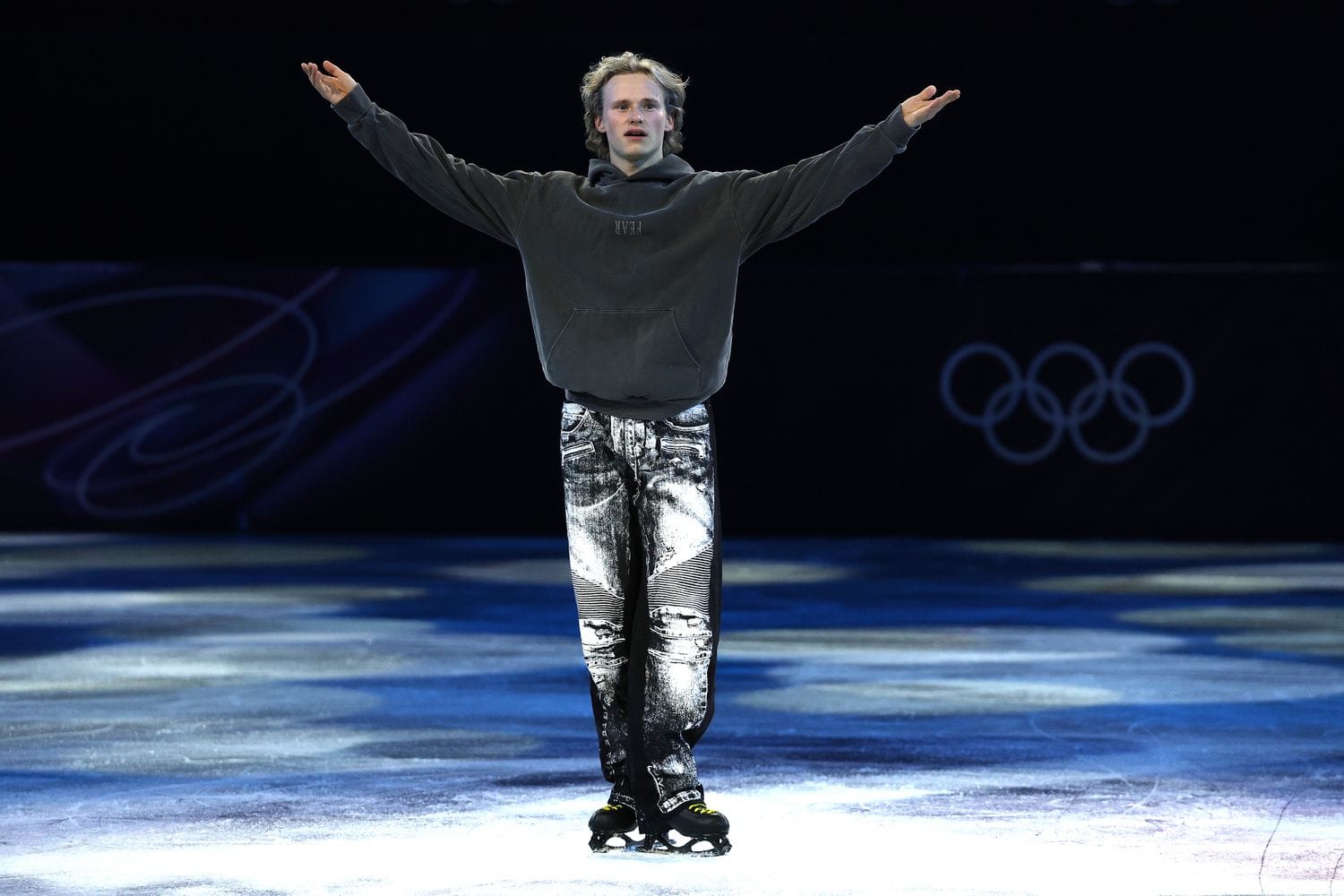
When Ilia Malinin stepped onto the ice wearing a simple gray hoodie for his final gala performance, the choice immediately caught attention. In a sport known for glittering costumes, elaborate designs, and visual spectacle, the understated outfit felt almost rebellious. Paired with his routine to “Fear” by NF, the look signaled that this performance would carry a deeper emotional purpose rather than focus on tradition or aesthetics.
At first glance, the hoodie appeared intentionally ordinary — something one might wear during training rather than on an Olympic stage. That simplicity became its strongest statement. It stripped away the illusion of perfection often associated with elite figure skaters and presented Malinin not as a polished icon, but as a young person confronting real pressure, doubts, and expectations.
The song choice intensified this message. NF’s “Fear” explores themes of inner battles, self-criticism, and the mental weight of public scrutiny. As Malinin skated through the routine, the hoodie reinforced the idea that he was stepping into a raw, unfiltered version of himself. It felt less like a performance and more like an honest confession delivered through movement.
Many observers interpreted the hoodie as symbolic armor. Instead of wearing something designed to impress judges or dazzle viewers, he wore something protective — a visual representation of shielding oneself from constant criticism. In an era where athletes are judged not only on their performance but also through relentless social media commentary, that symbolism resonated strongly.
The timing of the performance added another layer of meaning. Following intense expectations and a widely discussed Olympic disappointment, Malinin had faced waves of public analysis. The hoodie seemed to represent stepping away from the spotlight’s pressure and reclaiming control over his identity beyond results and rankings.
Throughout the routine, his choreography reinforced this interpretation. He often reached toward the hood or adjusted his posture in ways that mirrored vulnerability, almost as if he were physically carrying the weight of fear and scrutiny. These subtle gestures transformed the hoodie from a simple garment into a storytelling device woven into every movement.
Fans quickly connected the look to broader conversations about athlete mental health. The performance highlighted the unseen emotional cost of fame, reminding audiences that behind historic achievements and technical brilliance are individuals navigating stress, expectations, and personal growth. The hoodie became a relatable symbol — something ordinary people wear when seeking comfort during difficult moments.
Critics and commentators also noted how the outfit contrasted with Malinin’s reputation as the “Quad God.” Known for pushing technical limits, he chose this moment to emphasize emotional depth instead of athletic dominance. It suggested a shift in narrative, showing that his journey is not solely about breaking records but also about evolving as an artist and person.
By the end of the routine, the gray hoodie had transformed from a simple piece of clothing into a powerful visual metaphor. It represented fear acknowledged rather than hidden, resilience quietly asserted, and a refusal to conform to expectations of constant perfection. The crowd’s emotional reaction reflected how deeply that message connected.
Ultimately, Malinin’s choice demonstrated that sometimes the most impactful statements are the simplest ones. In stepping onto the ice dressed in something so ordinary, he delivered an extraordinary reminder: true strength lies not just in conquering challenges, but in openly facing the fears that come with them.