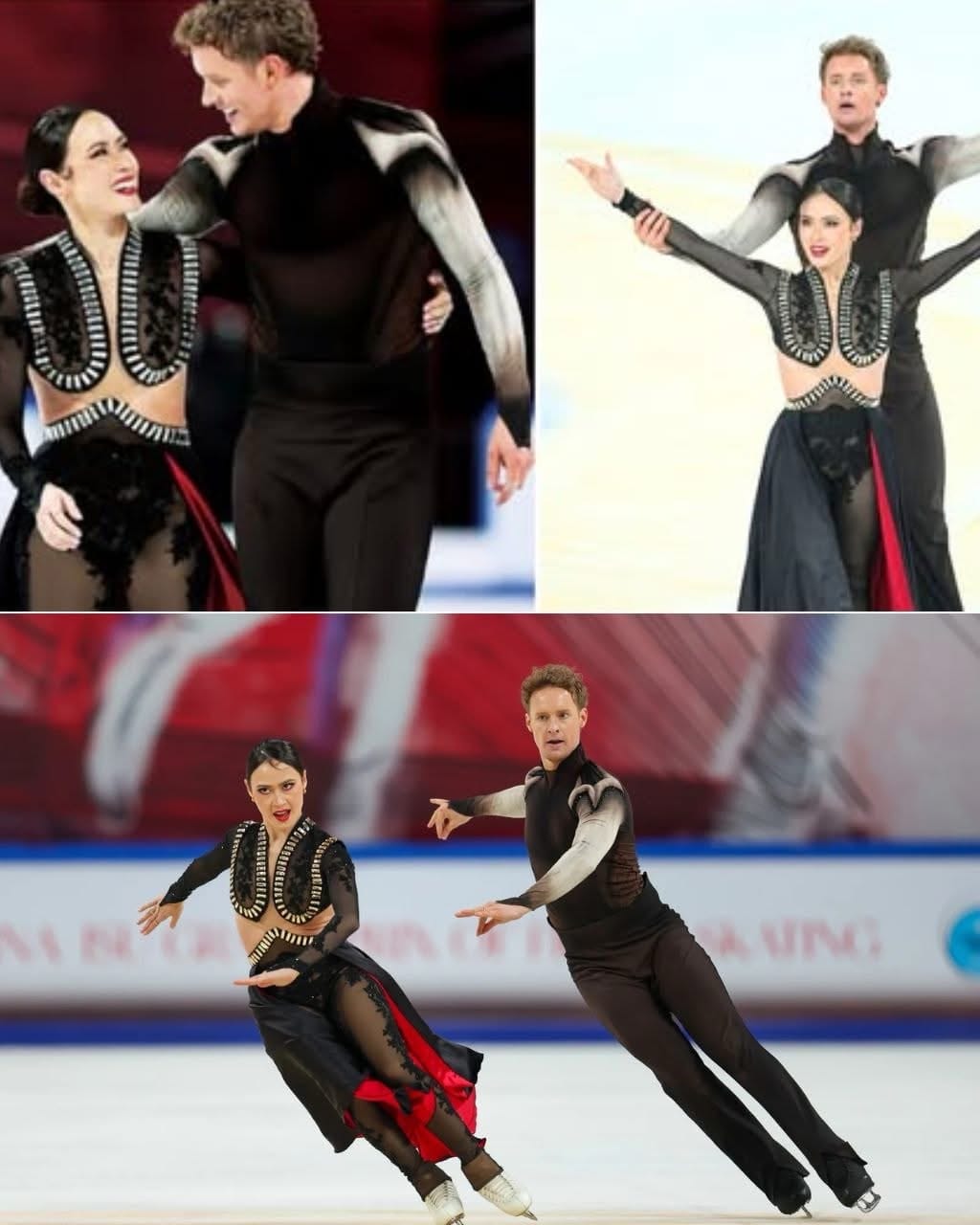
Madison Chock and Evan Bates skated into Milan with the confidence of veterans and delivered a near-flawless “Paint It Black” free dance that ignited the arena at the 2026 Winter Olympics. Sharp edges, commanding presence, and seamless lifts made it feel like their defining Olympic moment. Yet when the final scores appeared, gold slipped away by less than a single point.
What followed stunned the skating world.
Protocols revealed a dramatic seven-point scoring gap from one French judge compared to others on the panel. In a discipline where margins are razor-thin, that discrepancy immediately raised eyebrows. Within minutes, social media erupted with accusations of favoritism and calls for an official protest.
Fans pointed to what they described as a visibly stronger, more electric American performance scored lower than a routine that appeared to contain minor stumbles. Commentators dissected every level call and program component mark, searching for justification. The phrase “judging controversy” quickly dominated headlines.
Under Olympic rules, however, not every controversial score qualifies for appeal. Federations may challenge clear technical errors or calculation mistakes — but subjective program component scores, even when widely debated, are largely protected from protest unless there is evidence of rule violation.
That’s where Team USA’s decision becomes pivotal.
Despite public outrage, U.S. Figure Skating chose not to file a formal protest. On the surface, it appeared surprising — even passive. But insiders suggest the move may reflect a calculated understanding of the sport’s power structure.
Appeals without clear procedural grounds are rarely successful and can strain relationships within the International Skating Union. By avoiding a symbolic protest likely to be dismissed, Team USA may be positioning itself for longer-term influence — focusing instead on governance discussions, judging transparency reforms, and political capital within the sport.
Figure skating has long balanced artistry, athleticism, and subjectivity. That gray area creates space for disagreement — and for federations to decide carefully when to fight publicly and when to work quietly behind the scenes.
For Chock and Bates, the result remains bittersweet. After four Olympic cycles together, Milan may have been their strongest performance. Yet their response — composed, professional, and forward-looking — mirrors the federation’s measured approach.
The controversy has not faded. If anything, it has reignited global debate about scoring transparency and accountability in ice dance. Whether this moment leads to structural change remains to be seen.
But one thing is certain: the decision not to protest was not made lightly. In a sport where influence often extends beyond the ice, Team USA’s silence may speak louder than a formal appeal ever could.