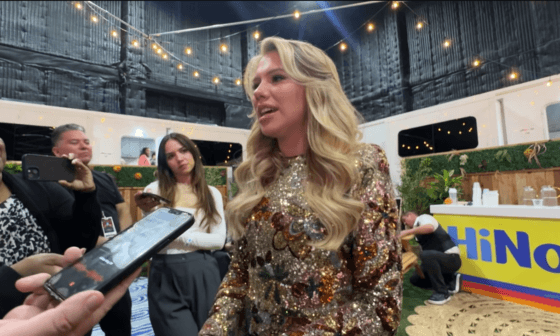
The latest episode of American Idol didn’t just spark conversation—it ignited a full-blown debate, and at the center of it all is Keyla Richardson. What began as a simple family moment quickly turned into one of the most controversial discussions of the season.
It started with something small.
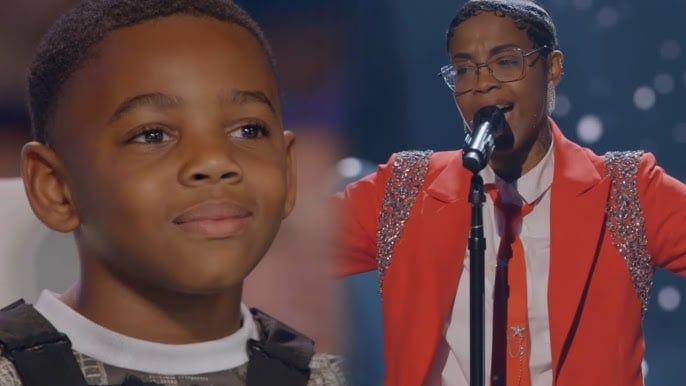
During the Top 11 night, viewers noticed the cameras repeatedly cutting to Keyla’s son in the audience. At first, it felt natural—just another emotional reaction shot, something the show has always done to highlight the human side of the competition.
But then people started counting.
Fans pointed out that her son appeared on screen multiple times—more than expected, and in some cases, more than eliminated contestants like Julián and Jake were shown during the same episode. That’s when the tone shifted.
And the rumor began.
Accusations spread quickly across social media, with some viewers claiming that the moment felt “staged,” suggesting that the focus on her child was being used to create an emotional advantage. The phrase “using her son for attention” started appearing again and again.
That’s when the divide became clear.
On one side, critics argued that the repeated camera cuts weren’t accidental. They believed it was a deliberate choice to shape a narrative, to influence how audiences felt, and ultimately, how they voted. For them, it raised questions about fairness.
But the other side pushed back just as strongly.
Supporters defended Keyla, saying the moment was completely genuine. They argued that she didn’t control the cameras, didn’t script the reactions, and was simply sharing a real-life experience with her family in a high-pressure environment. For them, the criticism felt misplaced.
Because at the center of it all… was a child.
That’s what made the situation more sensitive.
What some saw as a production choice, others saw as an attack on a personal moment. The debate wasn’t just about screen time anymore—it was about intention, perception, and how reality television presents emotion.
And through all of it, Keyla kept performing.
Despite the noise, despite the backlash, she advanced to the next round. Her voice, her presence, and her performance still carried her forward, proving that whatever the conversation was online, it didn’t completely overshadow what she brought to the stage.
That contrast is what’s making this moment so complex.
Because it raises a bigger question—how much of what we see is real, and how much is shaped by the way it’s presented? And when emotions are involved, does that line become even harder to define?
Fans are still debating.
Some believe it was a natural, heartfelt moment amplified by the show. Others think it crossed into something more strategic, even if not directly controlled by the contestant herself. There’s no clear answer, and that’s why the discussion keeps growing.
But one thing is certain.
This wasn’t just about a performance.
It became a conversation about storytelling, perception, and the power of a single moment on screen.
So is it genuine emotion that moved the audience…
Or a moment that became bigger than it was meant to be?
That’s the question fans are still trying to answer.