A Texas jury has reached a verdict in the high-profile case involving Karmelo Anthony, now 19, who was accused in the fatal stabbing of 17-year-old Austin Metcalf during a high school athletics event in Frisco. The case had been followed closely since April 2025 and became the center of national discussion about school safety, self-defense, and responsibility.
The incident happened during a track and field meet at Kuykendall Stadium, where students had gathered under tents as bad weather moved through the area. What began as a dispute near a team tent escalated into a confrontation that ended with Austin Metcalf being stabbed once in the chest.
During the trial, prosecutors argued that Anthony’s actions were not justified and that he had choices before the confrontation turned deadly. They told jurors the case was about accountability and said the stabbing should be viewed as murder, not self-defense.
The defense presented a different version of events, arguing that Anthony acted out of fear during a chaotic moment. His attorneys claimed he believed he was in danger and asked jurors to consider whether the confrontation unfolded too quickly for him to think clearly.
Witness testimony played a major role in the case because surveillance footage did not capture the actual stabbing. Students who were present described the moments before the incident, including repeated requests for Anthony to leave the team tent area and the tension that followed.
After hearing several days of testimony, the jury rejected the self-defense argument and found Anthony guilty of murder. Reports said jurors deliberated for only a few hours before returning the verdict, bringing a major phase of the trial to an end.
The case then moved into the punishment phase, where the jury had to decide how long Anthony would spend in prison. Under Texas law, the sentencing range for the conviction allowed for five to 99 years, or life in prison.
Anthony’s defense also asked jurors to consider a “sudden passion” argument, which could have reduced the punishment range if accepted. The jury rejected that argument and sentenced Anthony to 35 years in prison.
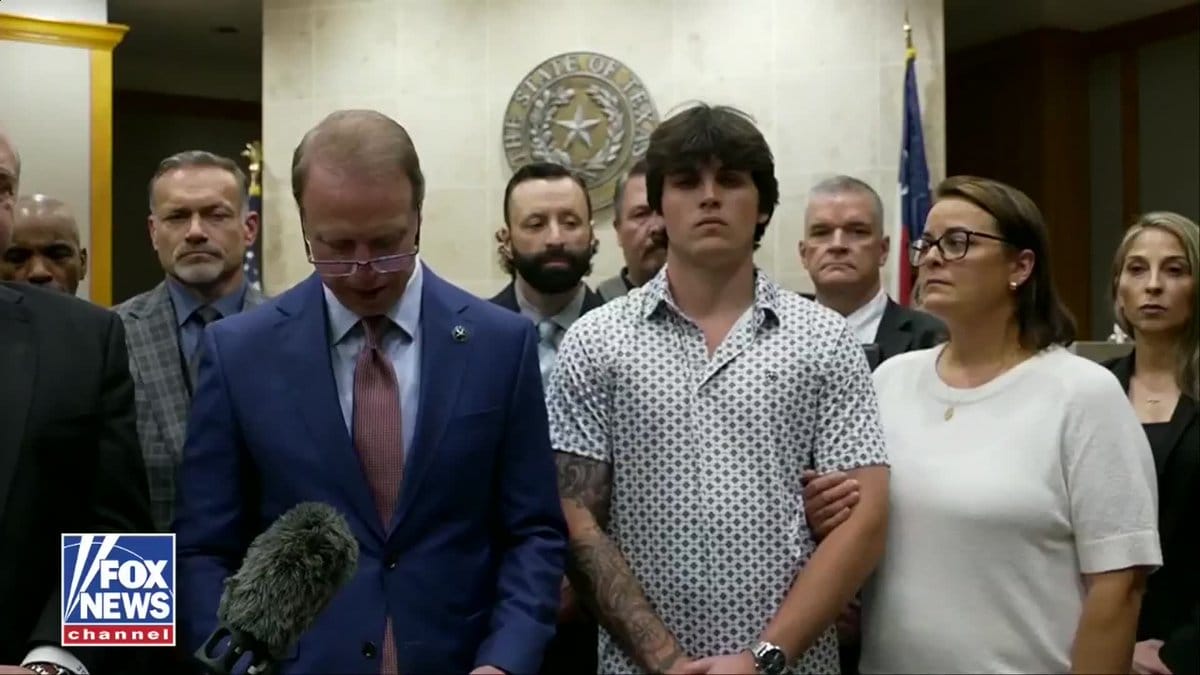
The sentencing brought emotional moments inside the courtroom as both families faced the outcome. Austin’s family delivered victim impact statements about the life they lost, while Anthony’s family reacted to the reality that he would spend decades behind bars.
The verdict and sentence have now closed the courtroom chapter of the case, but the public reaction continues. For many, the trial became a larger conversation about youth violence and school safety, while for Austin Metcalf’s family, it remains a personal tragedy centered on a son and brother who never came home.