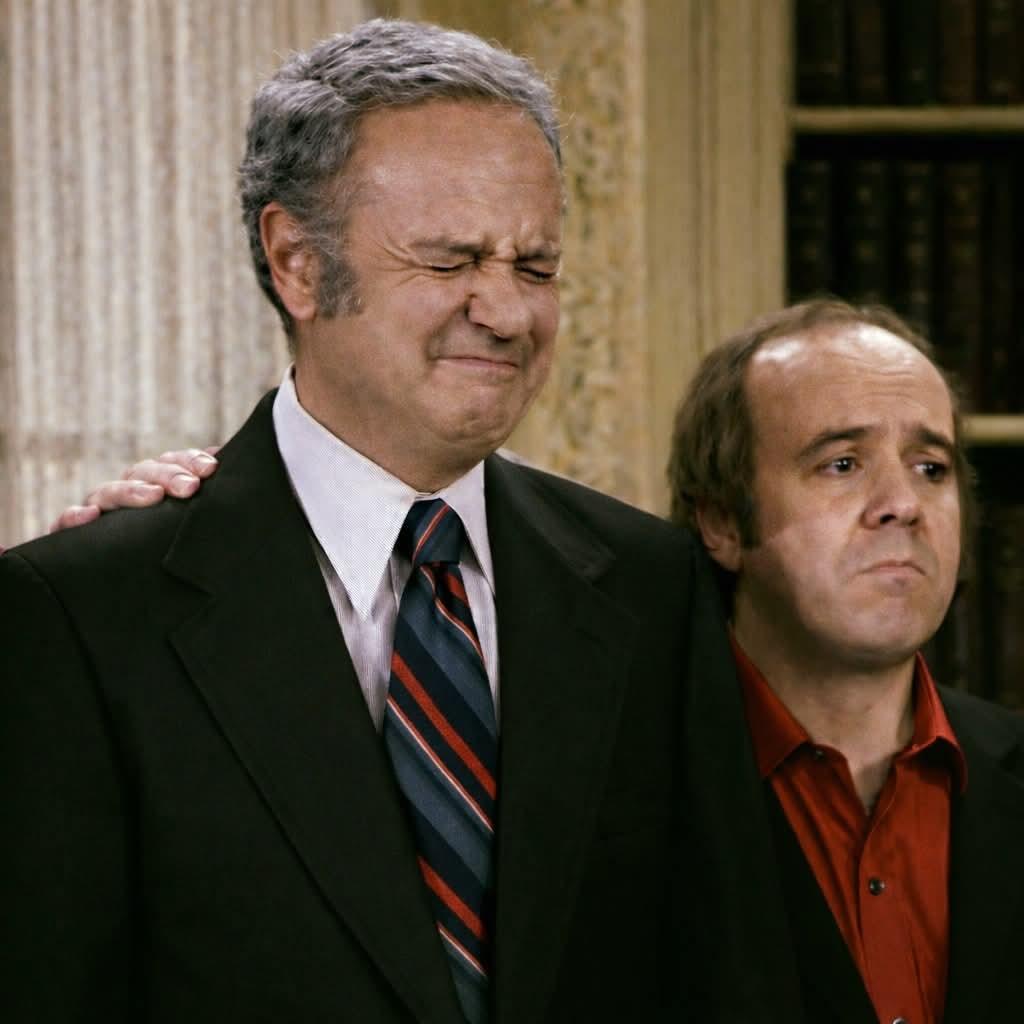
During rehearsal, Tim Conway casually mentioned he had forgotten all his lines. Harvey Korman didn’t laugh. He didn’t even blink. He sensed danger immediately.
“What are you planning to do out there?” Harvey asked, already bracing for impact.
Tim paused, gave a small shrug, and offered an answer that sounded harmless on the surface. “You just do the scene like normal,” he said. “I’ll… walk across.”
It didn’t sound like much. No wild improvisation. No outrageous prop. Just a simple promise.
That night, in front of a live audience, Tim did exactly what he said he would. In the middle of the scene — no warning, no cue — he slowly walked across the stage. No dialogue. No exaggerated expression. No punchline. Just a calm, deliberate crossing from one side to the other.
The audience laughed.
Minutes later, he did it again. This time slightly slower. The laughter grew louder, tinged with anticipation. Something was happening, and everyone could feel it.
By the third silent pass, the tension had become unbearable. The audience knew it was coming. Harvey knew it was coming. And that shared awareness made it impossible to survive. Harvey’s composure shattered. Lines disappeared. Laughter took over the sketch entirely.
And that was Tim Conway’s genius.
He hadn’t forgotten the script at all. He understood something deeper — that comedy isn’t always about what you say. Sometimes it’s about what you withhold. About rhythm. About patience. About allowing silence to stretch just long enough to become the joke itself.
No grand speech. No clever monologue.
Just a man walking across a stage — and proving that in the hands of a master, even nothing can become unforgettable.