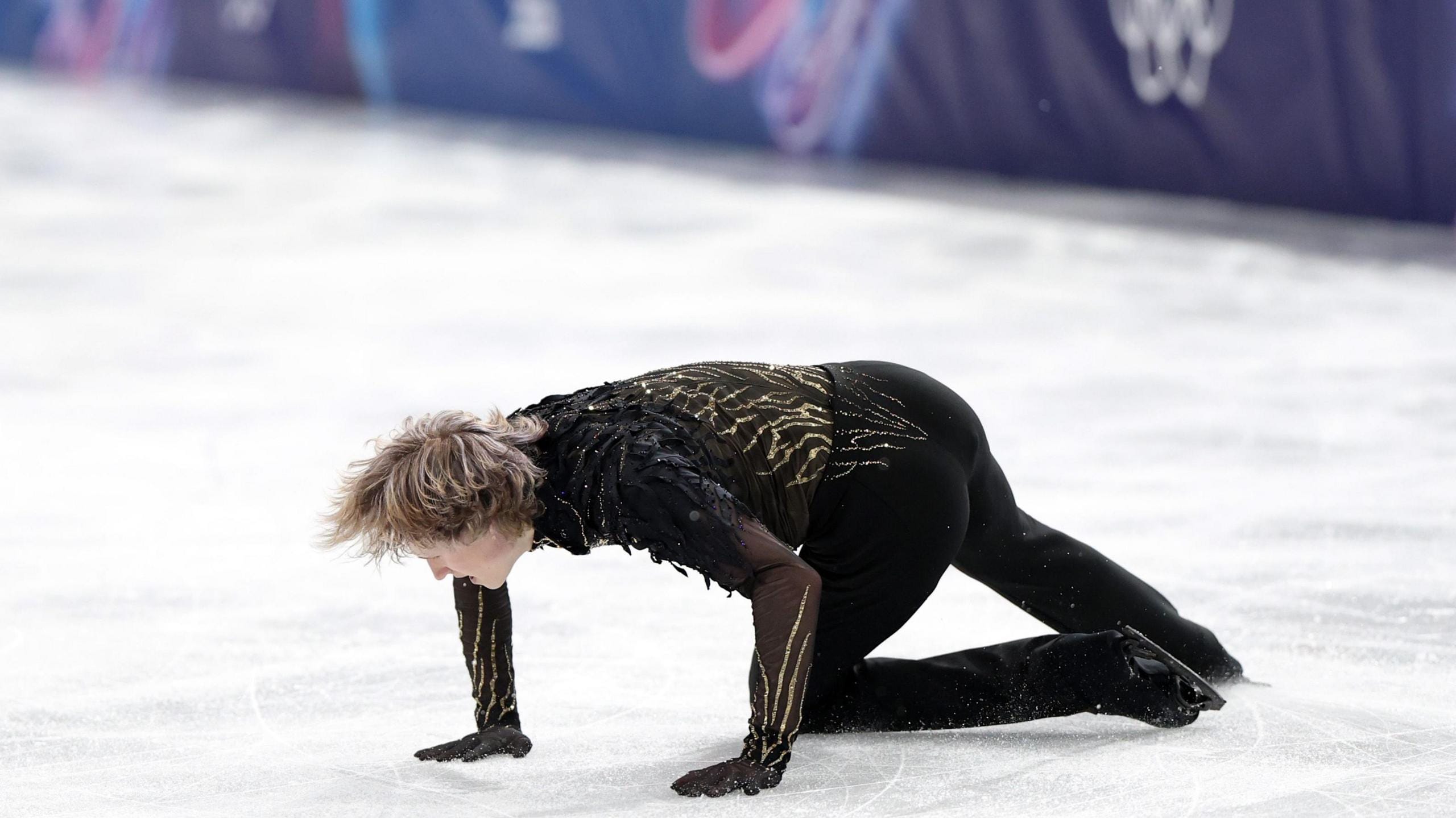
Days after his stunning Olympic free skate unraveled, Ilia Malinin has reappeared — not under arena lights, but quietly in the crowd.
Instead of standing on the podium, the 21-year-old was spotted in the stands, applauding teammates and offering support as competition continued. For many fans, the image felt symbolic: the “Quad God,” who entered the Games as a favorite, now watching from the sidelines after an eighth-place finish few predicted.
Observers noted his calm demeanor. Cameras caught him clapping, nodding, even managing a composed smile. Yet the contrast was unmistakable. Just days earlier, he had been at the center of medal projections and soaring expectations. Now, he was processing one of the toughest moments of his career in full public view.
The appearance was not accompanied by a dramatic statement or social media post. That, in itself, stood out. Rather than retreating entirely, Malinin chose presence — showing up for his team despite personal disappointment.
In elite sport, the aftermath can be just as revealing as the performance. Supporting others while navigating private frustration requires a different kind of resilience. For some fans, that quiet gesture spoke louder than any headline.
The Olympic result remains unchanged, and the sting of missed opportunity likely lingers. But this return to the arena — even from the stands — signals something important: he isn’t disappearing.
For now, the image of Malinin applauding teammates offers a glimpse of perspective amid setback. And sometimes, how an athlete carries themselves after a fall says just as much as the jumps they land.