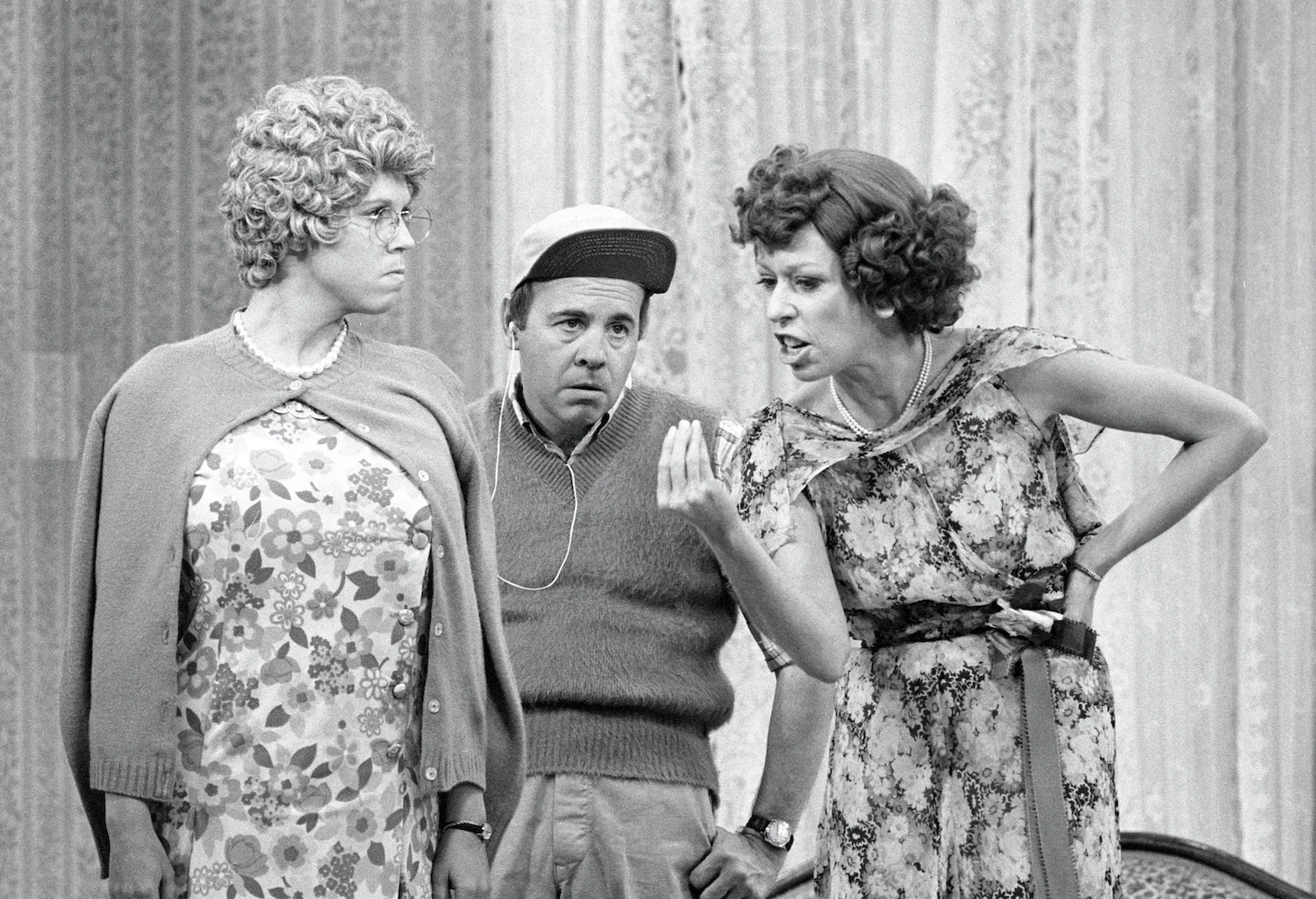
No one on that stage—not even Carol Burnett herself—was prepared for what Tim Conway was about to unleash. What began as a routine sketch on The Carol Burnett Show quietly transformed into one of the most famous laughter breakdowns in television history, a moment so uncontrollable it has lived on for generations.
The setup was simple. The cast was seated, the premise light, the expectations modest. Tim Conway, known for his slow-burn mischief, appeared calm, almost restrained. But longtime fans know that calm was never a sign of safety—it was a warning.
As Conway began his now-infamous “Elephant Story,” his delivery was deceptively ordinary. His voice stayed flat. His face barely moved. Each sentence landed with surgical precision, not because it was loud or exaggerated, but because it was relentlessly sincere in its absurdity.
Within moments, the cracks began to show. Carol Burnett, the consummate professional, tried desperately to hold her composure. She pressed her lips together, looked down, and covered her face—classic signs that she knew she was losing the battle.
Vicki Lawrence was next. Her shoulders started to shake, her eyes filled with tears, and every attempt to stay in character only made the situation worse. The audience, sensing the collapse, erupted into screams of laughter that fed the chaos unfolding onstage.
Then there was Dick Van Dyke. Known for his poise, timing, and impeccable control, he didn’t stand a chance. As Conway continued piling detail upon ridiculous detail, Van Dyke leaned forward, helpless, laughter completely overtaking him. At that point, the sketch had officially derailed.
What made the moment extraordinary wasn’t just that the cast broke—it was that Conway never did. He stayed perfectly straight-faced, calmly adding new layers to the story as if nothing unusual was happening around him. That contrast was the comedy. The stillness against the storm.
Carol eventually gave up entirely, hiding behind her hands as the audience roared. The laughter wasn’t polite or controlled—it was wild, primal, and contagious. This was live television surrendering to something bigger than planning or rehearsal.
Then came Vicki Lawrence’s line. Sharp, perfectly timed, and delivered through barely contained laughter, it landed like a final cymbal crash. The studio exploded. The sketch was over, but the moment had already become immortal.
WATCH HERE:
What was meant to be a short scene turned into a masterclass in comedic instinct. Conway didn’t rely on punchlines—he relied on patience, timing, and an uncanny ability to sense exactly how far he could push before everything collapsed.
Decades later, the “Elephant Story” remains one of the most replayed clips in television history. Not because it followed the rules of comedy—but because it shattered them completely.
It stands as proof that even the greatest performers, even the most seasoned professionals, were powerless against Tim Conway at his funniest. And in that glorious loss of control, television found one of its most perfect moments.