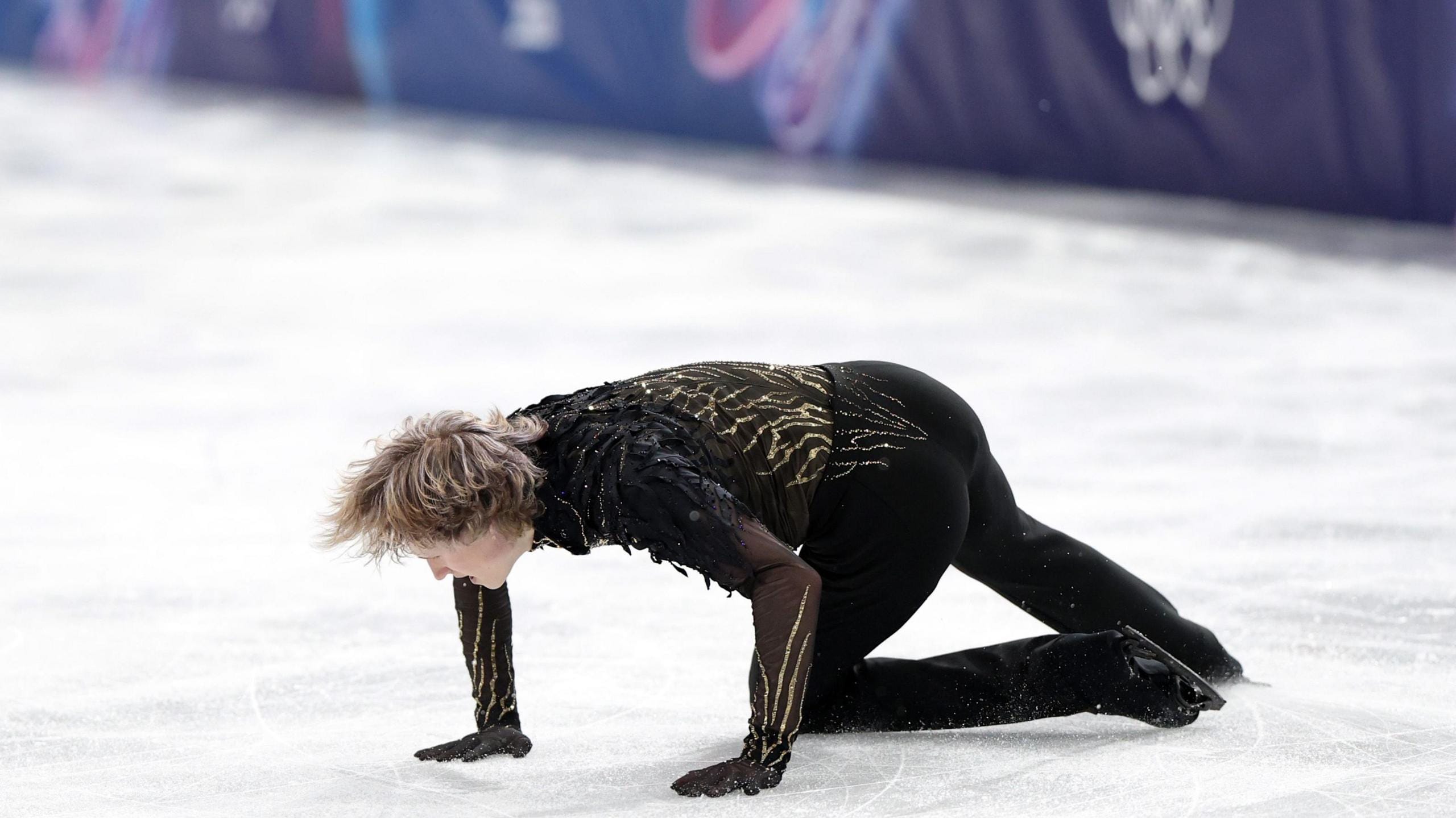
“There’s no way that just happened.” Those were the stunned words from Ilia Malinin after his free skate unraveled at the 2026 Winter Olympics, a moment that left both the arena and viewers at home in disbelief. The “Quad God,” known for rewriting figure skating’s technical limits, had entered the event as one of Team USA’s brightest medal hopes.
Malinin did not deflect blame. In post-skate remarks, he acknowledged the mistakes and accepted responsibility for the performance. The jumps that usually define him — explosive, precise, historic — didn’t align when it mattered most. For an athlete built on consistency at the highest technical level, the unraveling felt jarring.
Yet while Malinin owned the outcome, many fans pointed elsewhere when analyzing the broader picture. Social media quickly filled with criticism of NBC’s Olympic coverage, with some arguing the network amplified expectations to an overwhelming degree. Viewers accused the broadcast of crafting a “can’t lose” narrative around the young star long before he stepped onto the ice.
Clips of pre-event commentary circulated online, highlighting phrases that framed Malinin as nearly unbeatable. Critics argued that such storytelling can unintentionally heighten pressure, particularly for athletes competing on the world’s biggest stage. In a sport where focus and mental clarity are crucial, even subtle psychological weight can matter.
The backlash echoed similar criticism following NBC’s coverage of Simone Biles during the Tokyo Olympics. At that time, debates erupted over whether intense media narratives and constant medal projections added to the emotional strain elite athletes already carry. For some viewers, Malinin’s experience felt like history repeating itself.
Supporters of the network countered that Olympic broadcasting naturally spotlights favorites and storylines — a standard part of sports coverage. Building anticipation, they argue, is part of engaging a global audience. Still, critics maintain that framing athletes as inevitable champions can blur the line between confidence and expectation overload.
Sports psychologists have long noted the unique intensity of the Olympic environment. Unlike annual competitions, the Games arrive once every four years, compressing years of training into a single defining moment. Add global media attention and nonstop commentary, and the stakes can feel magnified beyond the rink.
Through it all, Malinin’s reaction stood out for its honesty. His immediate disbelief reflected the raw reality of elite competition — even the best can falter under extraordinary circumstances. Rather than shift focus outward, he kept his remarks centered on growth and accountability.
As debate continues online, the conversation has expanded beyond one skate. It now touches on how modern sports coverage shapes expectations and how young athletes navigate narratives built around them. In an era of constant commentary and viral moments, performance and perception are more intertwined than ever.
For Ilia Malinin, the story is still being written. One difficult Olympic program does not erase groundbreaking achievements or future potential. But his stunned words — “There’s no way that just happened” — have become a flashpoint in a larger discussion about pressure, media framing, and the human side of sport.