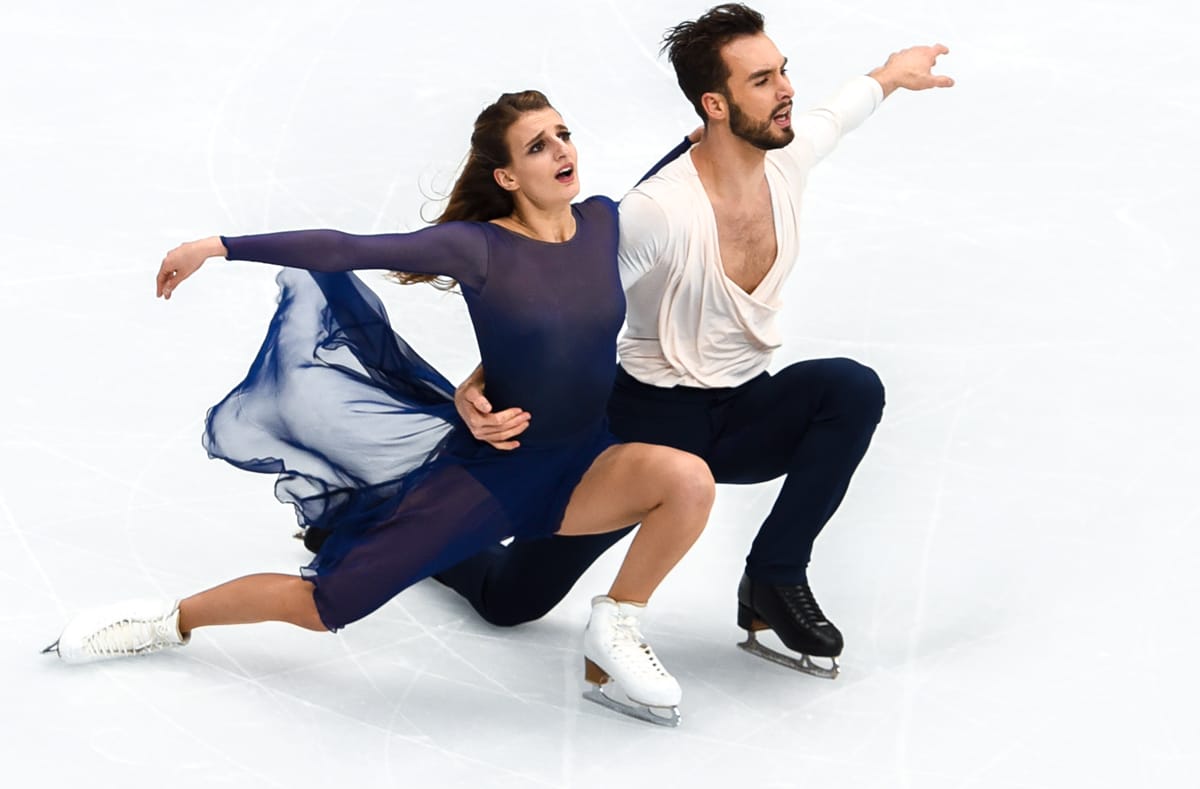
There are Olympic programs that win titles—and then there are programs that outlive them. When Gabriella Papadakis and Guillaume Cizeron stepped onto the ice in PyeongChang, the weight of everything that had already happened was impossible to ignore. But what followed didn’t feel like a response to pressure. It felt like something entirely separate from it.
Skating to Moonlight Sonata, they didn’t try to overpower the moment. They didn’t chase redemption in the way audiences might expect. Instead, they did something far more difficult—they stayed quiet. Not literally, but in how they moved, how they carried the music, and how they allowed the performance to unfold without forcing it.
From the very first glide, there was no chaos in their movement. Every step felt controlled, almost suspended, as if time itself had slowed to match the tone of the music. It created a kind of stillness that pulled the audience in, not with intensity, but with focus.
What made the performance so striking was its restraint. There were no exaggerated expressions, no dramatic gestures designed to win back favor or demand attention. It was precise, measured, and deeply intentional. Nothing was wasted, and nothing felt out of place.
That kind of control becomes even more powerful when you understand the context. After the complications and pressure they faced earlier in the competition, this free dance could have easily carried tension, urgency, or even visible stress. Instead, it felt almost impossibly calm.
And that calmness became the story.
As the routine progressed, the connection between them remained unbroken. Their synchronization didn’t just reflect technical excellence—it reflected trust. Every movement seemed to exist in response to the other, creating a flow that felt continuous and unshaken by everything happening around them.
There’s a unique kind of beauty in performances like this. Not the kind that demands applause, but the kind that lingers. The kind that becomes more powerful the longer you watch, as small details reveal themselves and the emotional depth quietly builds beneath the surface.
By the time the music reached its final notes, there was no dramatic finish, no explosive ending. Just a sense of completion. A performance that didn’t need to prove anything, because it had already said everything it needed to say.
They may not have left with gold that night, but something else happened instead. This program became a reference point. A moment that fans return to, not because of the result, but because of how it made them feel.
Years later, it still holds that same power.
People revisit it not to analyze scores or placements, but to experience it again—to feel that quiet intensity, that control, that almost fragile perfection. It’s the kind of performance that doesn’t fade with time, because it was never built on the moment alone.
And maybe that’s why it stands out.
Because sometimes, the routines that stay with us aren’t the ones that win… they’re the ones that remind us what the sport can feel like at its most honest.