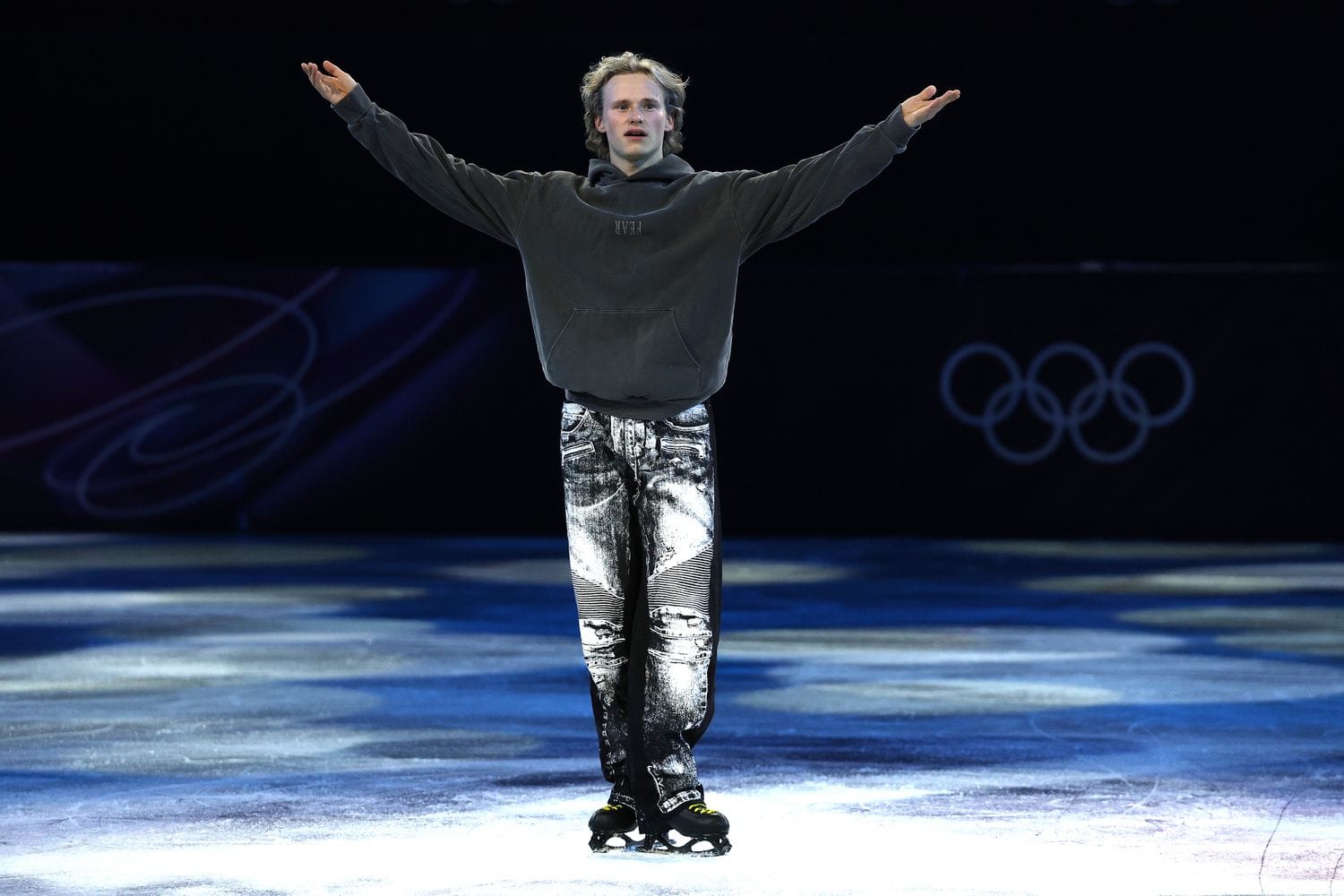
The words came not as a whisper, but as a declaration that rippled across the figure skating world: “This isn’t the end of my story.” When Ilia Malinin spoke those lines after his unexpected finish at the 2026 Winter Olympics, they carried the weight of heartbreak, frustration, and unshaken determination. For an athlete once seen as nearly untouchable, the moment marked one of the most emotionally raw scenes of his career.
The Olympic stage had been set for triumph. Expectations surrounding the “Quad God” were enormous, fueled by his history of record-breaking jumps and revolutionary technical skill. Many believed the Games would be his crowning moment — a defining victory that would cement his legacy as one of skating’s greatest pioneers. Instead, the outcome stunned fans and analysts alike.
As the results settled in, Malinin stood under an unrelenting spotlight, visibly struggling to contain his emotions. Cameras captured the tension in his face, the quiet stillness of someone absorbing the collapse of long-held dreams. Around the world, reactions poured in instantly — disbelief from supporters, sharp criticism from skeptics, and a collective sense of shock from the skating community.
In the days that followed, narratives quickly formed. Some labeled the performance a fall from grace, while others framed it as a cautionary tale about pressure and expectations. Yet those closest to Malinin saw something different unfolding beneath the surface. They described a competitor who was hurt, yes, but far from defeated.
According to friends and training insiders, the setback ignited an even deeper fire within him. Rather than retreating, Malinin reportedly returned to training with renewed intensity, focusing not only on technical refinement but also on mental resilience. The disappointment became a catalyst — pushing him to rebuild from the inside out.
For Malinin himself, the experience represented transformation rather than failure. He has openly acknowledged that the Olympic heartbreak forced him to confront fears, doubts, and vulnerabilities he had long kept hidden. In doing so, he began redefining what success truly means beyond medals and records.
Observers note that this shift could mark a turning point in his career. Known primarily for pushing the boundaries of difficulty, Malinin now appears equally committed to evolving as an artist and competitor. The focus is no longer just on conquering the sport physically, but also on mastering its emotional and psychological demands.
His vow resonated strongly with fans because it reflected a universal truth. In sports and in life, greatness is not measured solely by victories, but by the ability to rise after setbacks. Malinin’s words transformed a moment of disappointment into a narrative of resilience — a reminder that even the most extraordinary talents face defining challenges.
Within the skating world, many believe his next chapter could be historic. With his unmatched technical foundation and a newly sharpened emotional depth, Malinin stands poised not just to return stronger, but potentially to reshape the sport itself. His journey now carries an added layer of complexity that could redefine how future athletes approach both performance and pressure.
In the end, his declaration remains more than a personal promise — it is a statement of intent that continues to echo across arenas and headlines alike. For Ilia Malinin, the Olympic heartbreak was not an ending, but a beginning. And if his determination is any indication, the next chapter of his story may prove even more powerful than the one that came before.