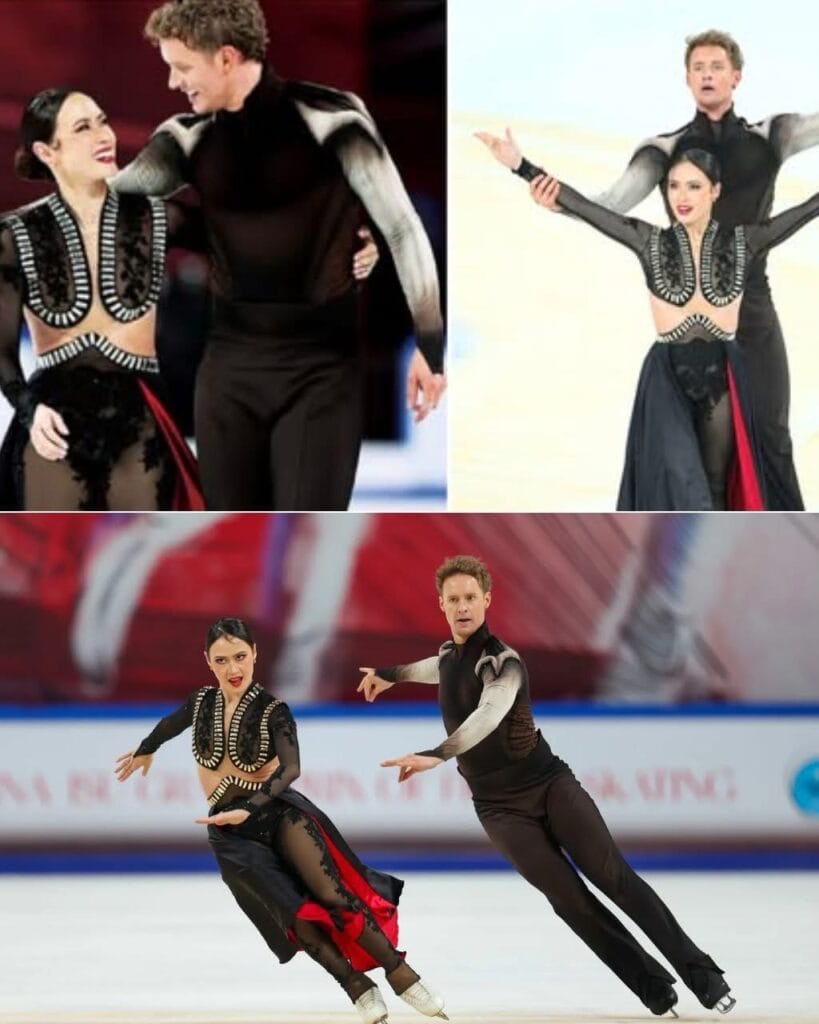
Madison Chock and Evan Bates did not step onto the ice at Gold on Ice to deliver a spectacle. They stepped onto it to tell a story. From the very first quiet glide, it was clear this would not be a performance built on explosive tricks or dramatic showmanship, but on something far more fragile — honesty.
Skating to Once I Was Loved, the Olympic champions made a bold artistic choice that instantly changed the atmosphere in the arena. Instead of opening with speed or technical fireworks, they slowed the moment down, allowing every movement to breathe. The music didn’t push them forward — it seemed to pull them inward.
Their edges traced deliberate, aching lines across the ice, each curve feeling less like choreography and more like a confession. There were no rushed transitions, no attempts to overwhelm the audience with complexity. Everything unfolded with a quiet patience that demanded attention.
What made the performance so striking was its restraint. In a sport known for gravity-defying lifts and dazzling athletic displays, Chock and Bates chose vulnerability over spectacle. They traded jaw-dropping height for emotional depth — and in doing so, they took a far greater artistic risk.
The connection between them was unmistakable. Every glance held meaning, shaped by years of partnership, setbacks, triumphs, and shared pressure. It wasn’t the kind of chemistry that can be manufactured for an audience — it was the kind that only time can build.
As they moved in near silence between phrases of music, the arena itself seemed to grow still. The usual sounds of skating — blades cutting ice, audience murmurs — faded into the background. What remained was an almost fragile tension, as if the entire crowd were afraid to break the spell.
Fans later described the experience in simple terms: they forgot they were watching a show. Many said the performance felt less like entertainment and more like witnessing something deeply personal unfolding in real time.
The lifts, when they came, were not designed to impress through height or speed. Instead, they flowed seamlessly out of emotional moments, appearing almost inevitable rather than planned — extensions of the story rather than interruptions to it.
And then came the detail that viewers cannot stop replaying. Just before their closing pose, there was a nearly imperceptible squeeze of hands — brief, subtle, and unscripted in appearance. It lasted only a heartbeat, but it carried a weight that resonated far beyond the final note.
In that tiny gesture, the entire performance seemed to crystallize. It wasn’t about medals, technical scores, or applause. It was about trust, shared history, and the quiet power of connection — the very thing they had promised from the start: not to impress, but to make people feel.