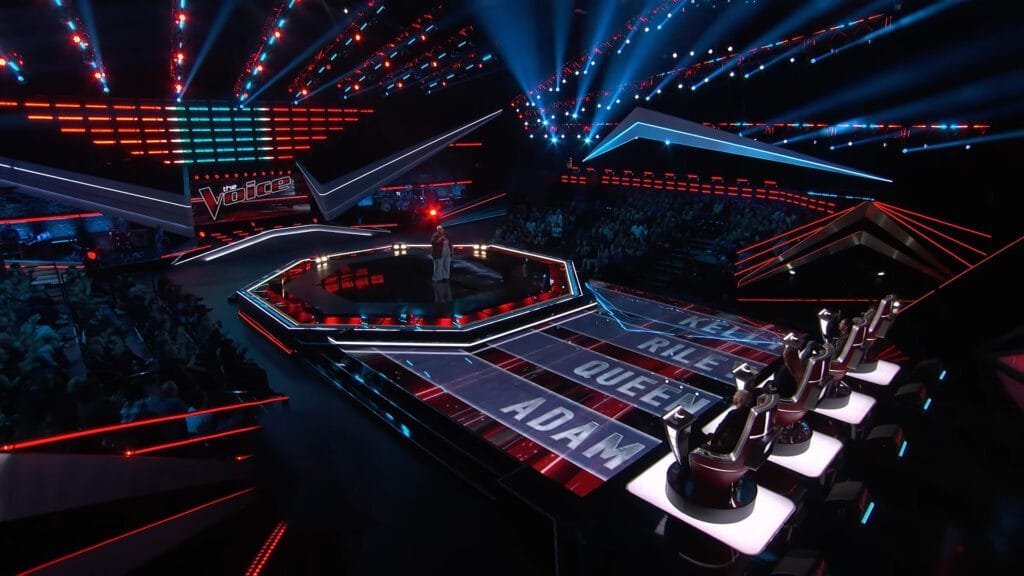
Millions of viewers know the familiar formula of The Voice: a nervous singer walks onto the stage, the coaches sit with their backs turned, and one press of a giant red button can completely change someone’s life.
But what viewers see on television is only a small piece of what actually goes into making the competition.
Long before a contestant ever stands in front of Kelly Clarkson, Adam Levine, Queen Latifah or Riley Green, there has already been an extensive process behind the scenes.
THE BLIND AUDITION ISN’T REALLY THE FIRST AUDITION
Despite the name, the televised Blind Audition is far from the first time producers hear the contestants sing.
Thousands of singers apply through auditions and submissions before producers begin narrowing down the field.
By the time contestants reach the famous red-chair stage, they have already survived multiple rounds of evaluation.
Host Carson Daly has previously explained that the show begins its televised competition with roughly 75 to 100 of what producers consider the strongest voices discovered during that process.

That means singers who appear before the coaches have already made it through an enormous amount of competition before viewers ever meet them.
THE COACHES REALLY DON’T SEE THE SINGER DURING THE BLINDS
The central idea behind The Voice remains genuine: during a Blind Audition, coaches begin with their backs to the performer and make their initial decision based on the voice.
If a coach likes what they hear, they hit the “I Want You” button and their chair rotates toward the stage.
If multiple coaches turn, the contestant normally gets to hear each coach’s pitch before choosing a team.
That recruiting battle has become almost as important to the show as the performance itself.
And those pitches can become surprisingly elaborate, with coaches using props, gifts, jokes and sometimes even blocking each other from making their case.
THOSE RED CHAIRS ARE REAL PIECES OF CUSTOM EQUIPMENT
The famous chairs aren’t ordinary seats with a television trick added afterward.
They are specially constructed pieces of equipment created for the show.
The chairs have included built-in speakers around the headrest so coaches can clearly hear performances while facing away from the stage.
Over the years they have also been upgraded with lighting, buttons and other features.
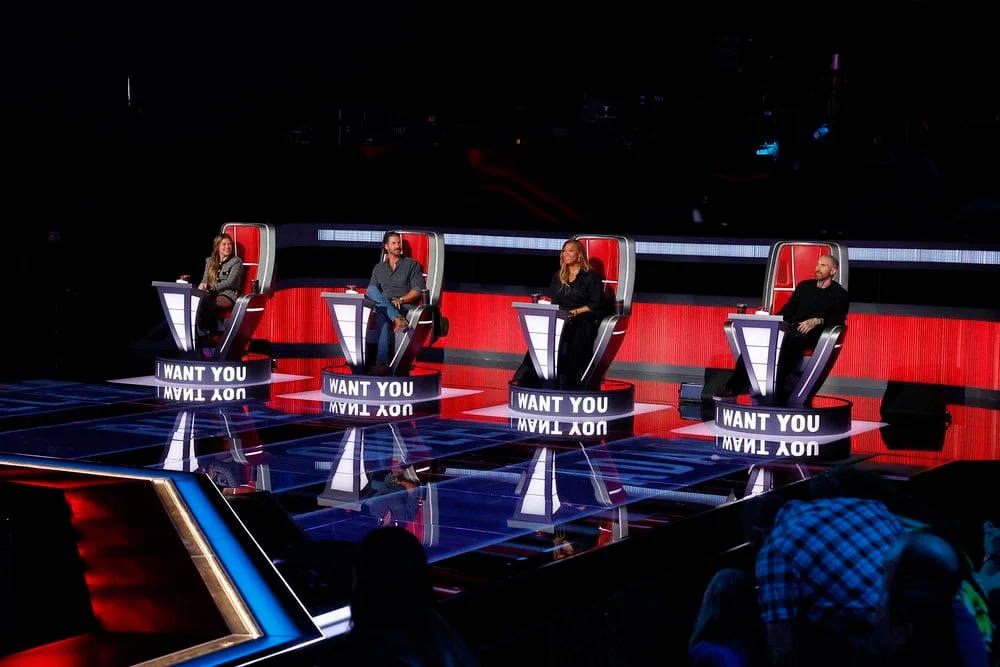
And because the chairs are such an important part of filming, the production reportedly keeps backup equipment available in case something goes wrong.
So when viewers see one suddenly spin around after a coach hits the button, the movement is actually happening in the studio.
SONG CHOICE IS MORE COMPLICATED THAN IT LOOKS
Another misconception is that contestants simply arrive each week and sing whatever they want.
Artists absolutely can have input, but song selection can involve the contestant, coach and Voice music department.
Former contestants have described maintaining lists of songs they would like to perform while discussing those options with producers and coaches.
Sometimes a coach suggests the song.
Sometimes the contestant brings the idea.
And sometimes both sides collaborate until they find something they believe fits the singer and the stage of the competition.
Season 25 winner Asher HaVon said Reba McEntire was heavily involved in his song selections, with producers sending potential choices to her for feedback.
Other coaches have taken different approaches. Adam Levine has previously explained that when he trusts an artist’s instincts, he may allow that contestant to lead the process.
That means every team can approach song selection a little differently.
THE SONG ALSO HAS TO TELL A STORY
Choosing a technically impressive song isn’t necessarily enough.
Former contestants have explained that the music department thinks about how an artist’s performances fit together across an entire season.
A contestant might have the perfect song in mind, but producers or coaches could believe it would work better several weeks later.
The goal is often to show different sides of the singer rather than repeating the same type of performance every week.
That helps explain why contestants sometimes perform songs that appear to be surprising departures from their Blind Audition.

COACHING GOES FAR BEYOND THE FEW MINUTES VIEWERS SEE
Television episodes naturally condense rehearsal footage.
Viewers might see a coach offer one or two pieces of advice before the program cuts to the performance, but contestants can spend considerably more time preparing.
Coaches discuss arrangements, phrasing, confidence, stage presence and the emotional meaning of a song.
Battle rehearsals can also include guest advisers, who help contestants work through vocals and performance choices before the singers face each other onstage.
The short rehearsal package viewers see is therefore an edited version of a much longer creative process.
THE COACHES DON’T ALL HAVE THE SAME STYLE
Another thing that happens behind the scenes is that each coach develops a different relationship with their artists.
Some become heavily involved with arrangements and song selection.
Others prefer giving contestants more independence.
Adam Levine has previously said that when he believes an artist knows who they are musically, he may simply approve their choices rather than interfering.
Other coaches have described themselves as more hands-on.
So two contestants on different teams can have very different experiences even while competing on the same show.
THE BATTLES CREATE A VERY DIFFERENT ATMOSPHERE
Once the Blind Auditions end, singers who were celebrating becoming teammates suddenly have to compete against one another.
During the Battles, coaches pair artists from their own teams and give them a song to perform together.
Behind the scenes, those singers rehearse knowing that the same person they are harmonizing with could soon be the reason their journey ends.
Season 30 coach Riley Green recently admitted just how difficult that transition can become when he faced his first Battle decision.
After working with both Brandy Neelly and Ferryn & Brinkley, Riley said choosing who advanced was genuinely difficult.
EVEN THE COACHES CAN BECOME ATTACHED
The show naturally presents the coaches as rivals, but their relationships with contestants can become very real.
Many coaches have talked about seeing themselves in younger artists or remembering the uncertainty they experienced early in their own careers.
That mentoring element is one reason several major stars continue returning to the show despite already having successful careers of their own.
WHAT VIEWERS SEE IS ONLY THE FINAL VERSION
A televised performance may last only a few minutes.
Behind it can be auditions, producer evaluations, rehearsals, musical arrangements, conversations with coaches and hours of production work.
Even something as simple as deciding which song a contestant should sing can involve multiple people and several different ideas.
The spinning red chairs remain the image everyone associates with The Voice.
But behind every button press is a much larger process viewers rarely get to see — one that begins long before a singer walks onto the stage and continues long after the cameras cut away.