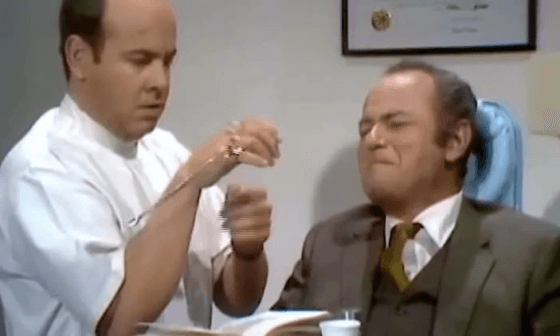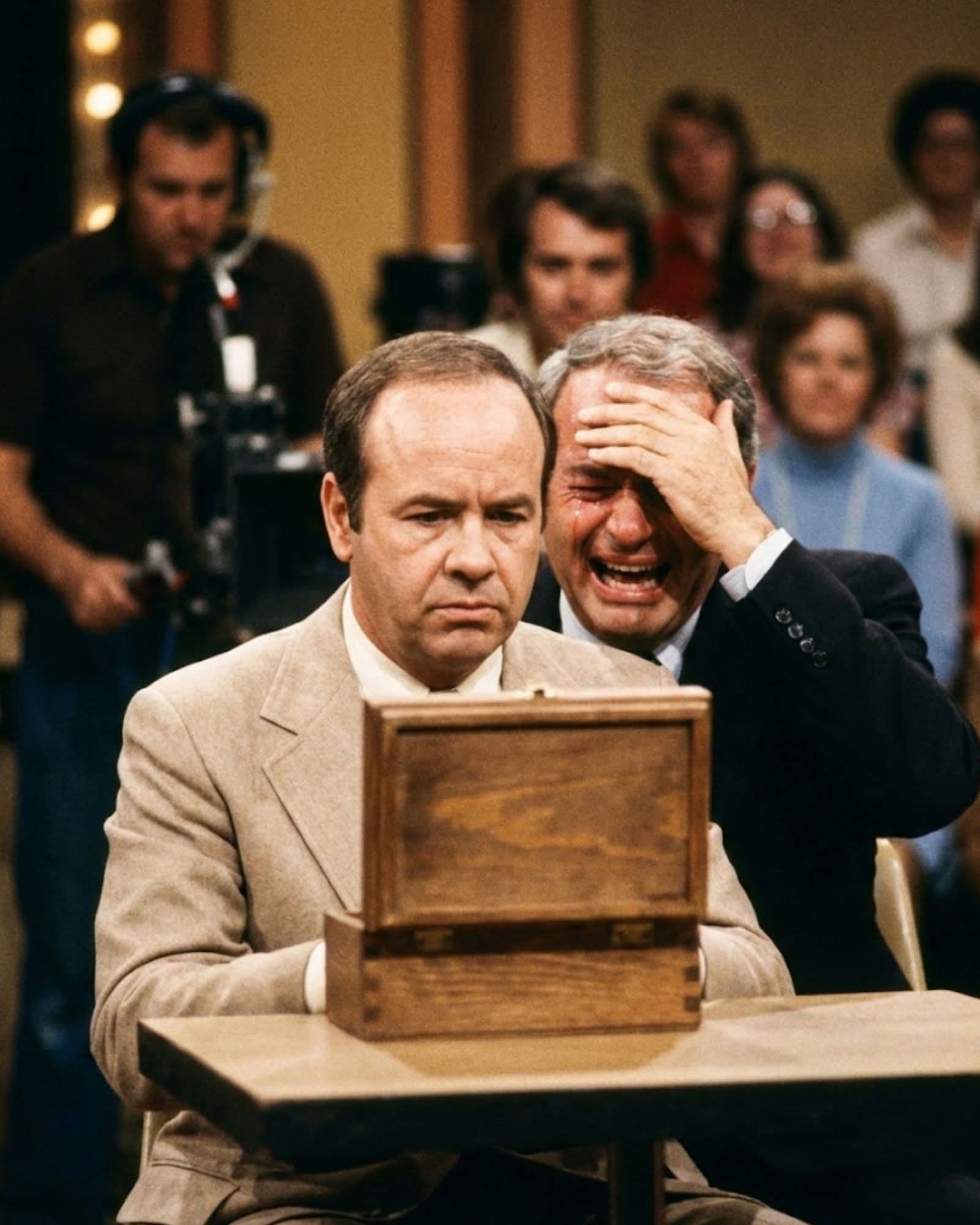
They say Tim Conway once walked onto a sketch having forgotten every line he was supposed to say. No cue cards saved him. No whispered reminders came from offstage. And most remarkably, there was no visible panic, no apology, no attempt to explain what had gone wrong.
Instead, Conway did something far more dangerous. He simply kept going.
What was written as a serious scene began to loosen at the seams almost immediately. His character walked a little too long before stopping. He sat down just a moment too late. When he finally spoke, his voice was softer than expected, barely filling the space, forcing the audience to lean in rather than laugh out loud.
Every movement seemed slightly delayed, every action just off enough to feel uncomfortable. Conway tripped over nothing at all, then recovered as if that, too, had been planned. Each pause stretched longer than logic allowed, hovering in a space where comedy isn’t supposed to live.
The other actors felt it instantly. They tried to hold their composure, clinging to professionalism and muscle memory. Faces tightened. Eyes darted away. Hands covered mouths. One by one, their defenses failed — not subtly, but spectacularly.
To the audience, it looked like the sketch was falling apart. Timing was off. Momentum was gone. Something had clearly gone wrong, and yet the laughter kept growing, swelling in waves that no one could fully control.
What the audience didn’t see was the calculation underneath the calm. Conway understood that the absence of jokes can be more powerful than jokes themselves. He wasn’t filling space — he was letting it breathe, daring the room to sit with the silence.
When everyone expects you to be funny, Conway knew the bravest move is to act completely normal. To resist the punchline. To trust that tension, not noise, would do the work for him.
By then, the sketch no longer belonged to the writers. The script was irrelevant. The structure had dissolved, replaced by something alive, unpredictable, and far more powerful than anything planned.
It didn’t even belong to the performers anymore. The actors were simply caught inside it, reacting in real time, powerless against the momentum Conway had quietly created.
When it finally ended, there was no clean resolution — only laughter, exhaustion, and the unmistakable feeling that something rare had happened. Not because everything went right, but because everything went wrong in exactly the right way.
In that moment, Tim Conway didn’t just save a sketch. He surrendered it. And in doing so, he let it belong to laughter itself.