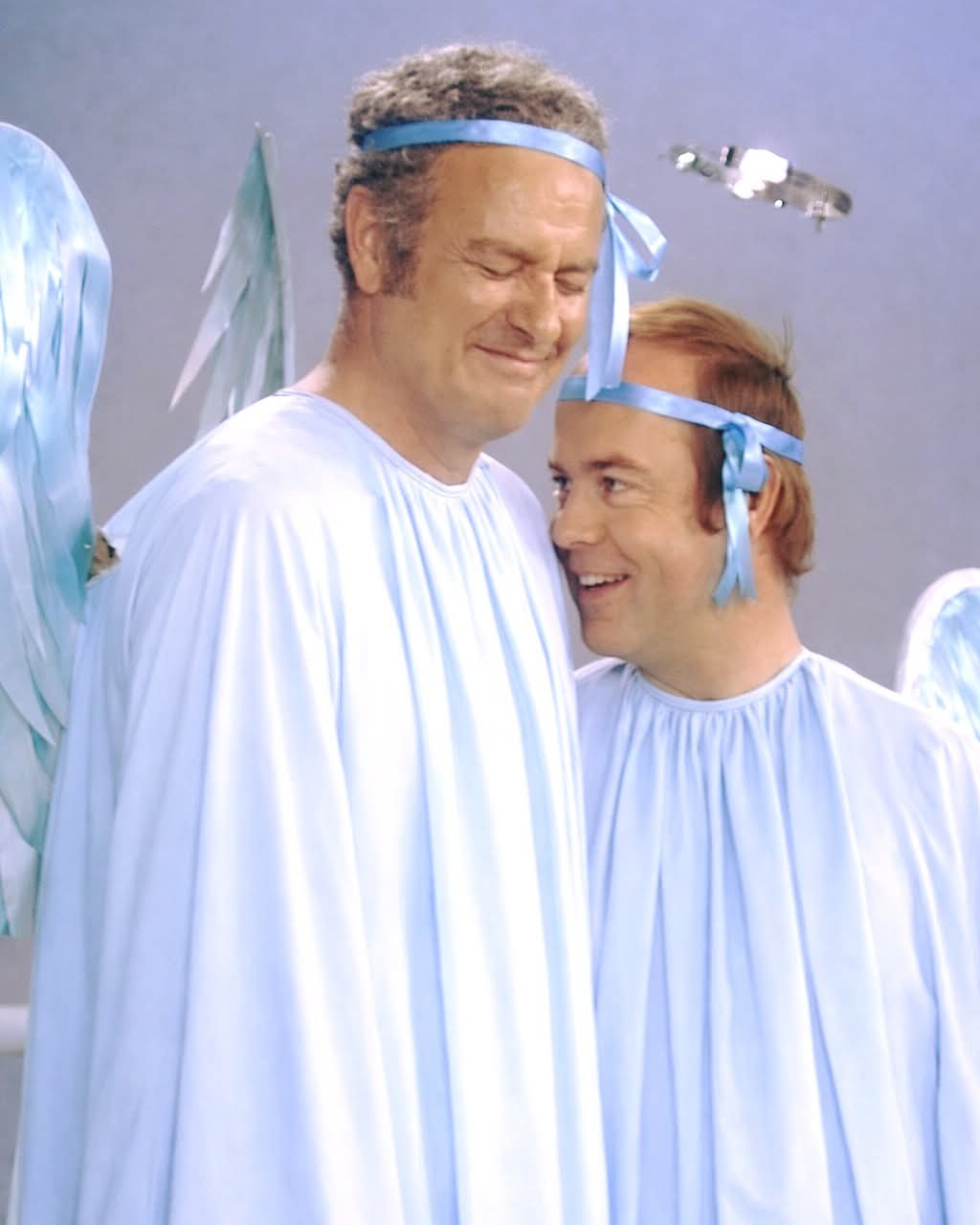
Tim Conway’s “rookie angel” sketch begins with a premise so simple it feels harmless. A newly minted angel arrives in heaven, wide-eyed, innocent, and eager to do good. There is no mischief in him, no hidden agenda, just a gentle soul who seems slightly lost in eternity.
From the moment he floats in, it’s clear this angel has absolutely no idea what he’s doing. Conway plays him like a child who wandered into the afterlife by mistake, responding to divine surroundings with polite confusion and earnest sincerity. Every line is delivered calmly, as if nothing could possibly go wrong.
Assigned to train him is Harvey Korman’s seasoned angel, a professional who has clearly seen it all. Or so he thinks. The moment Conway opens his mouth, a quiet sense of dread settles in, and the audience can feel what’s coming long before Korman does.
What should be simple heavenly tasks begin to unravel almost immediately. Instructions are misunderstood. Concepts of eternity are taken far too literally. Each small mistake gently chips away at the order of paradise, not through chaos, but through kindness gone wrong.
Conway never rushes the joke. He lets pauses hang just long enough to become dangerous. His angel listens carefully, nods seriously, and then responds in the most perfectly incorrect way imaginable. The calm delivery makes the damage even funnier.
Harvey Korman fights valiantly to stay in character. You can see it in his posture, his tightened jaw, his desperate attempts to maintain control. But Conway’s sincerity is relentless, and professionalism starts slipping through the cracks.
As the sketch progresses, heaven feels less like a sacred realm and more like a workplace on the brink of collapse. Each new line from Conway lands softly, yet hits harder than the last. Korman’s composure weakens with every beat.
The brilliance of the sketch lies in its restraint. There are no big gestures, no shouting, no exaggerated antics. Just two performers, perfect timing, and a slow-burning breakdown that feels both inevitable and irresistible.
By the end, Conway’s angel has technically succeeded. He has earned his wings, completed his task, and remains blissfully unaware of the destruction left in his wake. Korman, on the other hand, is clearly changed forever.
It’s Conway and Korman at their absolute peak — a masterclass in chemistry, patience, and comic precision. One angel ascends calmly into heaven, while the other is left behind, completely and joyfully undone.