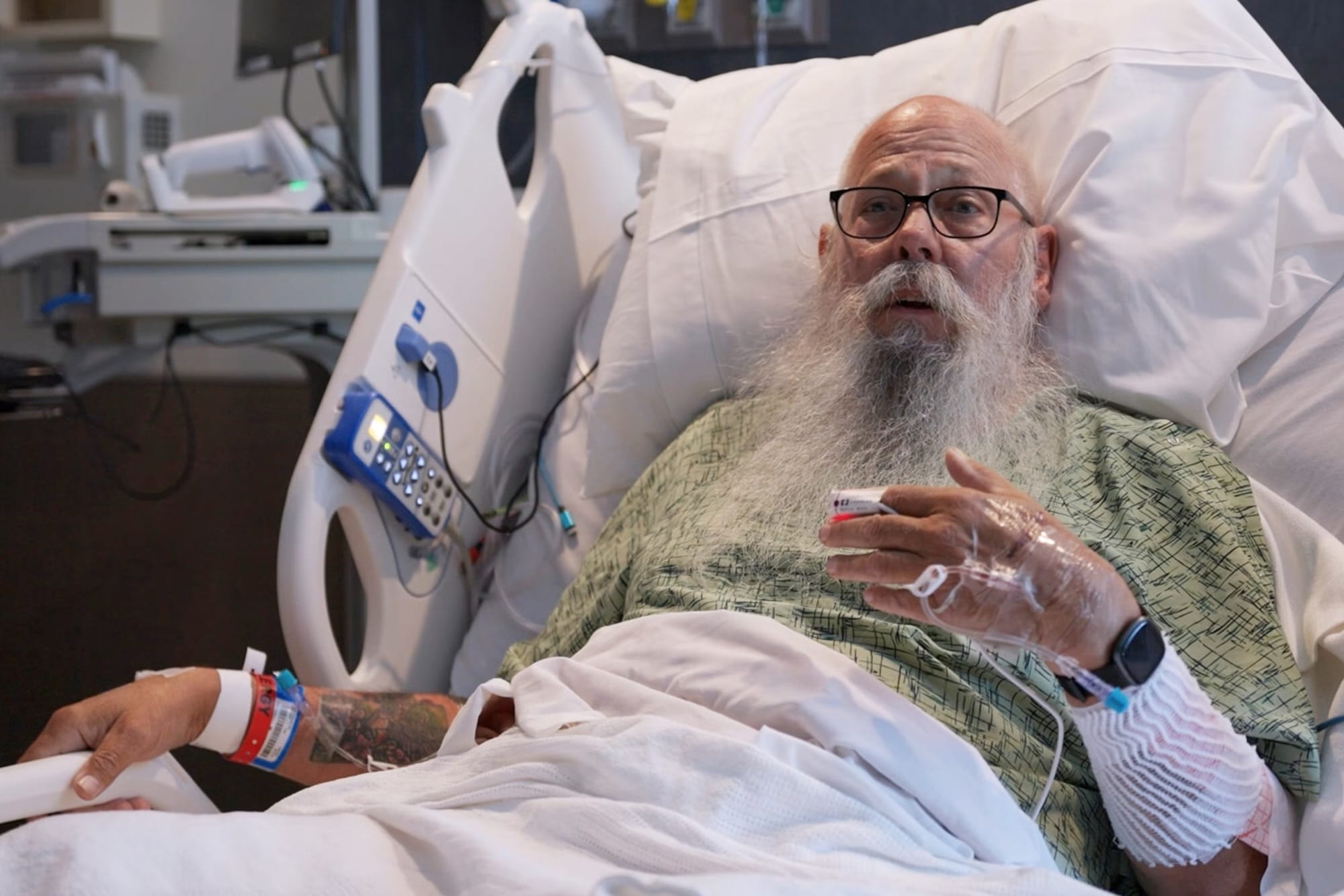
A Yellowstone National Park visitor who was violently attacked by a bison has spoken publicly for the first time since the frightening encounter, offering a detailed account of the terrifying moments that left him seriously injured and served as another reminder of the unpredictable power of America’s largest land mammal.
Carl Isom-McDaniel, a 65-year-old grandfather from Washington state, was visiting Yellowstone with his 13-year-old grandson when what began as a peaceful evening walk suddenly turned into a life-threatening ordeal. The pair had been observing a bison near the Bridge Bay Campground on July 10 when the animal unexpectedly charged. Until that moment, McDaniel said, the bison had appeared calm and showed no obvious signs that it was about to become aggressive.
Speaking from his hospital bed after undergoing surgery, McDaniel recalled how quickly the situation changed. He said the bison suddenly focused on him and began running at incredible speed. Knowing he could not outrun the massive animal, his first instinct was to make sure his grandson got to safety. He shouted for the boy to run while he tried to draw the bison’s attention away.
Despite attempting to move through nearby trees to avoid the charging animal, McDaniel said the bison continued pursuing him. Within seconds, the animal caught up and struck him with tremendous force, launching him several feet into the air before he crashed to the ground. He later described the impact with the ground—not the initial hit—as the most painful part of the entire attack.
Doctors determined that McDaniel’s femur had been broken in four places, requiring surgery soon after he arrived at Bozeman Health in Montana. Although the injuries were severe, he expressed gratitude that the outcome was not even worse, saying the bison could have gored or trampled him after knocking him down.
One aspect of the incident that surprised McDaniel most was the incredible speed of the animal. He said many visitors underestimate how fast bison can move because they often appear slow and relaxed while grazing. In reality, he explained, the attack happened so quickly that there was almost no time to react once the animal committed to charging.
The dramatic encounter was captured on video by wildlife photographer Mike MacLeod, who happened to be nearby. MacLeod later said McDaniel and his grandson appeared to be acting responsibly and were not provoking the animal before the attack. According to the photographer, the bison had displayed unusual behavior shortly beforehand, but there was little indication of exactly when it would charge.
Park officials have confirmed that no action will be taken against the bison, noting that wild animals naturally defend their space and behave unpredictably. Yellowstone is home to thousands of free-ranging bison, and encounters with visitors occasionally result in injuries when people get too close or when animals unexpectedly become defensive.
Yellowstone’s safety guidelines advise visitors to stay at least 25 yards (75 feet) away from bison and other large herbivores at all times. Although they often appear peaceful, bison can run up to about 35 miles per hour—much faster than most people—and can change direction with surprising agility.
McDaniel hopes that by sharing his experience, other visitors will better understand the risks of approaching wildlife. He emphasized that the animals are not behaving maliciously—they are simply wild creatures that deserve space and respect. Even experienced outdoor enthusiasts, he said, should never assume a calm-looking bison will remain calm.
Despite enduring major surgery and a long recovery ahead, McDaniel said he feels fortunate to be alive and especially thankful that his grandson escaped without injury. Looking back, he believes protecting his grandson was the only thing on his mind during those terrifying seconds before the attack.
His story has quickly spread across the country, serving as both an inspiring account of survival and a sobering reminder that Yellowstone’s breathtaking wildlife should always be admired from a safe distance. As millions of visitors continue exploring the nation’s first national park each year, McDaniel hopes his experience encourages everyone to give wild animals the space they need—because, as he learned firsthand, a peaceful moment can change in an instant.