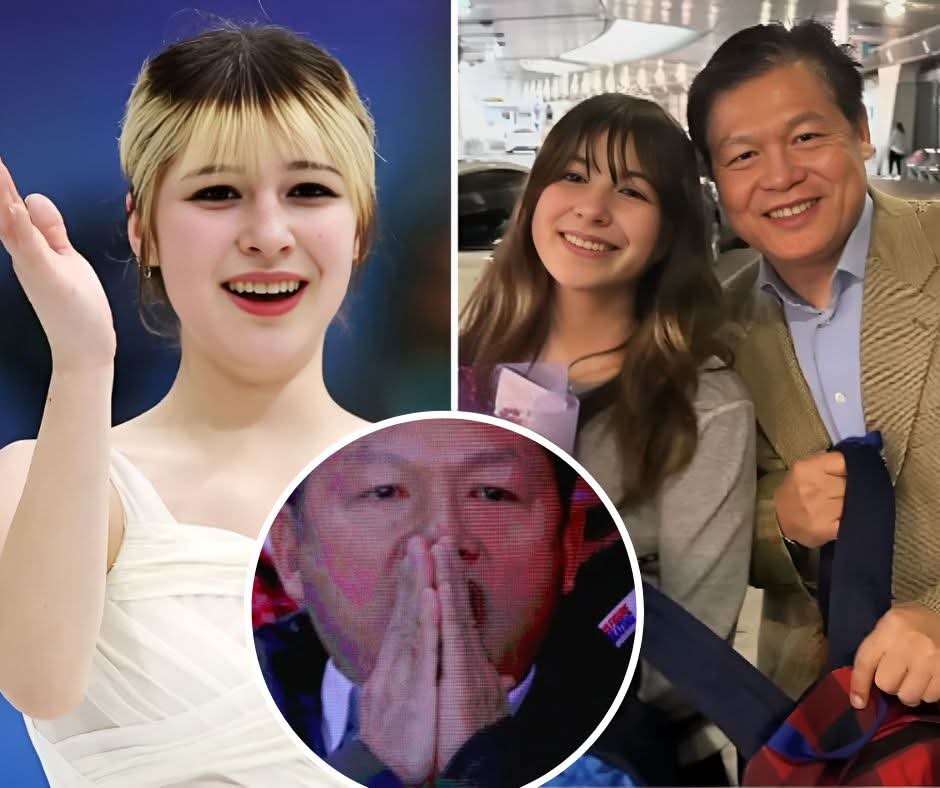
The second Alysa Liu’s winning score flashed across the screen, the arena erupted. Flags waved. Teammates screamed. Commentators raised their voices over the roar. But for a brief, unforgettable moment, the cameras turned away from the ice — and found her father.
He didn’t jump.He didn’t pump his fists.Instead, he froze.
Hands pressed together near his face, eyes wide in disbelief, he seemed to hold his breath as the reality settled in. Then came the exhale — slow, trembling — followed by tears he didn’t try to hide. It wasn’t dramatic. It wasn’t staged. It was deeply human.
For those who know the Liu family story, the reaction carried layers.
Her father had guided Alysa through the earliest days of her skating journey, through youth titles, Olympic expectations, and the shocking decision to step away at just 16. He had watched her walk away from the sport when burnout overshadowed joy. And he had watched her return — not chasing medals, but chasing freedom.
When gold became official, the years seemed to flash across his face all at once.
At one point, cameras caught him looking upward briefly, as if replaying every early morning practice and every uncertain turning point. Then he simply nodded to himself — a small gesture that said more than celebration ever could.
Social media immediately seized on the clip. Within hours, the video of his reaction had been shared thousands of times, with fans calling it “the real gold medal moment” and “every parent’s dream in one frame.”
Some viewers pointed out that while Alysa’s composure on the ice showed maturity, her father’s raw emotion showed the cost — and the commitment — behind the journey.
By the time Alysa reached the stands to embrace him, the world had already fallen in love with the image: a father overwhelmed not just by victory, but by vindication.
In a night filled with history, it was his quiet, tearful stillness that reminded everyone what Olympic dreams are really built on.