The family of HeeHaw, the miniature donkey whose death during a Georgia police search sparked widespread outrage, has now taken the dispute to federal court with a $1 million legal demand.
Attorney Christopher McCormick, representing HeeHaw’s owner Hannah Israel, filed a federal lawsuit against Cedartown Police Officer Trenton Ryan Garner, who was involved in the Aug. 30 incident. McCormick also sent a $1 million demand to the Cedartown Police Department, the city and other local authorities.
The incident happened shortly after midnight at Israel’s family farm in Polk County, Georgia. Officers were searching for a missing 12-year-old girl, who was eventually found safe.
During the search, officers encountered HeeHaw inside a pasture. Garner has said the donkey approached the officers and charged toward them, leading police to take action.
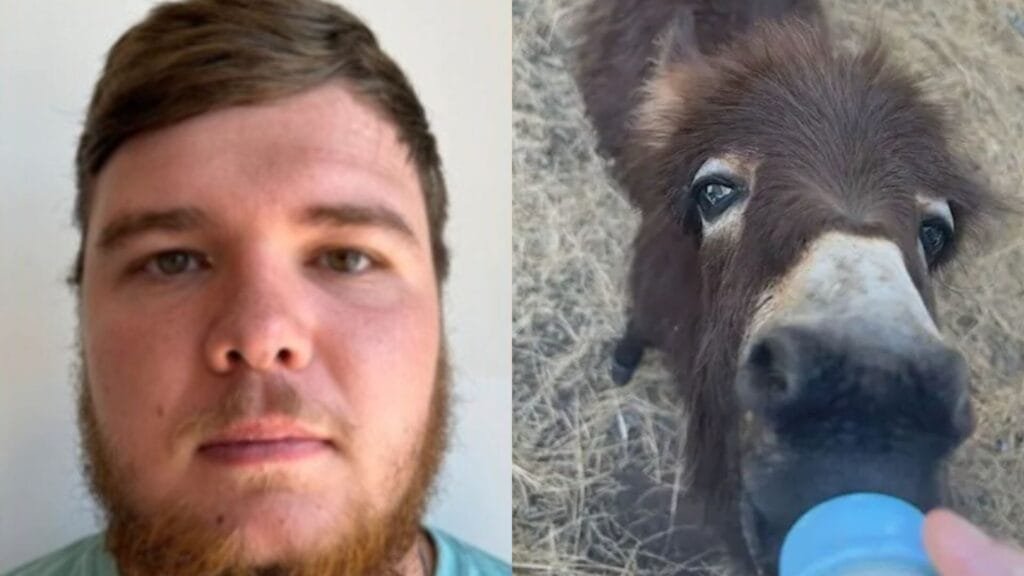
Israel, however, has strongly disputed the officer’s account and has described HeeHaw as a highly social animal that was comfortable around people.
She had bottle-raised HeeHaw and frequently brought him to petting zoos and community events, where he interacted with members of the public.
The disagreement over what happened in those moments has become one of the central issues in the case.
The family is now seeking answers through the federal court system, while the officer involved remains under investigation. Cedartown Police Chief Jamie Newsome previously placed Garner on administrative leave following the incident.
The lawsuit comes as public attention around HeeHaw’s death continues to grow. Supporters have gathered for rallies demanding accountability and greater transparency from authorities.
The latest rally in Cedartown on Sept. 11 became tense, with an altercation involving a reporter covering the event. The confrontation occurred on the same day the lawsuit and $1 million demand were announced.
For Israel and her family, the case is not simply about money. They have repeatedly emphasized their desire to understand exactly what happened to an animal they considered part of their family.
Authorities have also faced questions about available evidence, including police body-camera footage from the incident.
The investigation remains ongoing, meaning the competing accounts have not yet been fully resolved in court.
The legal demand gives the named local authorities 30 days to respond, according to McCormick. Meanwhile, the federal lawsuit against Garner moves the dispute into a new legal phase.
What began as a police search for a missing child has now become a closely watched legal battle over the death of a beloved miniature donkey.
With the lawsuit officially filed, the focus will now turn to the evidence, the investigation and whether the court ultimately accepts the family’s claims about what happened that night.