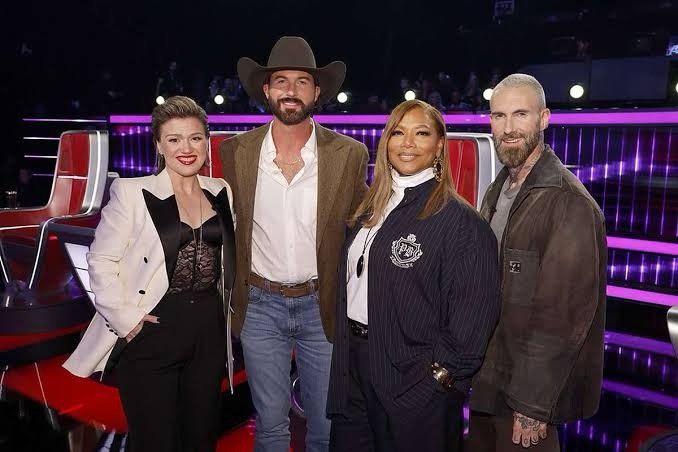
The Voice Season 30 has delivered impressive performances and introduced several major changes, but its return to live competition has also brought renewed criticism from viewers. While the remaining contestants continue competing for America’s votes, some fans have noticed that the show feels different from its earlier episodes. Two particular concerns have emerged, with viewers questioning the lack of entertaining interactions between the coaches and the increasingly rushed pace of the Live Shows.
The NBC singing competition has already seen several emotional eliminations, narrowing the field to its Top 10 contestants. However, the performances and results are only part of what has made The Voice popular over the years. For many longtime viewers, the personalities of the coaches and their playful relationships have been equally important, creating entertaining moments that extend beyond the musical competition.
One of the biggest complaints involves the noticeable reduction in humorous exchanges between the four coaches. Kelly Clarkson, Adam Levine, Queen Latifah and Riley Green developed an entertaining dynamic during the Blind Auditions and Battle Rounds. Their jokes, friendly rivalries and unexpected reactions frequently provided some of the season’s most memorable moments, but those interactions have become less prominent since the Live Shows began.

Earlier in the season, Clarkson and Green were particularly entertaining together. Clarkson once presented another coach with a personalized gift to help cope with losing contestants during the Blind Auditions, while Green occasionally brought out his duck call during filming. These spontaneous exchanges helped create a relaxed atmosphere, balancing the emotional pressure of the competition with humor and friendly teasing.
Clarkson also delivered several unpredictable moments throughout the earlier rounds, including a surprising interaction in which she offered a contestant some of her own hair. Meanwhile, Green frequently joked about Levine’s age, adding another entertaining element to the coaching panel. Those lighthearted exchanges helped establish the chemistry between the returning coaches and the show’s newer personalities.
However, the atmosphere has shifted considerably since the competition entered its live phase. Episodes now focus almost entirely on contestants performing with live musicians and backup singers before viewers cast their votes. Although this approach places greater attention on the artists, it also leaves limited opportunities for the coaches to interact naturally or deliver the humorous commentary that audiences enjoyed earlier in the season.

The remaining team sizes could have created opportunities for additional friendly rivalries. Following the latest eliminations, Levine and Clarkson each have three contestants remaining, while Green and Queen Latifah each have two. The differences between their teams provide obvious material for playful exchanges, particularly between Levine and Green, whose earlier interactions frequently entertained viewers. Yet the current format gives them little room to develop those moments.
The second major complaint concerns the length of the Live Shows themselves. While earlier stages of Season 30, including the Blind Auditions, Battles and Cut Week, featured two-hour episodes, the live competition has been reduced to just one hour each week. The shorter broadcasts have created an increasingly demanding schedule, particularly as multiple contestants must perform and voting results are announced within the same episode.
With so much happening in a limited amount of time, viewers have noticed that the coaches frequently have little opportunity to offer meaningful feedback. During previous rounds, contestants could receive detailed comments about their vocal abilities, stage presence and artistic development. In the current live format, those conversations are often shortened or eliminated entirely, leaving audiences with fewer opportunities to hear the coaches explain their reactions.

The rapid pacing has also affected the elimination process. Contestants who have spent months preparing for their television appearances can find themselves leaving the competition after only a brief announcement. The November 16 episode highlighted these concerns when Cade Mower from Team Riley and Anna McElroy from Team Kelly were eliminated as the field narrowed to 10 singers. With so many performances and results packed into one broadcast, there was little time to acknowledge their journeys.
Interestingly, the return of the Live Shows was originally intended to address viewer demand. After Season 29 moved away from the traditional live competition format, NBC brought back six weeks of live performances for the milestone 30th season. The decision was welcomed by viewers who wanted more opportunities to influence the results, but the shorter episodes have introduced a different set of challenges. Some now believe the network should reconsider how much time it gives the live portion of the competition.
One possible solution would be extending the weekly broadcasts to 90 minutes instead of the current hour-long format. That adjustment could provide additional opportunities for coach commentary, contestant interviews and more meaningful elimination announcements without requiring every episode to run for a full two hours. It could also allow the coaches’ personalities to become a more prominent part of the show again, helping restore the balance between entertainment and competition.
For now, The Voice Season 30 continues its journey toward the December finale, with the Top 10 scheduled to perform during Dolly Parton Tribute Night on Monday, November 23, at 8 p.m. Eastern Time on NBC. Despite the complaints, the competition remains filled with talented singers hoping to secure a place in the next round. As the season progresses, the criticism highlights a challenge for producers: giving contestants enough time to shine while preserving the entertaining coach chemistry that has helped make The Voice a television favorite for years.