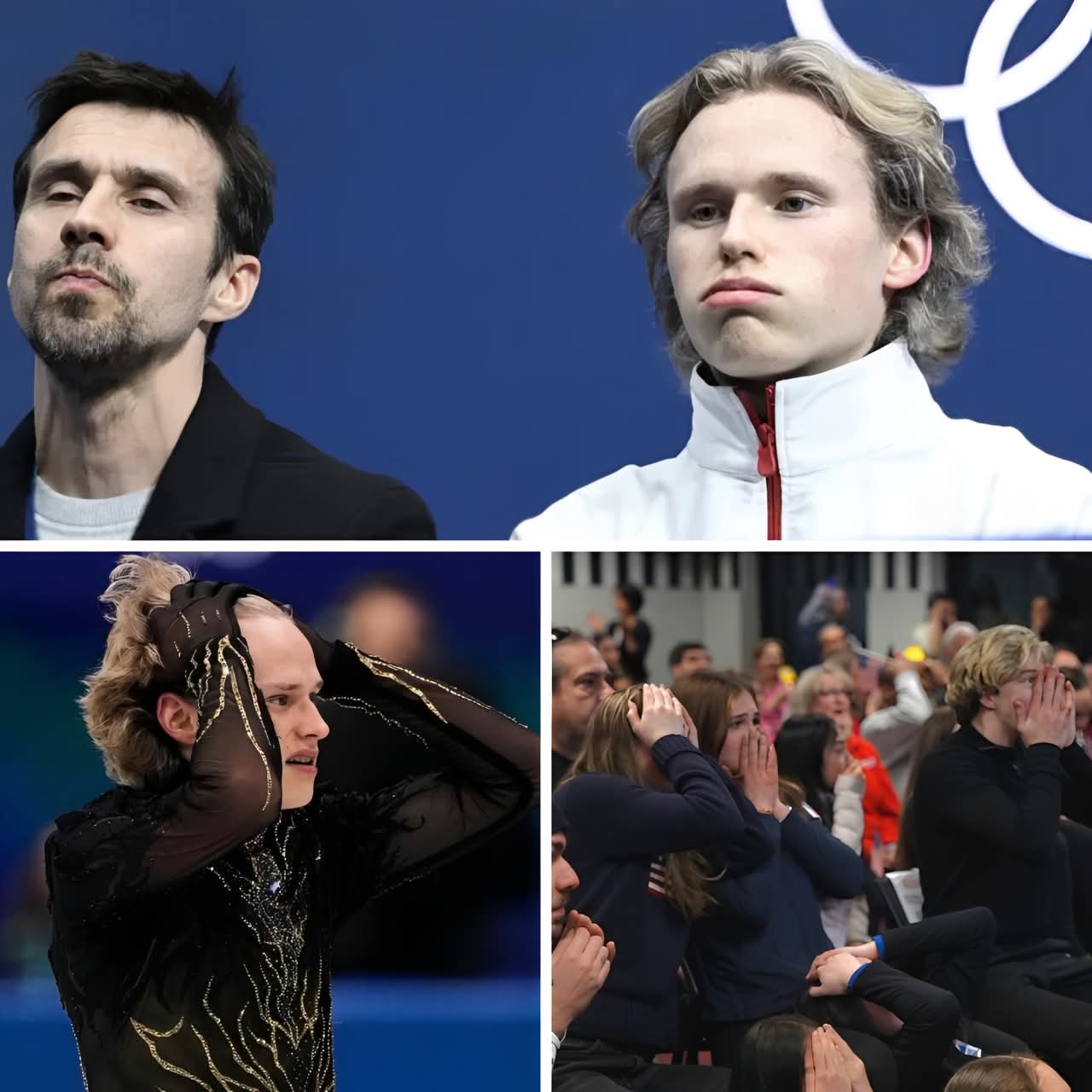
After a free skate marked by two costly falls, Ilia Malinin left the Olympic ice with visible frustration — and the emotion didn’t disappear when the music stopped. For an athlete known for composure and historic technical firepower, it was a rare public glimpse of raw disappointment.
As arena cameras continued rolling, a nearby microphone appeared to catch a brief, blunt remark from the 21-year-old. Though different versions of the quote quickly spread across social media, the tone was consistent: this was an athlete who knew he hadn’t delivered the performance he expected of himself.
Malinin entered the Milano-Cortina Games carrying enormous expectations. Dubbed the “Quad God” for his groundbreaking jump content, he wasn’t just another contender — he was widely viewed as one of Team USA’s strongest medal hopes. With that reputation came pressure few skaters his age have ever faced.
The first mistake shifted the mood instantly. A jump that normally looked automatic went wrong, and the energy inside the arena tightened. When a second fall followed, fans described the program as a “nightmare skate,” a phrase reflecting just how quickly momentum can unravel at the Olympic level.
In the kiss-and-cry area, Malinin appeared tight-lipped, staring ahead as the scores confirmed he would slide down the standings. The hot-mic moment amplified the intensity of the scene, offering viewers an unfiltered snapshot of what elite competitors often feel but rarely let the public see.
For some, the comment became headline material. For others, it was something more relatable — a young athlete reacting honestly in the seconds after a dream slipped away. Olympic performances are dissected frame by frame, but emotions in those moments are rarely filtered.
Supporters were quick to defend him, noting that the same passion and relentless self-criticism that fuel his success also make setbacks cut deeper. Great athletes often hold themselves to harsher standards than anyone else ever could.
Malinin has spoken before about managing negative thoughts and the mental side of competition. In that context, the moment felt less like controversy and more like confirmation of how much the result mattered to him personally.
One difficult night does not erase a legacy built on record-setting jumps and fearless ambition. If anything, the reaction underscored the intensity that helped elevate him to world champion status.
For now, the clip continues to circulate — not simply as a “brutal comment,” but as a reminder that behind every highlight reel is a human being navigating heartbreak in real time.