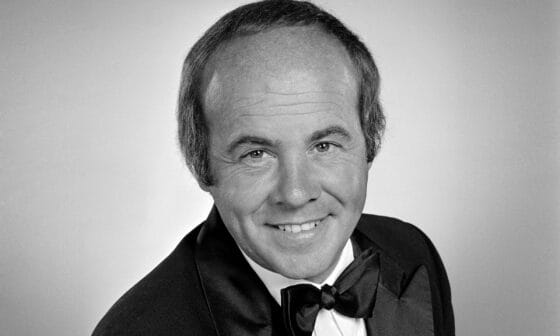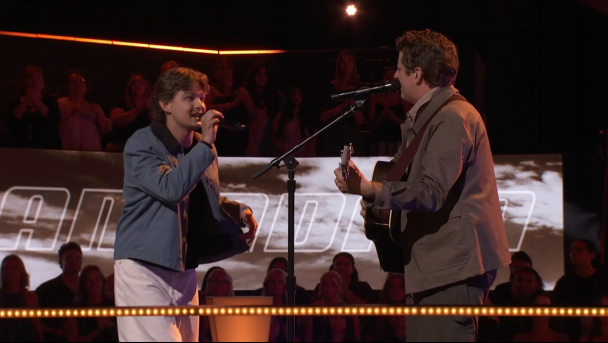
Adam Levine is facing questions about one of his latest decisions on The Voice Season 30 after choosing Evan James over Luke Curran in a highly anticipated country music Battle. Both contestants had impressed the coaches during their Blind Auditions, but when Levine selected Evan to continue in the competition, Luke’s journey came to an emotional end without another coach stepping forward to save him.
The matchup was especially intriguing because Evan and Luke had both chosen Levine over country superstar Riley Green during the Blind Auditions. Their decisions had already made them interesting additions to Team Adam, and their eventual pairing created a difficult situation for a coach who had personally fought to recruit both singers.
Evan James, a 22-year-old country singer from Highland, Michigan, entered the competition with a memorable Blind Audition that immediately attracted attention. Performing Morgan Wallen’s hit “Wasted on You,” he demonstrated a distinctive vocal style that combined contemporary country influences with an expressive delivery.

His performance impressed three coaches, with Adam Levine, Kelly Clarkson, and Riley Green all turning their chairs. For a young performer hoping to establish himself in country music, attracting that level of interest represented an important achievement and gave him a choice between three successful musicians.
Kelly Clarkson was particularly impressed by Evan’s unusual vocal qualities, comparing elements of his singing to Gary LeVox of Rascal Flatts while recognizing the R&B influences in his delivery. Riley Green also appreciated his stage presence and country sound, making Evan’s eventual decision even more interesting.
Despite having the opportunity to work with Green, Evan ultimately selected Levine. The Maroon 5 frontman had argued that Evan could occupy a distinctive position as a country artist on his team, rather than competing for attention among several singers with similar musical backgrounds.

The choice represented a significant victory for Levine, who has frequently demonstrated his willingness to coach artists outside his own pop-rock musical identity. Evan’s arrival gave Team Adam a contemporary country performer with the potential to appeal to listeners across multiple genres.
Beyond his musical ambitions, Evan also brought an interesting personal background to the competition. He grew up around his family’s long-established Christmas tree farm in Michigan, a place that had been part of his family’s history for generations.
His upbringing gave him a story quite different from many aspiring artists who arrive on television talent competitions after years of performing in major entertainment cities. Despite those differences, Evan shared the same ambition as his fellow contestants: to turn his passion for singing into a lasting musical career.
Luke Curran, meanwhile, entered Season 30 with an equally compelling journey. The 31-year-old singer from Sarasota, Florida, earned attention during the Blind Auditions with his interpretation of Jim Croce’s classic “Operator (That’s Not the Way It Feels).”
Unlike contestants who rely on dramatic high notes or elaborate vocal runs, Luke impressed with a relaxed, authentic performance that highlighted his storytelling ability and guitar playing. His approach reflected an appreciation for classic folk, country, and singer-songwriter music.
Riley Green was the first coach to recognize Luke’s potential, turning his chair early in the performance. Levine followed, creating another contest between the two coaches as they attempted to persuade the Florida singer to join their respective teams.
Green praised Luke’s individuality and ability to tell a story through music. As a country performer himself, he recognized qualities in Luke’s performance that could translate naturally into his own musical approach.
Levine, however, connected with Luke on a different level. He admired the singer’s musical taste and believed his choice of a Jim Croce classic revealed something meaningful about the kind of artist Luke wanted to become.
What made Luke’s decision particularly memorable was his personal connection to the show. He revealed that he had watched The Voice since its earliest days, making the opportunity to work with Levine especially significant.
Although Green had turned first, Luke ultimately followed his long-standing admiration for Levine and chose Team Adam. The decision gave him the opportunity to receive guidance from a coach he had watched on television for years.
That background made his subsequent Battle against Evan particularly emotional. Both singers had independently decided that Levine was the right mentor for their musical futures, but the competition eventually placed them in a situation where only one could continue under his guidance.
The pairing brought together two artists with different interpretations of country-influenced music. Evan leaned toward the polished sound of contemporary country, while Luke’s strengths were rooted in traditional storytelling and classic singer-songwriter influences.
Those differences helped make the matchup interesting. Evan’s musical identity had already impressed three coaches, while Luke’s distinctive approach had persuaded both Levine and Green that he deserved a place in the competition.
For Levine, choosing between them required more than simply evaluating who could deliver the strongest individual performance. He also had to consider which artist might be better suited to the musical challenges awaiting his team.
During this season’s Battle Rounds, Levine has been working alongside singer-songwriter Alex Warren, who joined Team Adam as a celebrity advisor. Warren’s involvement brought an additional perspective to the coaching process, particularly when helping artists communicate emotion and personality through their performances.
The Battle format also places unusual demands on contestants. Instead of performing alone, singers must share the stage with someone they are directly competing against. They need to demonstrate musical cooperation while still showing enough individuality to convince their coach that they deserve to advance.
When Evan and Luke faced each other, their contrasting styles created precisely that kind of challenge. Both had earned their places through memorable auditions, and neither entered the matchup without strengths that could potentially benefit Team Adam.
But when the moment arrived for Levine to announce his decision, he ultimately chose Evan James as the Battle winner, allowing the Michigan singer to continue his journey in the competition.
For Luke, the decision was disappointing. His hopes of progressing with the coach he had admired for years ended when no other coach used a steal to bring him onto a different team.
The absence of a steal made the elimination particularly final. During the Battles, coaches have limited opportunities to rescue artists eliminated from opposing teams, creating a second chance for some singers who lose their head-to-head performances.
However, those opportunities are valuable and must be used strategically. Even when a contestant demonstrates genuine talent, another coach may decide to preserve a steal for a different artist or a later matchup.
Luke’s departure was therefore not necessarily a reflection of poor performance. Instead, it illustrated how the structure of the competition can force talented musicians to leave before viewers have seen everything they might be capable of delivering.
The outcome also created an interesting contrast with the Blind Auditions. Luke had initially attracted Riley Green’s attention almost immediately, yet when he faced elimination, the country coach did not intervene to bring him onto Team Riley.
For viewers who appreciated Luke’s traditional approach, that development made his departure especially disappointing. His choice of “Operator” had introduced an artist interested in storytelling, musical authenticity, and classic songwriting rather than simply following contemporary trends.
At the same time, Levine’s decision to keep Evan was not without merit. Evan had impressed three coaches during his audition and demonstrated a sound that blended country music with influences from other genres.
His contemporary style also offered Levine an opportunity to develop a singer who could stand apart from more traditional performers. In a competition where versatility and memorable performances can become increasingly important, those qualities may have influenced the direction Levine wanted to take.
The question of whether he made the correct choice ultimately comes down to what listeners value most. Some may prefer Evan’s contemporary country appeal, while others may connect more strongly with Luke’s relaxed delivery and classic musical influences.
The two singers also arrived with different expectations. Evan appeared eager to establish himself within the modern country scene, while Luke’s audition demonstrated a deep appreciation for artists whose music emphasized storytelling and emotional authenticity.
With Evan advancing, the pressure now shifts toward proving that Levine’s decision can lead to continued success. Winning a Battle is an important accomplishment, but it does not guarantee a place in the Live Shows.
Season 30 introduces an additional challenge through Cut Week, a new stage replacing the traditional Knockout Rounds. Coaches will have to make further decisions as they reduce their teams and select the artists who will move into the later stages of the competition.
For Evan, that means his victory over Luke represents another opportunity rather than a guarantee of success. His ability to adapt to new musical challenges and maintain a distinctive artistic identity will become increasingly important as the field narrows.
Luke, meanwhile, leaves the show having accomplished something significant. His Blind Audition introduced him to a national television audience, earned recognition from established musicians, and allowed him to work with a coach he had admired since the show’s beginning.
Although his time in the competition ended earlier than he had hoped, the experience may still provide opportunities for his musical future. Many contestants have used their appearances on The Voice to connect with new listeners and continue developing careers outside the televised competition.
As for Levine, his decision to advance Evan rather than Luke will remain an interesting moment in Team Adam’s Season 30 journey. Both artists brought different qualities to the competition, and choosing between them was never going to satisfy every listener.
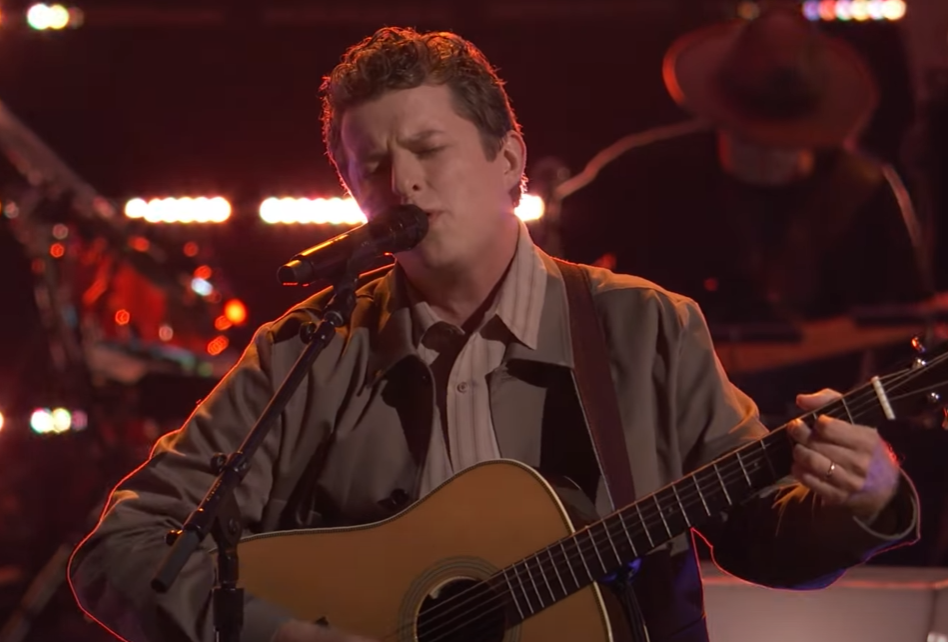
Whether Evan ultimately progresses deep into the competition or encounters another difficult challenge, his future performances will offer a clearer picture of the potential Levine recognized when making his selection.
For now, Evan James continues his pursuit of The Voice title, while Luke Curran’s journey has reached its conclusion. Their Battle serves as another reminder that even talented singers can face elimination when a coach must choose between two artists with different musical strengths.
Adam Levine placed his confidence in Evan James, but Luke Curran’s departure has left some viewers wondering whether Team Adam lost a distinctive voice too soon. As Season 30 continues, Evan will have the opportunity to demonstrate why his coach believed he deserved to advance, while Luke’s memorable audition and musical individuality remain part of the season’s story.