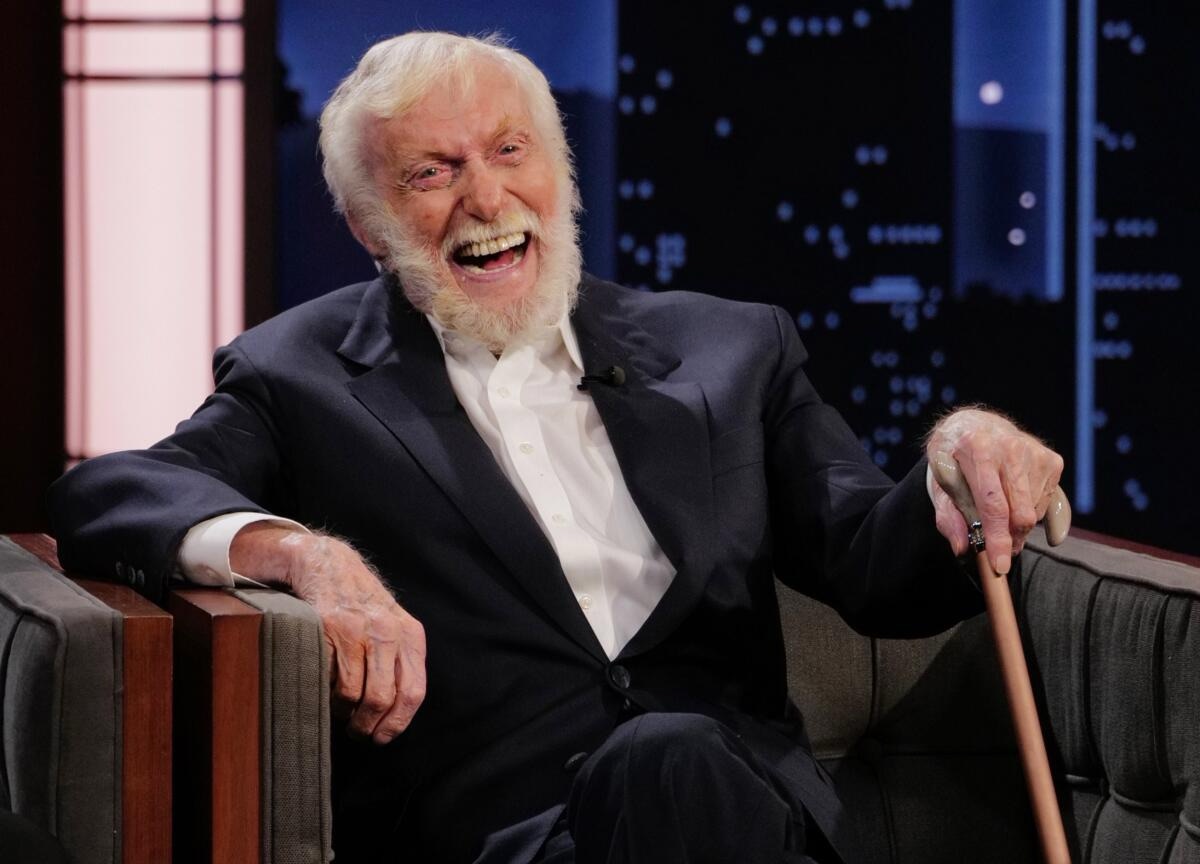
Dick Van Dyke’s 100th birthday did not begin with spectacle. There were no flashing lights, no red carpet chaos, no grand announcement designed for headlines. Instead, it unfolded quietly, surrounded by family, close friends, and the kind of warmth that comes from a life richly lived rather than loudly advertised.
The evening opened with laughter and gentle speeches. Stories were shared — not polished anecdotes, but the kind that wander, circle back, and end in smiles. People spoke about Dick not as a legend, but as a husband, a father, a friend whose humor had always arrived effortlessly, even in ordinary moments. The atmosphere felt intimate, almost protective, as if everyone in the room understood they were witnessing something rare.
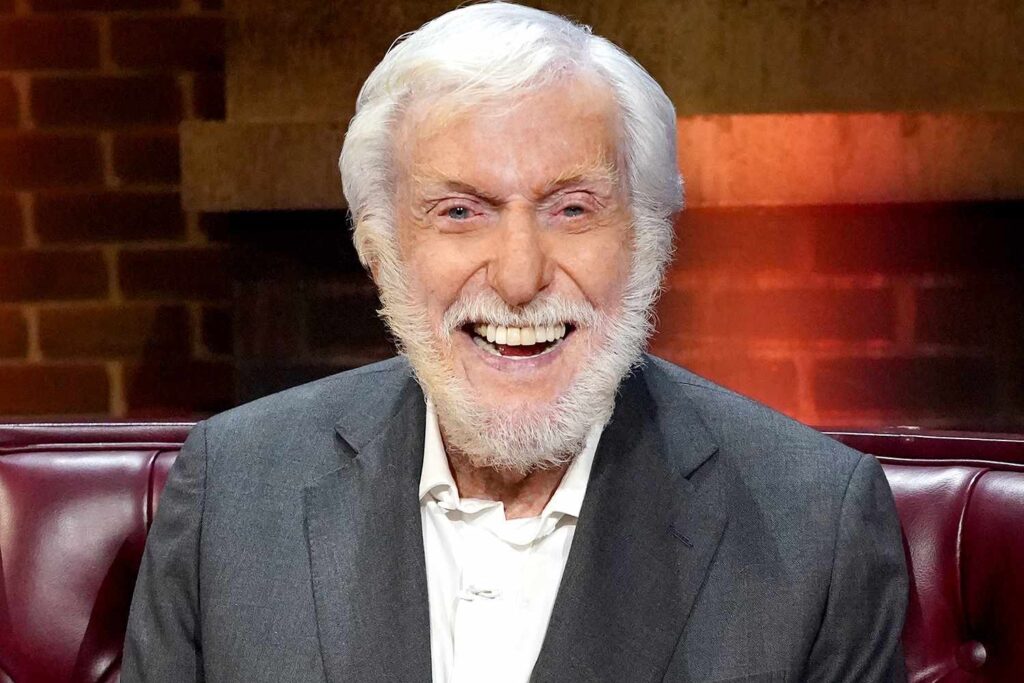
Dick listened with that familiar grin, eyes bright, posture relaxed. He laughed easily, clapped softly, and waved off praise with humility that has always defined him. At nearly 100, there was no sense of performance — only presence. It felt less like a celebration of fame and more like a gathering of people who loved him deeply.
Then, without fanfare, the mood shifted.
Jon Batiste stepped forward, not with ceremony but with intention. What followed was not planned spectacle, but pure energy — a full-hearted, soul-deep performance of “When the Saints Go Marching In” that instantly lifted the room. The rhythm rolled in like a tide, joyful and unrestrained, pulling everyone with it.
The music didn’t stay on the stage. It spilled into the space between chairs, into the corners of the room, into the smiles that spread from face to face. Hands began clapping in time. Laughter returned, louder now, freer. The quiet gathering transformed into something alive and breathing.
Dick watched at first, visibly moved, his smile widening with every beat. Then, slowly, he rose to his feet. The moment landed softly but powerfully — the man who had spent a century entertaining others now swept up in the joy created for him. He clapped along, laughed, and finally joined in himself, fully present in the rhythm of the moment.
There was no sense of age in that instant. No number attached to him at all. Just a man standing in music, surrounded by love, responding instinctively to joy the way he always had. It felt less like nostalgia and more like continuity — the same spirit, still shining.
Guests later described the scene as electric, but not overwhelming. It wasn’t about volume or spectacle. It was about feeling. About joy arriving naturally, without being summoned. About a life so full that celebration didn’t need to be forced.
As the song came to an end, the room lingered in the afterglow. People didn’t rush to speak. No one wanted to break the spell. What had begun as a modest family gathering had quietly become something unforgettable.
In the end, Dick Van Dyke’s 100th birthday didn’t feel like a farewell or a milestone weighed down by time. It felt like a curtain call — not to end a performance, but to acknowledge a century lived with laughter, generosity, and an unshakable love for joy itself.