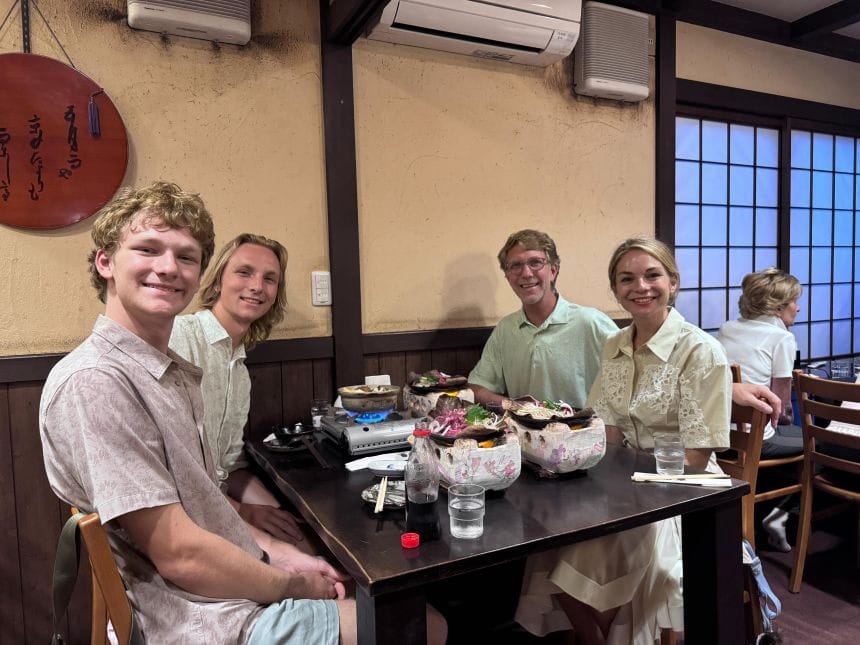
The death of Auburn University student James “Weston” Higginbotham has continued to generate public attention, with new details about his final known movements prompting widespread discussion online.
Weston disappeared while visiting Japan with family members, leading to an extensive search effort that lasted more than a week before authorities located his body in a remote wooded area outside Kyoto.
As investigators worked to reconstruct his final movements, reports emerged indicating that Weston had visited a Kohnan hardware store sometime before his disappearance.
The reported stop quickly became a focus of public interest, particularly as people attempted to understand the sequence of events that unfolded during the days leading up to the tragic discovery.
Additional reports suggested that Weston may have been experiencing emotional distress at the time. However, many details surrounding his condition and state of mind have not been publicly confirmed by investigators.
As information spread online, numerous theories began circulating across social media platforms. Many of these theories attempted to explain his movements, purchases, and actions during the period before he disappeared.
Authorities, however, have not publicly endorsed such speculation, and many key facts remain unknown. Investigators continue to rely on evidence, surveillance footage, witness accounts, and official findings rather than online interpretations.
Friends and family members have largely focused on remembering Weston’s life and character, while urging people to respect the ongoing investigation and avoid drawing conclusions before all facts are known.
The case has highlighted how quickly public speculation can grow when unanswered questions remain, especially in situations involving international travel and tragic circumstances.
While investigators continue their work, the focus for many remains on honoring Weston’s memory and supporting those closest to him. Until official findings are released, questions surrounding his final movements remain part of an ongoing investigation rather than confirmed conclusions.