
Three instructors charged in the death of 21-year-old Maria Eduarda Rodrigues de Freitas are now giving investigators the same troubling answer: they cannot clearly explain how she was launched from a bridge without the main safety rope attached.
The case has drawn national attention in Brazil after Maria Eduarda died during a rope-jumping event at the so-called Skeleton Bridge, located between Limeira and Cordeirópolis in São Paulo state.
Authorities say Maria Eduarda was taking part in an extreme sports activity when she was propelled from the bridge in what is known as the “airplane” style of rope jumping. In that version, participants are launched by instructors rather than jumping on their own.
But investigators say the main safety rope was left behind on the platform. Maria Eduarda was released without it properly attached to her body, leading to the fatal 131-foot fall.
The three men arrested after the tragedy have been identified as Luis Felipe Feliciano Egoroff, 32, Maicon Fernandes Cintra, 42, and Vitor de Freitas Gonçalves, 27. All three have been charged with homicide and remain in custody.
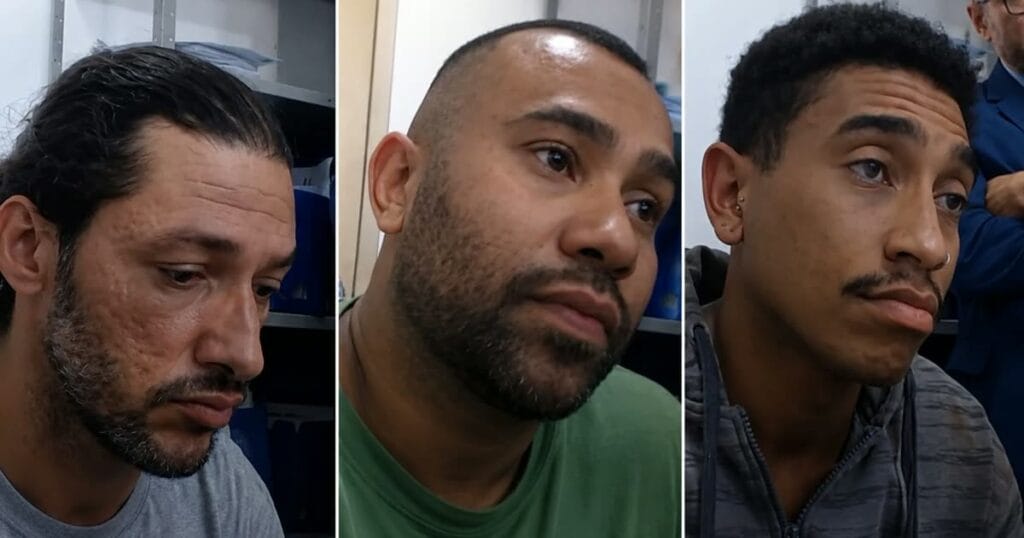
A judge later converted their arrests into preventive detention, meaning they will remain behind bars while the investigation continues. The decision came as police examined both the safety failure and the conduct of the workers after the incident.
According to statements obtained by investigators, none of the three men has been able to give a clear explanation for how the fatal mistake happened. Their answers have only deepened questions about who was responsible for the final safety check.
Egoroff and Cintra reportedly acknowledged that they were responsible for installing and checking equipment before participants jumped. However, when asked who handled specific tasks that day, both failed to explain how Maria Eduarda was released without the rope attached.
In his statement to police, Cintra admitted that he could not understand how the rope was missed. He reportedly said it was difficult to explain how they did not see it before the launch.
That answer has become one of the most unsettling parts of the investigation. For authorities, the key question is not only that the rope was missing, but how multiple people involved in a high-risk activity failed to notice it before the release.
At the same time, investigators are looking into another mystery: the disappearance of a GoPro-style camera Maria Eduarda was reportedly wearing during the activity.
Witnesses told police that she had a body camera before the jump. But after the fall, the device allegedly vanished, and investigators have not recovered it.
One witness claimed to have seen someone connected to the operation remove the camera from Maria Eduarda’s body after the incident. Police are now trying to determine whether the device may have captured crucial footage from the moments before the fatal fall.
During questioning, Gonçalves reportedly said the team could not explain where the camera went. That missing device has now become a major focus because it could help answer questions about the setup, the safety checks, and the final moments before Maria Eduarda was launched.
The investigation has also raised questions about whether the event should have been happening at all. Brazil’s Secretariat of Union Heritage reportedly confirmed that the Skeleton Bridge did not have authorization for extreme sports activities, while local authorities are now considering whether the structure should be closed or even demolished.
Defense attorney Rafael Gomes dos Santos has argued that the death was a tragic accident, not an intentional crime. He disputes the homicide charges and says the instructors did not intend to cause Maria Eduarda’s death or knowingly accept that risk, but police are still awaiting forensic reports as they investigate how a young woman was released from a bridge without a safety rope and what happened to the camera that may have recorded everything.