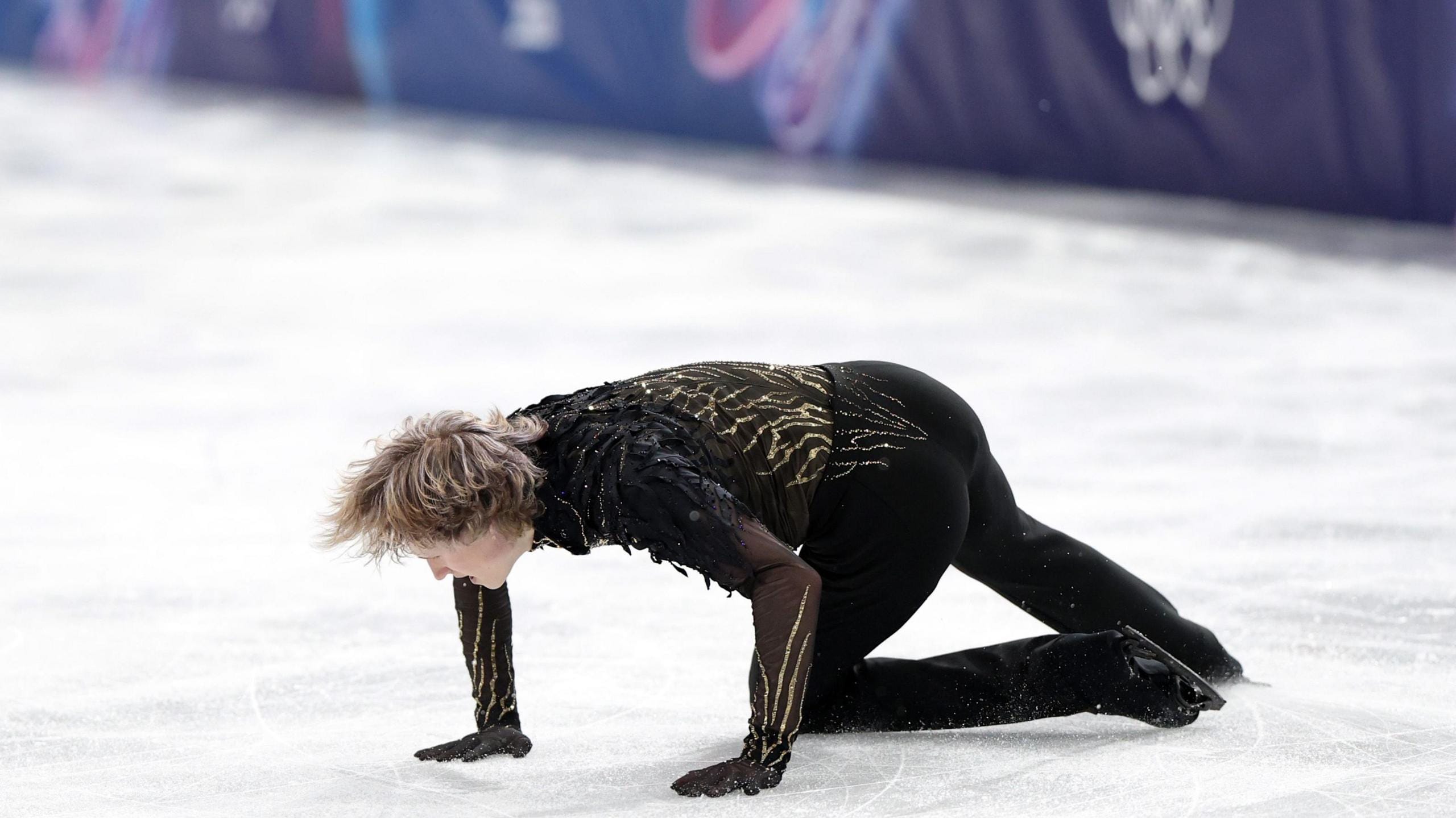
The fall itself was shocking enough. Entering the Milano Cortina 2026 Olympics as the overwhelming favorite, Ilia Malinin — the skater known globally as the “Quad God” — carried enormous expectations on his shoulders. But when two costly mistakes unraveled his routine and dropped him to an unexpected eighth-place finish, the real heartbreak didn’t fully surface until after the cameras stopped focusing on the ice.
In the days that followed, fans noticed something subtle but deeply emotional. Instead of issuing long statements or interviews, Malinin quietly reposted a series of vulnerable TikTok videos that revealed a side of him rarely seen in public. One line struck viewers particularly hard: “Your little boy is tired, mom.”
Another repost carried words that echoed across social media: “Nothing hurts more than trying your best and still not being good enough.” For many who had watched him grow from a prodigy into a global star, the messages felt less like posts — and more like a raw window into the mind of a young athlete processing unimaginable disappointment.
The reaction from fans was immediate and overwhelming. Messages flooded his pages from around the world, many repeating the same sentiment: “You’re still our champion.” Others simply wrote, “Hope you’re okay,” reflecting a shift from admiration of his athletic brilliance to concern for his emotional well-being.
Behind the scenes, however, Malinin was never truly alone. His family — deeply rooted in the world of figure skating — has always been his strongest foundation. His father, Roman Skorniakov, who also serves as his coach, stood beside him in Milan throughout the competition, quietly supporting him through the intense pressure.
His mother, Tatiana Malinina, herself a former world champion and coach, chose to stay home during the Olympics — not out of distance, but because of how emotionally difficult it is for her to watch her son compete under such immense stakes. Even from afar, her presence remained constant.
His younger sister Elli also reached out privately, offering the kind of quiet encouragement only family can provide. Together, they represent a support system that understands not just the spotlight, but the lifelong grind, sacrifice, and emotional cost of elite sport.
Those closest to Malinin have long emphasized one thing: their pride has never been tied to medals. To them, he is not defined by a podium finish or a scoreboard, but by his character, resilience, and dedication. In moments like this, that distinction becomes especially powerful.
The reposts themselves revealed something universal — that even athletes celebrated for superhuman achievements remain deeply human. Beneath the titles, records, and expectations is still a young man carrying pressure that few people his age could fully comprehend.
For many fans, the most moving part of the story is not the fall, but what followed: the openness, the vulnerability, and the reminder that greatness does not mean being unbreakable. Sometimes it simply means continuing forward while surrounded by those who remind you that you are loved, no matter the result.